
Some organisms self-destruct after reproduction
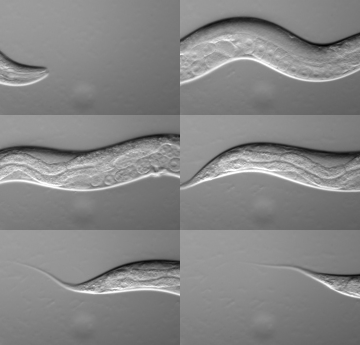
Most mammals are iteroparous, meaning they can undergo multiple cycles of reproduction and gradually advance in age. In stark contrast, semelparous species only reproduce once before they die, as the physiological toll of mating is quite high. Examples of semelparous species include Pacific salmon, which swim upstream where they die after spawning, thus becoming nutrients for their own offspring and the environment. By only 10 months of age, male kalutas […]
 Life Lines by Dr. Dolittle