Tag Archive for ‘Stress’

Why leadership stresses everyone out: From birds to bosses

From birds to people, research demonstrates that leadership roles can be really stressful. In this post, let’s explore the physiology of stress and how it affects such relationships. Stress as defined by the founder of Stress Theory, Dr. Hans Selye (1907-1982), is the “nonspecific response of the body to any demand” (Tan and Yip, 2018). Our bodies were designed to deal will short bouts of stress by releasing special stress […]

Continue Reading →

Time Machine: Homeostasis and ‘The Wisdom of the Body’

In this time machine post, we travel back to 1929 to discuss an article written by Dr. Walter B. Cannon, published in Physiological Reviews. Among other achievements, Dr. Cannon is perhaps best known for being the first to coin the term “homeostasis” and to describe “fight or flight responses” in organisms. As a review article, Dr. Cannon summarized observations made by others about how organisms appear to “maintain their own […]

Continue Reading →

Even shy animals find overcrowded conditions more stressful than bold animals

In a newly published study in the American Journal of Physiology – Regulatory, Integrative and Comparative Physiology, researchers examined the relationship between behavioral and physiological responses to stress in a model organism, zebrafish. Following a series of behavioral tests, the fish were classified as either shy or bold and were then exposed to either overcrowded (32 fish per liter) or control conditions (1.6 fish per liter). After 10 days, the […]

Continue Reading →

Meet the honey possum

Meet the honey possum (Tarsipes rostratus). These animals are small and rather unusual marsupials with few teeth and a specially adapted tongue to aid in the consumption of a diet consisting of only nectar and pollen. Because they feed primarily at night, rely on fresh flowers, and tend to stress easily, they are difficult to study. In fact, their adrenal gland, which produces the stress hormone cortisol, weighs about 1,600 […]

Continue Reading →

Extreme tolerance of dehydration stress

Talk about an extreme animal. During the rainy season annual killifish, Austrofundulus limnaeus, lay eggs that are resistant to droughts. This is an important attribute for a fish that lives in temporary pools of water. The stress-resistant embryos within the eggs literally shut down their metabolism to survive months – possibly years without water. For many fish, exposure to air (and oxygen) can cause profound oxidative stress. Remarkably, this is […]

Continue Reading →

Stressed out cat? Cat music may help

Do you have a stressed out cat? If so, try playing cat music, that’s right…music designed for cats. Researchers at Louisiana State University observed that music made specifically for felines can help them calm down during a visit to the vet. The special recordings (below) include cat vocalizations as well as sounds that are close to the vocal frequency of cats. The team found that cats who were exposed to […]

Continue Reading →

High altitude deer mice have less stress?

Animals that live at high altitude have evolved a number of physiological adaptations to deal with the low atmospheric oxygen concentrations (hypoxia). For low altitude acclimated animals, short exposures to high altitude results in activation of the sympathetic nervous system (i.e. the fight or flight response). This is a good thing because activation of this system results in more blood flow, especially to the heart and brain to help protect oxygen […]

Continue Reading →

Chronic stress impacts everyone around us

A new study examined how our stress impacts our best friend’s mental health.  The researchers studied Shetland sheepdogs, border collies and their owners and found that dogs living with people who had high levels of stress hormone (cortisol) in their hair follicles, similarly had high levels of cortisol in their fur. In contrast, canine anxiety does not appear to run off on people. That’s good news for those of us […]

Continue Reading →

Adapting to rising temperatures

In a new review article published in Physiology, Dr. Jonathon Stillman from San Francisco State University explores how populations of animals and humans may respond to increasing frequency of heat waves. According to Dr. Stillman, the past decade has produced some of the hottest years on record, resulting in the loss of human and animal life. Both the length and intensity of these heat waves are expected to increase, which […]

Continue Reading →

Lack of sleep stresses out birds too

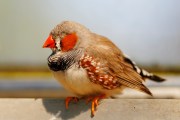
Birds show signs of stress resulting from sleep loss. A new study published in Physiological and Biochemical Zoology shows that zebra finches who are sleep deprived have increased expression of inflammatory genes in their fat tissues, spleen and hippocampus region of the brain along with  increased levels of circulating stress hormones. The hippocampus is the region of the brain associated with long term memory formation. I wonder if sleep deprived birds are […]

Continue Reading →