Tag Archive for ‘wildlife’

Ever wonder how polar bears stay warm?
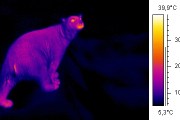
On this “National Polar Bear Day”, we explore how these formidable animals keep warm. Arctic polar bears, Ursus maritimus, live in very cold environments where temperatures are often colder than a home freezer and can dip as low as -40 degrees C. They thrive on ice and routinely hunt and swim in ice-cold water. Unlike humans, and many other mammals for that matter, polar bears have several characteristics that help […]
Continue Reading →

Celebrating National Squirrel Appreciation Day: Recent discoveries about ground squirrel hibernation

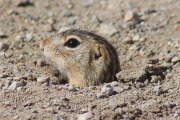
I am thrilled to have come across a calendar of fun and interesting “holidays” for all sorts of occasions, including celebrating nature and the animals around us. In honor of ‘National Squirrel Appreciation Day’, let’s take a moment to marvel at furry survival experts and the incredible science behind winter slumber in ground squirrels.     When temperatures drop, ground squirrels settle down for a long winter’s nap. During hibernation, their […]

Continue Reading →

On the path to preventing white-nose syndrome

This Halloween, we are checking in with our “bat-ty” friends. North American populations of bats have been severely decreased by a deadly fungus, known as Pseudogymnoascus destructans, which results in a disease called ‘white-nose syndrome’. There are currently 13 species of hibernating bats known to have been impacted by the disease (Center for Biological Diversity). Having toured a cave recently, our guide ensured that everyone decontaminated their shoes before entering […]

Continue Reading →

From Hibernation to Healing: Unlocking Genomic Secrets for Human Therapies

I was just cleaning my desk and came across an issue of The Physiologist Magazine from March that had ended up under a pile of papers., some of which were admittedly much older. Clearly, I should clean my desk more often. Anyway, in perusing the issue I came across a gem… The March issue featured Dr. Joanna Kelley, associate professor at the University of California Santa Cruz. Dr. Cruz was […]

Continue Reading →

Tiny Devils Hole pupfish make a big comeback

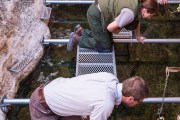
Devils Hole pupfish (Cyprinodon diabolis) are a tiny critically endangered fish that live in a pond in just one limestone cave, known as Devils Hole, in Death Valley, Nevada. In fact, their habitat is the smallest known for a vertebrate. Biologists from the Nevada Department of Wildlife, US Fish and Wildlife Service and the National Park Service have been painstakingly counting these tiny fish twice a year. Counting these fish […]

Continue Reading →

Some organisms self-destruct after reproduction

Most mammals are iteroparous, meaning they can undergo multiple cycles of reproduction and gradually advance in age. In stark contrast, semelparous species only reproduce once before they die, as the physiological toll of mating is quite high. Examples of semelparous species include Pacific salmon, which swim upstream where they die after spawning, thus becoming nutrients for their own offspring and the environment. By only 10 months of age, male kalutas […]

Continue Reading →

Males are not always bigger…unless they are northern elephant seals

A new study published in Nature Communications challenges the popular notion that males are usually bigger than females – at least in mammals. Their findings are consistent with Dr. Katherine Ralls who also challenged this idea in the late 1970s. In this new study, researchers looked at data collected for 429 species of animals. Rather than using averaged values from the literature, they turned to large-published datasets that included values […]

Continue Reading →