Tag Archive for ‘winter’

Red, White, and Bison: Celebrating Freedom and National Bison Month

Happy 4th of July! What a perfect time to also honor National Bison Month! This month, we celebrate an icon of the American landscape. Bison are incredible animals, not just for their symbolic significance but also for their remarkable adaptations to extreme environments. As highlighted by the National Park Service’s Bison Bellows, their resilience in the face of brutal winters is extraordinary. Bison are uniquely adapted to harsh winter conditions […]
Continue Reading →

Ever wonder how polar bears stay warm?

On this “National Polar Bear Day”, we explore how these formidable animals keep warm. Arctic polar bears, Ursus maritimus, live in very cold environments where temperatures are often colder than a home freezer and can dip as low as -40 degrees C. They thrive on ice and routinely hunt and swim in ice-cold water. Unlike humans, and many other mammals for that matter, polar bears have several characteristics that help […]

Continue Reading →

Celebrating National Squirrel Appreciation Day: Recent discoveries about ground squirrel hibernation

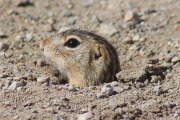
I am thrilled to have come across a calendar of fun and interesting “holidays” for all sorts of occasions, including celebrating nature and the animals around us. In honor of ‘National Squirrel Appreciation Day’, let’s take a moment to marvel at furry survival experts and the incredible science behind winter slumber in ground squirrels.     When temperatures drop, ground squirrels settle down for a long winter’s nap. During hibernation, their […]

Continue Reading →

New research shows that muscles in hibernating animals consume energy

Hibernation allows animals to reduce their energy needs during winter, when food may be scarce and high amounts of energy would be required to maintain body temperature. These animals prepare for winter by storing body fat that can be used as fuel during hibernation. Skeletal muscles in particular have high energy needs as they make up nearly half of an animal’s body mass. They also play important roles in regulating […]

Continue Reading →

The physiology of ‘frogsicles’ and the quest for life after death

Cope’s gray treefrogs, Dryophytes chrysoscelis, are remarkable animals that can actually survive being frozen…multiple times each year. In fact, these animals live in an environment in which temperatures commonly dip below freezing. When temperatures drop, up to 65% of their body water literally freezes. In anticipation of freezing temperatures, they begin to accumulate cryoprotectant chemicals during the fall to help protect their organs. Until now, the effects of repeated cycles […]

Continue Reading →

It’s getting cold outside…what’s a squirrel to do?

As the weather cools down, animals must find ways to stay warm. This is especially important for small animals as they lose body heat faster than larger animals. One way to stay warm is by increasing your metabolism to create body heat, although this process requires a lot of energy. That can be a problem in areas where food may be scarce in the winter. Although some animals, like the […]

Continue Reading →

Stranger than science fiction: treefrogs that freeze and live to tell the story

Today we have a guest blog written by Elizabeth Evans (pictured above), a graduate student at the University of Dayton working in the laboratory of Dr. Carissa Krane. She presented her research on freeze tolerance today at the 2022 Experimental Biology conference in Philadelphia. She wrote the award-winning blog entry below which earned the 2022 Dr. Dolittle Travel Award to attend the conference. Congratulations Elizabeth!! Stranger than science fiction: treefrogs […]

Continue Reading →

Featuring: Ohio Physiological Society, Part 2

Here are some additional highlights from the 35th annual Ohio Physiological Society conference… Elizabeth Evans (Graduate Student, University of Dayton), Dr. David Goldstein (Wright State University), and Dr. Carissa Krane (University of Dayton) presented research examining the effects of multiple freeze-thaw cycles on Cope’s Gray treefrogs (Dryophytes chrysoscelis). Yes, that’s right, I said freeze-thaw cycles. These freeze tolerant animals build up glycerol in their bodies to help survive seasonal conditions […]

Continue Reading →

Birds may stay warm with the help of red blood cells

Researchers at Lund University in Sweden were interested in understanding how birds adapted to cold weather. Birds can’t turn up the heat in their birdhouse, so it is important for them to find physiological ways to stay warm. While they can store body fat and grow more feathers for insulation, metabolism is the primary way endothermic animals create body heat. Mitochondria produce cellular energy (ATP) but can also create heat […]

Continue Reading →

Extreme Fasting

While giant pandas roll in horse manure to stay warm in the winter (that’s a different story), other animals spend up to 8 months hibernating to conserve energy during times of reduced food availability and freezing temperatures. During their long winter’s nap, animals such as the Arctic ground squirrel and 13-lined ground squirrel go without food or water while at the same time avoiding muscle wasting – a rather impressive […]

Continue Reading →