Climate Change

Final highlights from the 2019 Arizona Physiological Society conference

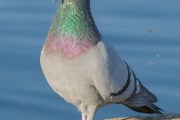
Here are some additional comparative physiology highlights from the 2019 Arizona Physiological Society poster session: Researchers at Arizona State University compared the physiology of Gambel’s quail (Callipepla gambelii) living in urbanized and less developed areas. They found that birds living in more urbanized areas were larger and had more circulating lipids than birds living in areas that were less developed. (A Funk, P Hutton, S Earl, P Deviche, and K Sweazea. […]
Continue Reading →

Adapting (or not) to increasing temperatures

Birds are not the only animals experiencing massive declines in populations. Rising temperatures and heat waves, in particular, have been blamed for killing humans and animals. In fact, a new review article published in Physiology mentioned that globally, heat is “a significant natural killer of humans, with the first decade of the 21st Century seeing a 23-fold increase in human casualties from heat waves compared with the 1990s.” If current predictions hold true, […]

Continue Reading →

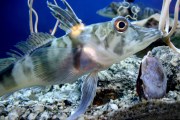
Antarctic icefish do not tolerate rising temperatures

Antarctic finfishes may be facing rising ocean temperatures. This is of particular concern to icefishes, as they are not very tolerant of increasing temperatures. Prior studies have shown that this lack of tolerance may be due to an inability for their hearts to beat normally and actually collapse at higher temperatures. In a study presented at the 34th annual Ohio Physiological meeting at Wright State University today, researchers Evans et al., (working […]

Continue Reading →

Polar bears summering on land exposed to more pathogens

Polar bears (Ursus maritimus) living near the southern Beaufort Sea are spending more time on land during the summer months than in years past as a result of climate change and melting sea ice. Researchers wanted to know whether bears that spent more time on land were exposed to more pathogens compared to those who spent more time on sea ice. Their results, published in the journal Physiological and Biochemical Zoology, showed […]

Continue Reading →

Animals that eat plastic?

Have you seen this? A video just released by Yellowstone National Park talks about how some heat-loving microorganisms can break down plastics. Pretty cool.   Not so cool was the recent finding published in the Proceedings of the Royal Society B: Biological Sciences that Astrangia poculata coral polyps are eating microplastics instead of brine shrimp eggs…on purpose. In the lab, the team were able to observe the corals consuming nearly […]

Continue Reading →

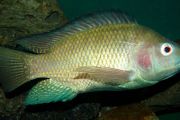
Rising water temperatures masculinizes Nile tilapia

Nile tilapia, Oreochromis niloticus, is a species of freshwater fish native to Egypt and Africa. Global warming has the potential to significantly impact this species as water temperatures above 32 to 36.5 degrees Celsius can induce young fish (10-30 days after fertilization) that are genotypically female to become masculinized. Moreover, a recent study published in PLOS ONE showed that some young fish choose to visit warmer waters. A new study published […]

Continue Reading →

Highlights from the last day in Orlando

Today marked the final day of the 2019 Experimental Biology meeting in Orlando. As usual it was a great day for Physiology. Crupi et al., from the University of Messina and the Universita della Magna Grecia in Italy put up a poster presentation describing their research on how red blood cells respond to environmental toxins. Their research showed that isolated red blood cells from rabbits are more sensitive to venoms […]

Continue Reading →

Highlights from EB 2019

There were so many poster presentations on comparative and evolutionary physiology today at the 2019 Experimental Biology conference that it was impossible to see them all. Here are some highlights: Dr. Michael Hedrick from California State University – East Bay, presented his research on African cheetahs (Acinonyx jubatus) examining adaptations that cheetahs have evolved to supply their muscles with oxygen so efficiently, given they maintain the world record for being […]

Continue Reading →

Adapting to rising temperatures

In a new review article published in Physiology, Dr. Jonathon Stillman from San Francisco State University explores how populations of animals and humans may respond to increasing frequency of heat waves. According to Dr. Stillman, the past decade has produced some of the hottest years on record, resulting in the loss of human and animal life. Both the length and intensity of these heat waves are expected to increase, which […]

Continue Reading →