Comparative Physiology

2025 August Krogh Distinguished Lecturer, Dr. Michael Hedrick

We are delighted to announce that Dr. Michael Hedrick (Emeritus Professor, California State University – East Bay) received the 2025 August Krogh Distinguished Lectureship award at the 2025 American Physiology Summit! He shared his body of research on how frogs and toads (anurans) regulate their lymphatic system in a lecture entitled, “What Goes Down Must Come Up: Regulation of Lymph Movement in Anuran Amphibians.” Dr. Hedrick earned his Ph.D. in […]

Continue Reading →

Weddell seals dampen inflammatory response to combat dive induced hypoxemia injury

We are very excited to share this winning guest blog post from Amy Klink, doctoral student at the University of Nevada – Las Vegas. Amy received the Dr. Dolittle travel award to present this research at the 2025 American Physiology Summit in Baltimore. Congratulations Amy! As a kid growing up in Lake County, Illinois, I spent more than half of my summer in some lake or body of water competing […]

Continue Reading →

Even small birds fly high

Dr. Catherine Ivy (Assistant Professor, University of Saskatchewan, Canada), shared research this morning at the 2025 APS Summit on the remarkable hypoxia tolerance of birds. Although bar-headed geese (above) are the poster-birds for research on extreme hypoxia tolerance, I was surprised to learn that even many small migratory species of birds fly at relatively high altitude. Tiny migratory yellow-rumped warblers (~12g), for example, travel for about 6-8 hours at a […]

Continue Reading →

New study explores whether diet and blood sugar affect cancer risk

A new study published by researchers at Arizona State University, led by Dr. Carlo Maley, in Nature Communications set out to examine whether vertebrates that have high blood sugar are at greater risk of developing cancer. The current study follows on the heels of prior work by his team that was published in Evolution, Medicine, and Public Health last summer showing that cancer prevalence is lower in birds than other […]

Continue Reading →

Ever wonder how polar bears stay warm?

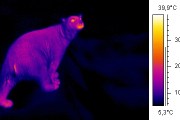
On this “National Polar Bear Day”, we explore how these formidable animals keep warm. Arctic polar bears, Ursus maritimus, live in very cold environments where temperatures are often colder than a home freezer and can dip as low as -40 degrees C. They thrive on ice and routinely hunt and swim in ice-cold water. Unlike humans, and many other mammals for that matter, polar bears have several characteristics that help […]

Continue Reading →

Does your fish recognize you?

A new study published in Biology Letters found that wild fish could distinguish between two divers based on the colors they were wearing. The investigators began by training two species of wild sea bream (Oblada melanura and Spondyliosoma cantharus) to obtain a food reward from a diver by following them. They then had two divers enter the water wearing different colors and found that the fish were able to tell […]

Continue Reading →

The gatekeepers of life: Exploring the complex role of GPCRs

Cell membranes are incredibly complex environments that play crucial roles in interacting with other cells, sensing specific molecules in the body, controlling what crosses the membrane, and other vital functions. The composition of these membranes varies between organs in an animal, between similar organs in different species, and even between individuals of the same species. Think of cell membranes as gatekeepers, responsible for detecting various chemical signals (such as ions […]

Continue Reading →

Time Machine: Do horses produce more heat per day than humans, and what happened to Tusko?

In this post, we travel back to 1947 to explore a fascinating review by Dr. Max Kleiber from the University of California – Davis. Published in Physiological Reviews, this review examined the relationship between body size and metabolism. Simply asking the question of whether horses produce more heat per day than humans or rats will lead one to conclude that indeed they do because of their larger body size. However, […]

Continue Reading →

To eat or not to eat, that is the question

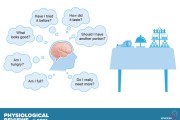
Ever wonder how your body knows when, what and how much to eat, what to crave, or when to stop? Have you ever found yourself indulging in a little extra during the holidays, even though you’re not actually hungry? It turns out, the science behind our eating habits is far more complicated than we realize— and it’s not just about willpower or self-control. A fascinating comprehensive review published by Watts […]

Continue Reading →