Diet and Exercise

Improving endurance exercise

  We all know that aerobic exercise is good for us because it helps improve muscle function and our ability to move well. For fish, aerobic exercise helps animals escape predators, catch prey as well as improve reproduction success. When we exercise, our muscles adapt by altering the metabolism of energy, the way calcium is handled as well as the type of contractile proteins present in the muscle. Together these changes […]

Continue Reading →

Why flamingos stand on one leg

Scientists think they have discovered the reason why flamingos (Phoenicopteridae) stand on one leg. In a new study published in Biology Letters scientists studied both live flamingos and carcasses. What they found was that standing on leg requires less energy or effort than standing on both legs. In fact, the researchers found carcasses could be made to stand on one leg quite easily. As stated in the article: “By contrast, the cadaveric flamingo could not […]

Continue Reading →

Obesity gene found in Labrador retrievers

Researchers at the University of Cambridge in Britain recently studied ‘willpower’ in pet Labrador retrievers. After allowing each dog to smell a hot dog, the researchers placed the hot dog in a hamster cage and sealed it shut with duct tape. While some dogs showed only mild interest in the sealed-up hot dog, others were fixated on the out-of-reach treat. One dog, named Ash, broke apart the contraption to obtain the treat. This […]

Continue Reading →

Meet the star (nosed) of the show

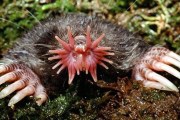
Dr. Kenneth Catania from Vanderbilt University presented his work with star-nosed moles at the Experimental Biology meeting last month in Chicago. These animals are really cool. Here are some facts from Dr. Catania about these crazy-looking creatures you may not know: If participating in a bug-eating contest, they would win hands down every time because they are the fastest-eating mammal known. In fact, they can identify and consume a bug in a record […]

Continue Reading →

Experimental Biology – Day 3

Highlights from today’s sessions included: Norelia Ordonez-Castillo, undergraduate student from Fort Hays State University, presented her research on channel catfish. According to Norelia, these fish can become obese so her research was geared towards trying to find out how their receptor for LDL cholesterol differs from rodents and humans. But what I want to know is whether the obese catfish tastes better… Christine Schwartz, Investigator from University of Wisconsin-La Crosse, studied how […]

Continue Reading →

Experimental Biology – Day 2

Yesterday was a great day for comparative physiology! Highlights from the seminars on comparative physiology: Melissa Reiterer, graduate student from Florida Atlantic University, presented her research on how freshwater turtles (Trachemys scripta) survive for long periods of time without oxygen and do not develop oxidative stress after oxygen is restored. The turtles are able to do this by creating their own antioxidants as well as eliminating oxidative stress. In contrast, mammals including humans, develop […]

Continue Reading →

Obese rhesus monkeys develop diabetes too

A new study published in American Journal of Physiology – Endocrinology and Metabolism shows that rhesus monkeys (Macaca mulatta) who spontaneously develop obesity with aging are prone to insulin resistance and diabetes, similar to humans. The major goal of insulin is to lower blood sugar after eating a meal. In line with this goal, muscles respond to insulin by taking up large amounts of the sugar. Similarly, insulin blocks the breakdown of glucose […]

Continue Reading →

What do frogs and humans have in common?

Leptin is a hormone that signals the brain to suppress appetite in humans. While researchers at the University of Michigan described a similar appetite regulating role for leptin in South African clawed frogs (Xenopus), they also discovered that leptin signals limb development in tadpoles. They suspect that this happens once there are sufficient energy stores to begin the process of metamorphosis. Shalitin and Kiess (2017) also described a role for leptin in skeletal development of children and researchers implicate leptin in […]

Continue Reading →

Growing meaty fish

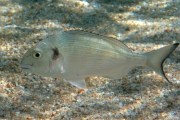
Similar to humans, muscle growth in fish is increased with exercise. Unlike humans, however, teleost fish are able to continue growing in length as well as weight throughout their lives. This type of meat, I mean muscle, growth happens in two ways: 1) muscle cells get bigger and 2) new muscle cells form. Researchers at the University of Barcelona in Spain wanted to know what effect moderate sustained swimming would have on the muscles of young […]

Continue Reading →

The ultimate desalination plant: the eel esophagus

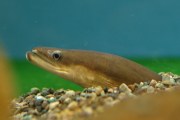
I love fish. The diversity of these aquatic creatures is so vast, I find them fascinating. Take the eel for example: In a study published this month in the American Journal of Physiology – Regulatory, Integrative and Comparative Physiology, researchers wanted to link information they learned from sequencing the RNA of eels with understanding how the animals adapt to saline environments. During acclimation to saltwater, fish have no choice but […]

Continue Reading →