Environment

Sniffing out pathogens

Rainbow trout are able to mount an immune response after simply smelling a virus or bacteria, even before they are infected. In a new study shared at the 2023 American Physiology Summit, researchers examined whether smell-induced activation of the immune response also triggers avoidance behaviors in the fish. By creating a maze that included a pathogen at one end, they discovered that the fish do in fact avoid the smell […]


Continue Reading →

Physiological Desalination

Ellie Runiewicz, an undergraduate student in the laboratory of Dr. Jason Breves at Skidmore College presented research on osmoregulation in teleost fish at the American Physiology Summit last month. Ellie’s research examined how Atlantic salmon are able to remove salts from the water they drink. When these fish live in marine environments, they are constantly drinking saltwater. Processing the water to remove the salts is therefore really important to their […]

Continue Reading →

You Can Sweat, But the Seals Can’t!

Congratulations to this year’s Dr. Dolittle Travel Award winner, Emily Lam from the University of California, Berkeley! Emily presented her research at the inaugural American Physiology Summit conference this past weekend in Long Beach, California (Lam E, Mouly M, Congdon C, Henderson K, Vazquez-Medina J. Physiological and behavioral responses of northern elephant seals (Mirounga angustirostris) to global change among three northern California rookeries). Here is a guest blog describing her […]

Continue Reading →

Hydrogen sulfide – the gas we hate to smell, but can’t live without

Although hydrogen sulfide (H2S) is most often associated with manure and the smells of rotten eggs, research has shown it plays important physiological roles. In fact, our bodies actually produce H2S within our cells. Other source of H2S include sulfate-producing bacteria in our gut and dietary intake (such as garlic and cruciferous vegetables). H2S is a member of a group of gasotransmitters, referred to as the ‘reactive species interactome’, that […]

Continue Reading →

Infertility is not an issue for naked mole rats

Naked mole-rats have attracted the attention of scientists once again. Not only do they live very long lives (30+ years), while typically avoiding cancer, females remain fertile their whole life. Unlocking their secrets to avoiding menopause may lead to new ways to treat infertility. New research has identified their tricks for lifelong fertility. It turns out that female naked mole-rats have 1.5 million egg cells (oocytes) when they are born, […]

Continue Reading →

Now we know how life underground reduces metabolism

…at least for mole-rats. African mole-rats live in dark underground dwellings where oxygen and food are scarce, and humidity and temperatures are high. These animals have low metabolic rates and body temperatures uniquely adapted to their life underground. Metabolism is controlled in part by thyroid hormones. To understand the role of thyroid hormone in mole-rats, researchers examined the thyroid gland and hormones in naked mole-rats (Heterocephalus glaber) as well as […]

Continue Reading →

Protecting oil palms and owls with cholecalciferol

Wild rodent infestations can destroy crops and pose many risks to public health. According to the CDC, they are hosts to many diseases including Hantavirus, Monkeypox, Salmonella, Hemorrhagic fever, Lassa fever, Leptospirosis, Arenavirus, Sylvatic Typhus, and Tularemia. Wild rodents may also indirectly spread diseases to humans and other animals through infected ticks, mites, mosquitoes, and fleas that feast on them. Such indirect illnesses include Lyme disease, Plague, Typhus, Colorado Tick […]

Continue Reading →

Keeping it cool when it gets hot

Human thermoregulation in a warm environment Thermoregulation is the ability for an organism to control body temperature within a specified physiological range even when environmental temperatures vary. A recent article published in Physiological Reviews explored thermoregulation in humans and how various factors such as age, body shape, adaptation, and biological sex impact a person’s ability to maintain body temperature. They also explored how various diseases such as multiple sclerosis, diabetes, […]

Continue Reading →

On the road to developing artificial odorant sensors for noses

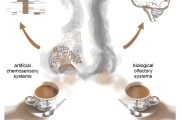
Almost all animals have some ability to detect smells their environment and there are countless odorant molecules and combinations of molecules in the environment that our systems are challenged with identifying. The sense of smell is important in many biological processes such as finding food, mates, and detecting threats. Scents may also conjure up memories and affect our emotions. About 5% of the population either has no (anosmia) or very […]

Continue Reading →

Hypoxia gives alligators a big heart: Q&A with Dr. Dane Crossley, University of North Texas

We recently interviewed Dr. Dane Crossley, Professor of Physiology in the College of Biological Sciences at the University of North Texas about the research his laboratory presented at the recent APS Intersociety meeting, Comparative Physiology: From Organisms to Omics in an Uncertain World. The title of his presentation was, “A large heart: How does developmental hypoxia affect individual cardiomyocyte performance in the American alligator, Alligator mississippiensis.” Thank you for taking time […]

Continue Reading →