Extreme Animals

Komodo dragons have antibacterial blood

Researchers studying komodo dragons (Varanus komodoensis) at George Mason University discovered 48 previously unknown peptides in their blood that might have antimicrobial properties. Their findings were published in the Journal of Proteome Research. For the largest lizard, these peptides may help prevent the animals from getting infections from their own saliva, which is host to at least 57 species of bacteria. With this number of bacteria, it is easy to understand why they evolved so many […]

Continue Reading →

Camouflage in motion

Cuttlefish (Sepia officinalis) are masters of camouflage. Being able to mimic their surroundings helps them hide from predators. But how do they maintain their camouflage while moving through complex environments, such as coral reefs, sea grass, and varying light patterns? A new study published in Frontiers in Physiology examined this question. They wanted to know how small an object in the environment could be for the cuttlefish to still mimic it quickly enough while moving. What […]

Continue Reading →

Ammonia tolerance of goldfish

Liver failure or congenital defects can lead to a build-up of ammonia in the brain of mammals resulting in life-threatening swelling, convulsions and comas. For goldfish (Carassius auratus), environmental exposure to ammonia causes reversible swelling of the brain. In a new study published in the American Journal of Physiology – Regulatory, Integrative and Comparative Physiology, researchers wanted to explore how the fish were able to accomplish this. They exposed goldfish to high […]

Continue Reading →

Reindeers may pave way for discovery of nerve regeneration techniques for humans

I came across a neat article in Scientific American that described how reindeer and elk regrow their antlers every year. Could you imagine putting that much energy into growing new bone each year complete with a velvety cover containing nerves, skin, and blood vessels? Although full-grown antlers lose their blood supply and animals scrape the velvet layer off to reveal just bone. Researchers have explored whether understanding this amazing process of […]

Continue Reading →

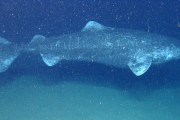
Amazing longevity of Greenland sharks

A multi-national team of scientists sought to determine the age of Greenland sharks (Somniosus microcephalus). These animals grow rather slowly (about 1cm per year) and are the largest fish in the arctic (>500 cm long), but their longevity was not yet known. The team used radiocarbon dating of crystalline proteins found within the nuclei of the eye lens. Because these proteins are formed prenatally, they offer a rather accurate way to […]

Continue Reading →

Extreme Physiology: Radiation Tolerance

  Don’t let their small size fool you. Tardigrades, or ‘water bears’, are really tough animals. According to a review published in the American Scientist, these microscopic invertebrates can survive extreme variations in temperature from near absolute zero (-459 deg F) up to +302 deg F. They can also tolerate pressures that are 6 times greater than the deepest ocean, exposure to ionizing radiation (UV and x-ray) and the vacuum of space, as well as exposure to […]

Continue Reading →

Frigatebirds and lambs

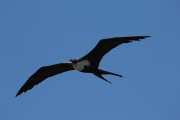
I was checking out the award-winning American Physiological Society’s I Spy Physiology blog and came across a couple of really interesting posts about animals: “If Only Birds Could Compete in the Summer Games” This post reported a study of how frigatebirds manage to sleep during flights out at sea that can last for weeks. By measuring brain activity, the research team found that the birds were capable of actual sleep, during which time both […]

Continue Reading →

Secret to safer stem cell therapy or cure for cancer?

Researchers trying to find cures for cancer find naked mole rats rather interesting. Not only are these animals long-lived by rodent standards, they are also resistant to the development of cancer. By long-lived, we are talking up to 30 years! A team of researchers from Hokkaido University and Keio University in Japan have now isolated stem cells from the skin of naked mole rats and induced them to revert back to pluripotent stem […]

Continue Reading →

Keeping arteries healthy, lessons from seals?

Heart rate decreases during diving in seals and other animals. Thus the ascending aorta becomes very important during diving as it helps to maintain blood pressure during prolonged dives. A new study published in the American Journal of Physiology – Regulatory, Integrative and Comparative Physiology was designed to examine the ascending aorta of hooded seals (Cystophora cristata) and the tiny blood vessels that supply nutrients to it, called the vasa vasorum. The […]

Continue Reading →