Feline

Physiology on the road: Celebrating physiology in Indiana

I am excited to announce that the Indiana Physiological Society, a chapter of the American Physiological Society, is hosting their annual meeting tomorrow! The event will take place at the University of Southern Indiana. The keynote address will be given by Dr. Thad Wilson, renowned professor of physiology and educator at the University of Kentucky College of Medicine. The conference also includes hands-on activities to improve teaching in physiology. It […]


Continue Reading →

Advancements in veterinary wound healing

Antibiotic-resistant infections are a global concern for both humans and animals. A recent study published in Veterinary Quarterly tested a new way to treat an antibiotic-resistant Pseudomonas aeruginosa wound infection in a Siamese cat, known as “Squeaks”. Squeaks had acquired the infection following multiple surgeries that aimed to treat the cat for injuries after a severe fall from a high-rise. In this study, the veterinary team created a viral phage […]

Continue Reading →

It’s all about the butt microbiome

While the gut microbiome has been gaining a lot of attention for its potential role in health and disease, it appears that the butt microbiome is important in feline communication. How many times have you seen cats sniffing each other? Brave researchers at the University of California at Davis explored this hidden side of cat communication and published their findings in Scientific Reports. The researchers identified both the bacterial species […]

Continue Reading →

Humans do it, cats do it, dogs do it…why can’t rodents or rabbits do it?

Did you know that rodents and rabbits are not able to vomit? This was certainly news to me. So, I had to find out more… First, let’s talk about the difference between retching and vomiting. During retching (or dry heaves), the diaphragm and abdominal muscles contract, which helps increase pressure within the stomach (and prepare the contents for expulsion). Vomiting also involves contractions of the diaphragm, abdominal as well as […]

Continue Reading →

Women tend to “mother” their pet cats

Often dubbed the “love hormone”, oxytocin is more than just responsible for pair bonding and feelings of trust. It is quite well-known by mothers who have induced labor (ever heard of Pitocin?) and is responsible for milk ejection during breastfeeding as well as maternal behaviors.    Given the role of oxytocin in human social interactions and relationships, as well as studies showing its involvement in human attachments to pet dogs, […]

Continue Reading →

Are humans really just upright cats?

Okay seriously, humans are not actually cats. But, humans and cats do share similar nervous system control over how we move from one place to another, i.e. locomotion as described in a recent review article published in Physiology. The ability for mammals to finely control movement depends on two main control systems located in the brain and spine as well as sensory feedback from the skin, muscles, tendons, eyes, and […]

Continue Reading →

Stressed out cat? Cat music may help

Do you have a stressed out cat? If so, try playing cat music, that’s right…music designed for cats. Researchers at Louisiana State University observed that music made specifically for felines can help them calm down during a visit to the vet. The special recordings (below) include cat vocalizations as well as sounds that are close to the vocal frequency of cats. The team found that cats who were exposed to […]

Continue Reading →

Don’t let that cute little face fool you…

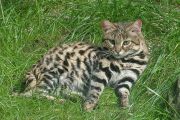
This is not your Grandmother’s cat. Despite its seemingly domesticated look, this cute feline is a fierce hunter. Black-footed cats are the smallest wild felines in Africa coming in at only 14-20 inches long, 8 inches in height and weighing only 2-6 pounds. They are also considered the deadliest feline on Earth. Say what??? Turns out this Napoleonic cat is known for killing more prey in one night (10-14 rodents […]

Continue Reading →

What your pets really like to eat

Although dogs and cats are both carnivores, they have surprisingly different appetites for food. In a study published last month, researchers at Oregon State University examined what our beloved pets really like to eat. Their results, published last month in the Journal of Experimental Biology, were rather surprising: dogs showed preference towards foods high in fats (41% fat, 36% carbohydrates) whereas cats preferred foods high in carbohydrates (43% carbohydrates, 30% proteins). […]

Continue Reading →