Intelligence and Neuroscience

Best Friend or Stress Test? What Pets Do to Our Bodies

According to the National Institutes of Health (NIH), 68% of households in the United States have a pet. Pets are thought to help people by decreasing stress and improving cardiovascular health. The NIH and Mar’s Corporation WALTHAM Centre for Pet Nutrition have teamed up to support research examining such questions, but the results have been mixed. According to Dr. Layla Esposito, who leads the NIH Human-Animal Interaction Research Program, people […]

Continue Reading →

To eat or not to eat, that is the question

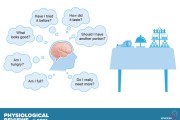
Ever wonder how your body knows when, what and how much to eat, what to crave, or when to stop? Have you ever found yourself indulging in a little extra during the holidays, even though you’re not actually hungry? It turns out, the science behind our eating habits is far more complicated than we realize— and it’s not just about willpower or self-control. A fascinating comprehensive review published by Watts […]

Continue Reading →

2024 “Ig Nobel” prize-winning research

The results are in (drumroll please). Here are some highlights from the 34th First Annual “Ig Nobel” Prize ceremony held on September 12th at the Massachusetts Institute of Technology. The Ig Nobel prize is designed to recognize “achievements that first make people laugh and then make them think”. Physiology Following the Covid-19 pandemic, an international team of researchers published a study in 2021 eloquently titled, “Mammalian enteral ventilation ameliorates respiratory […]

Continue Reading →

Physiology on the Road: Mophys 2024!

The Missouri Physiological Society (mophys) is holding their annual chapter meeting tomorrow at the University of Missouri, Kansas City (UMKC) campus! Here are just some of the highlights showcasing ways in which physiologists in Missouri are advancing science and medicine: Felix Yang (Graduate student at the University of Missouri, Kansas City; Mentor: Dr. Xiang-Ping Chu) will present research on certain ion channels in the brain that are associated with detecting […]

Continue Reading →

Stress is contagious, even for dogs

Stress can make people pretty stinky. Humans have two main kinds of sweat glands. The eccrine glands produce sweat that we associate with exercise or warm weather – thin, watery and mostly odorless. We can thank apocrine glands for responding to stress by producing a thick fluid containing fats and proteins that skin bacteria love to digest. The result: stinky compounds somewhat reminiscent of vinegar or leeks. While humans may […]

Continue Reading →

Flexible hypoxia tolerance in frogs

In a new study published in The Journal of Neuroscience and presented at the American Physiology Summit earlier this month, graduate student Nikolaus Bueschke, postdoctoral fellow Dr. Lara Amaral-Silva and Dr. Joseph Santin (University of Missouri, Columbia) together with researchers Min Hu and Alvaro Alvarez (University of North Carolina at Greensboro), explored how bullfrogs (Lithobates catesbeianus) emerging from hibernation tolerate hypoxia while they kickstart physiological functions in ice-covered ponds. This […]

Continue Reading →

It’s all about the butt microbiome

While the gut microbiome has been gaining a lot of attention for its potential role in health and disease, it appears that the butt microbiome is important in feline communication. How many times have you seen cats sniffing each other? Brave researchers at the University of California at Davis explored this hidden side of cat communication and published their findings in Scientific Reports. The researchers identified both the bacterial species […]

Continue Reading →

Researchers discover starfish are even more strange than previously thought

If you asked a starfish (aka: sea star) to pick “heads or tails”, and they could understand what you were talking about, they would pick heads every time. In fact, researchers recently discovered that starfish are simply heads without a body: It gets better…starfish do not even have a brain or blood, and they eject their stomach out of their mouth to eat. Terrible table manners. Aside from these extreme […]

Continue Reading →

The physiology of ‘frogsicles’ and the quest for life after death

Cope’s gray treefrogs, Dryophytes chrysoscelis, are remarkable animals that can actually survive being frozen…multiple times each year. In fact, these animals live in an environment in which temperatures commonly dip below freezing. When temperatures drop, up to 65% of their body water literally freezes. In anticipation of freezing temperatures, they begin to accumulate cryoprotectant chemicals during the fall to help protect their organs. Until now, the effects of repeated cycles […]

Continue Reading →