Intelligence and Neuroscience

#5: Competition horses calmed by lavender

In looking back over the history of the blog, I thought it would be fun to take another glimpse at the top 5 most popular posts in 2017 thus far… While lavender aromatherapy has been documented to reduce stress in humans, little is known about its potential for reducing stress in veterinary medicine. Horses can develop elevated heart rates and stress hormone levels when they are confined to horse trailers […]
Continue Reading →

Pigeons outperform humans when it comes to multitasking

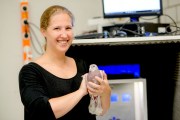
Sara Letzner had humans compete against pigeons in a behavioural experiment. Photo from: Ruhr-Universitat at Bochum A new study conducted by Drs. Sara Letzner and Onur Gunturkun (Ruhr-Universitat at Bochum) as well as Dr. Christian Beste (Technische Univeritat at Dresden) shows that pigeons are better than humans when it comes to multitasking. Their findings were published in Current Biology. The findings from the study show that the mammalian cerebral cortex, with […]

Continue Reading →

Kea “laughter” is contagious too

Most of us have heard the phrase: Laughter is contagious. When we hear other people laughing, we often smile even if we have no idea why they are laughing. Dr. Sophie Scott from the University College of London and her colleagues played both positive sounds (like laughter) and negative sounds (like retching or screaming) to subjects and found the sounds activated the premotor cortical region of the brain. This area of the […]

Continue Reading →

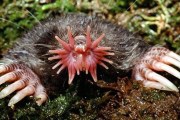
Meet the star (nosed) of the show

Dr. Kenneth Catania from Vanderbilt University presented his work with star-nosed moles at the Experimental Biology meeting last month in Chicago. These animals are really cool. Here are some facts from Dr. Catania about these crazy-looking creatures you may not know: If participating in a bug-eating contest, they would win hands down every time because they are the fastest-eating mammal known. In fact, they can identify and consume a bug in a record […]

Continue Reading →

Zebra finches reward themselves for singing well

Dopamine is an important hormone released from neurons involved in reward pathways. Researchers at Cornell University wanted to know if dopamine signaling was involved in how birds learn songs. Their findings, recently published in Science, present evidence that neurons in the brain of zebra finches do in fact decrease dopamine signals when the birds hear an error in their song in comparison to when they sing ‘correctly’. The researchers also found […]

Continue Reading →

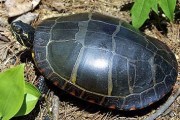
Improved cognition in male turtles exposed to BPA during development

Bisphenol A (BPA) has earned a bad reputation as a potential endocrine disrupting chemical in several studies of developing animals. Some studies even report correlations of BPA levels with certain diseases in humans. Thus it is not surprising there are a plethora of BPA-free food containers, especially for baby food and bottles, as our most common route of exposure is through our diet. It gets there from the epoxy resin lining of some canned foods as […]

Continue Reading →

Fin whales have coiled nerves

Fin whales have big mouths, really big mouths. When your meals consist of tiny krill, it is understandable why you would evolve the ability to stretch your mouth super-wide. With each meal comes a lot of water, which expands a pouch in the bottom of their mouths. As the pouch expands, all of the tissues in the pouch expand as well including blood vessels and nerves.  Stretchy nerves caught the interest of of Dr. […]

Continue Reading →

Is there an evolutionary advantage to being ‘stupid’?

As I was looking through the scientific literature the other day, I came across an article published in 1973, “The Evolutionary Advantages of Being Stupid.” With a title like that, how could I not read it? In this article Dr. Eugene D. Robin discussed how larger and more complex brains are associated with greater intelligence, which by evolutionary standards was thought to be related to “superiority.” He described how this line of thinking […]

Continue Reading →

Ant ‘love’ hormone may help prevent preterm labor in humans

Happy Valentine’s Day! Inotocin is the insect form of the so-called “love” hormone oxytocin. Oxytocin, as you may know, is responsible for inducing labor in pregnant women. A recent study published in Scientific Reports describes the work of a team of researchers that created a synthetic version of inotocin which could bind to both oxytocin and vasopressin receptors in human tissues. Vasopressin is important for preventing water loss in the kidneys, which is how it gets […]

Continue Reading →