Reproduction and Development

Will Santa have to find replacements for his reindeer?

New research presented at the British Ecological Society, Liverpool shows that reindeer are shrinking. These findings come from a survey conducted between 1994-2010 in Svalbard, a Norwegian island, which found the animals have lost about 12% of their body mass over this timeframe. The research team thinks the shrinking reindeer phenomenon might be caused by global warming as females have increased access to grasslands and give birth to more calves annually than in […]

Continue Reading →

Effects of environmental temperature on fruit flies

A changing climate has the potential to greatly impact ectotherms, which depend on the environment to regulate their own body temperatures. In a new study published in the American Journal of Physiology- Regulatory, Integrative and Comparative Physiology, researchers were curious how exposure to varying temperatures would affect developing ectotherms. They answered this question using Drosophila melanogaster, commonly known as fruit flies. They exposed freshly laid eggs to ten different temperatures ranging from 12 […]

Continue Reading →

The Integrative Biology of Exercise VII – Day 3

Highlights from Day 3!   The costs of being a father? Jacob Andrew et al. from the University of California – Riverside presented a poster examining the long-term effects of fatherhood in California mice (Peromyscus californicus). California mice are monogamous and biparental, like humans. This means that both parents participate in taking care of offspring. In prior research they found that first-time fathers did not experience many changes in their physiology, […]

Continue Reading →

The Integrative Biology of Exercise VII – Day 1

The opening session was great! Eric Hoffman (Children’s National Medical Center) presented work on chronic inflammatory diseases in children. He mentioned that while diets high in fats and carbohydrates (i.e. Western diets), obesity and sedentary lifestyles are associated with inflammation and related diseases (ex: asthma, type 2 diabetes), another contributor could be hormones. Kids who stay indoors more often have reduced exposure to sunlight and exercise less. This may alter the normal biological clock of […]

Continue Reading →

Polygamous deer mice have faster sperm

Deer mice are known for being quite promiscuous. In fact, it is not uncommon to find a litter of deer mice with multiple fathers. Dr. Hopi Hoekstra and colleagues at Harvard University’s Department of Organismic and Evolutionary Biology discovered that the tail of deer mice sperm have longer midsections than found in monogamous mice. What this means is that their sperm can swim better and faster, thereby reaching an egg sooner than sperm from other prospective fathers. […]

Continue Reading →

How to grow a bigger heart…

…in alligators at least. Researchers from the University of Manchester, University of North Texas – Denton, and the Rockefeller Wildlife Refuge – Grand Chenier, Louisiana teamed up to explore the effects of exposure to low oxygen on embryonic American alligators (Alligator mississippiensis). Alligator eggs are often laid in nests where oxygen concentrations can reportedly vary between 11-20% (21% is normal atmospheric levels). This is really important as issues related to embryonic development could continue to affect animals throughout their adult lives […]

Continue Reading →

The cost of male pheromones

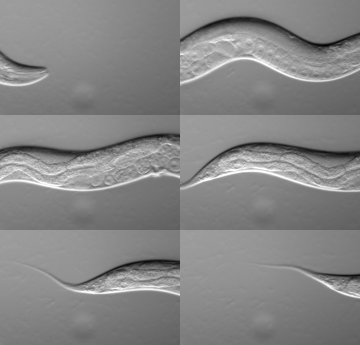
A new study conducted by researchers at Northwestern University examined the costs of reproduction in roundworms, otherwise known as C. elegans. They discovered that male roundworms can send two kinds of pheromones that prime females for reproduction. One type of pheromone they studied sparks the onset of puberty in young female worms while the other prolongs fertility in aging females.  The problem is that these changes come at a cost as it shortens the lifespan of […]

Continue Reading →

Rodent Birth Control

News out of Flagstaff, Arizona reports that a biotechnology company in the area, SenesTech, has developed a birth control for rats that was recently cleared by the Environmental Protection Agency. The new drug comes in the form of a sweetened liquid bait that has been shown to reduce rodent populations by as much as 40%. It works in female rats by inducing loss of eggs whereas in male rats it disrupts development of sperm. The drug is […]

Continue Reading →

Pigeons in the lead mine?

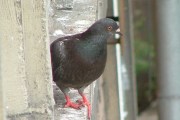
With reported lead poisonings in cities such as Flint Michigan, methods to detect risk of exposure are desperately needed. Since pigeons live in close proximity to humans, could pigeons be the ‘canary in the lead mine’? Researchers at Columbia University in New York City measured the concentrations of lead in the blood of 825 ill or injured feral pigeons to determine whether the animals could serve as bioindicators of levels in the environment. Their results were published […]

Continue Reading →