#3: Zebra Finches Reward Themselves for singing well

The #3 post so far this year explored how zebra finches reward themselves for singing well:   Dopamine is an important hormone released from neurons involved in reward pathways. Researchers at Cornell University wanted to know if dopamine signaling was involved in how birds learn songs. Their findings, recently published in Science, present evidence that neurons in the brain of zebra finches do in fact decrease dopamine signals when the birds hear an […]

Continue Reading →

#4: Komodo Dragons have antibacterial blood

Komodo Dragon

Here is the 4th most popular post so far this year: Researchers studying komodo dragons (Varanus komodoensis) at George Mason University discovered 48 previously unknown peptides in their blood that might have antimicrobial properties. Their findings were published in the Journal of Proteome Research. For the largest lizard, these peptides may help prevent the animals from getting infections from their own saliva, which is host to at least 57 species of bacteria. With this number […]

Continue Reading →

#5: Competition horses calmed by lavender

In looking back over the history of the blog, I thought it would be fun to take another glimpse at the top 5 most popular posts in 2017 thus far… While lavender aromatherapy has been documented to reduce stress in humans, little is known about its potential for reducing stress in veterinary medicine. Horses can develop elevated heart rates and stress hormone levels when they are confined to horse trailers […]

Continue Reading →

Back by popular demand: the Venezuelan poodle moth

It is hard to believe that I have been sharing my passion for comparative physiology and its application to human and animal health with you for over 7 years now! In reminiscing over the last 7 years, I thought it would be fun to look back at the most popular posts. So, here goes… The most popular blog post since 2010 featured the adorable Venezuelan poodle moth… ____ Posted August […]

Continue Reading →

New species of giant rat discovered in Solomon Islands

A new species of giant tree rats (Uromys vika) has been confirmed in the Solomon Islands! These rats can reach over 2 pounds and an impressive 1.5 feet in length. They can even break through coconuts with their teeth. I would not want to cross paths with one of these critters. Sources: Video: YouTube TH Lavery, H Judge. A new species of giant rat (Muridae, Uromys) from Vangunu, Solomon Islands. […]

Continue Reading →

Pigeons outperform humans when it comes to multitasking

Sara Letzner had humans compete against pigeons in a behavioural experiment. Photo from: Ruhr-Universitat at Bochum A new study conducted by Drs. Sara Letzner and Onur Gunturkun (Ruhr-Universitat at Bochum) as well as Dr. Christian Beste (Technische Univeritat at Dresden) shows that pigeons are better than humans when it comes to multitasking. Their findings were published in Current Biology. The findings from the study show that the mammalian cerebral cortex, with […]

Continue Reading →

Fasting as a survival strategy in animals

Although female northern elephant seals only typically deliver one pup, females will sometimes nurse offspring from other mothers as in this photo by Brocken Inaglory via Wikimedia commons. A situation like this would result in less milk available to each nursing pup. I just read an interesting paper published in Physiology. Animals periodically undergo periods of food deprivation such as during hibernation, mating, molting and migration. During these period of […]

Continue Reading →

People with diabetes have less sRAGE

When blood sugar concentrations are elevated, humans run the risk of glucose binding to proteins in the blood and causing the irreversible formation of advanced glycation end products (AGE). Once formed, AGEs can bind to their receptor (RAGE) and stimulate inflammation and oxidative stress. This pathological signaling can be stopped by pieces of the RAGE protein that break off and form a soluble version called sRAGE. These soluble versions of […]

Continue Reading →

Do Mexican cavefish hold the secret to treating diabetes?

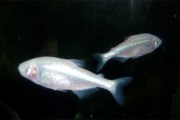
Mexican tetra (Astyanax mexicanus) are a fascinating example of divergent evolution. Over time, some of these freshwater river fish washed into caves where they continue to live. With perpetual darkness, these cavefish have lost their ability to see along with their skin pigmentation. Oxygen and food are also hard to come by in the caves. In fact, the cave dwelling fish may go for months without eating as they wait […]

Continue Reading →

Viral defenses are encoded in their genes, but not ours

Through the course of evolution vertebrates have apparently lost their gene-encoded viral defense mechanisms. These ancient defenses allow plants and insects to silence the expression of certain genes by using what is known as RNA interference. This natural defense system can be manipulated to create genetically modified crops that resist certain infections. However, a new study by researchers from the University of Leuven in Belgium examined over 40 organisms in […]

Continue Reading →