Tag Archive for ‘Aging’

Physiologists in California meet today to discuss the latest research

The California Society of Physiologists is hosting their annual meeting today at the University of California Davis campus! Adapting to high altitude The keynote address will be given this evening by Dr. Tatum Simonson (Associate Professor, University of California San Diego) who will speak about, “Variation in human responses to low oxygen: Insights from Mount Everest to Machu Picchu.” Together with Dr. Francisco Villafuerte (Universidad Peruana Cayetano Heredia, Lima, Peru) […]

Continue Reading →

Researchers discover a biological signature that can be used to predict the maximum lifespan of mammals

With the multitude of anti-aging products on the market today, it may be hard to believe that humans are one of the longest-living mammals. Why organisms age and how to slow down this process, or at least ensure that organisms stay healthy as they age, has been on the minds of many researchers over the years. Now, an international team of researchers called the Mammalian Methylation Consortium, led by Dr. […]

Continue Reading →

Physiology on the Road: What’s happening in the Midlands

The Midlands Society of Physiological Sciences held their annual conference on October 21st at the University of Nebraska Medical Center. The Keynote Lecture was given by Dr. Manolis Kellis, Professor at Massachusetts Institute of Technology. He spoke about the use of artificial intelligence approaches to examine how fly and human genes are regulated. Other highlights: Anuj Singh (University of Nebraska Medical Center): Opioid use is a major healthcare concern and […]

Continue Reading →

Aging and Immortality

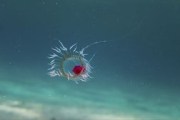
Have you ever heard of the ‘immortal’ jellyfish, Turritopsis dohrnii? These tiny creatures (about 4.5 mm) are aptly named for their ability to essentially live forever. According to the Natural History Museum, when these jellyfish are damaged, they can actually revert to a prior life cycle as a polyp and become an adult jellyfish (aka, medusa) all over again. This process is called transdifferentiation. Check out this video from the […]

Continue Reading →

Hibernation slows down aging

I don’t know about you, but when I see an article claiming to be able to explain “The Biology of Beauty Sleep”, I simply have to read it. Clicking on the title brought me to a news article from the journal Nature Ecology & Evolution that featured a recent study examining the idea of how sleep impacts aging. The burning question of course is whether or not there is any […]

Continue Reading →

Anti-aging Vaccine

Scientists have created a vaccine that slows aging, at least in mice. Their findings were recently published in Nature Aging. As we age, the ability for the body to get rid of damaged cells declines, which can lead to inflammation and a host of diseases like cancer, Alzheimer’s disease, as well as atherosclerosis. The vaccine works by triggering the immune system to create antibodies against a specific protein associated with […]

Continue Reading →

The key to the fountain of youth?

I just read an interesting article on the physiology of long-lived species that was published in Physiology. Some animals seem to have discovered the secret to the fountain of youth. Take the long-lived naked mole rat (Heterocephalus glaber) for example. These animals are able to maintain juvenile traits across their lifespan by growing slowly, having low levels of hormones responsible for development and delaying the onset of sexual maturity. Dwarf […]

Continue Reading →

If only I were a fruit fly…

  Oh, to be a Drosophila. A new study published in Science Advances reports that male Drosophila have an amazing tolerance for sleep deprivation. I wish I could say the same about humans. Like people, sleep duration in flies varies between individuals, with some animals getting only a few minutes of sleep a day. In many other species, chronic sleep deprivation is associated with shorter lifespans. In this new study, researchers […]

Continue Reading →

Longevity of dogs

Dogs are weird when it comes to predicting longevity based on body size. For many species, small body size means higher metabolic rate and shorter lifespan. For dogs, smaller body size = longer lifespan. Dr. Ana Jimenez (Colgate University) presented research at the Comparative Physiology meeting this weekend showing that larger dogs do indeed develop more DNA damage with aging than smaller dogs.

Continue Reading →