Tag Archive for ‘American Journal of Physiology’

The ultimate desalination plant: the eel esophagus
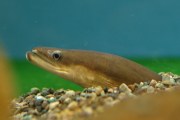
I love fish. The diversity of these aquatic creatures is so vast, I find them fascinating. Take the eel for example: In a study published this month in the American Journal of Physiology – Regulatory, Integrative and Comparative Physiology, researchers wanted to link information they learned from sequencing the RNA of eels with understanding how the animals adapt to saline environments. During acclimation to saltwater, fish have no choice but […]

Continue Reading →

Ammonia tolerance of goldfish

Liver failure or congenital defects can lead to a build-up of ammonia in the brain of mammals resulting in life-threatening swelling, convulsions and comas. For goldfish (Carassius auratus), environmental exposure to ammonia causes reversible swelling of the brain. In a new study published in the American Journal of Physiology – Regulatory, Integrative and Comparative Physiology, researchers wanted to explore how the fish were able to accomplish this. They exposed goldfish to high […]

Continue Reading →

Carbon monoxide lowers breathing rate in fish too

  We tend to think of carbon monoxide (CO) only in terms of being a poisonous gas. The reason for its toxicity is due to its ability to bind really tightly to our hemoglobin molecules, which prevents oxygen from being able to bind. In mammals, CO also decrease breathing rate. As you can imagine, it is a pretty terrible gas to breath in when you are a species dependent on hemoglobin for delivery […]

Continue Reading →

Effects of environmental temperature on fruit flies

A changing climate has the potential to greatly impact ectotherms, which depend on the environment to regulate their own body temperatures. In a new study published in the American Journal of Physiology- Regulatory, Integrative and Comparative Physiology, researchers were curious how exposure to varying temperatures would affect developing ectotherms. They answered this question using Drosophila melanogaster, commonly known as fruit flies. They exposed freshly laid eggs to ten different temperatures ranging from 12 […]

Continue Reading →

Eating saturated fat is bad for the brain

I know this is not a comparative physiology topic, but this article caught my attention as I know I just ate a rather high fat meal last week for Thanksgiving and I plan to do the same throughout the holiday season. Insulin does more than just lowering blood sugar by increasing its uptake into tissues. It can also increase blood flow to the hippocampal region of the brain to help […]

Continue Reading →

How to grow a bigger heart…

…in alligators at least. Researchers from the University of Manchester, University of North Texas – Denton, and the Rockefeller Wildlife Refuge – Grand Chenier, Louisiana teamed up to explore the effects of exposure to low oxygen on embryonic American alligators (Alligator mississippiensis). Alligator eggs are often laid in nests where oxygen concentrations can reportedly vary between 11-20% (21% is normal atmospheric levels). This is really important as issues related to embryonic development could continue to affect animals throughout their adult lives […]

Continue Reading →

Using yeast to prevent outbreaks of C. difficile infections

As the name implies, Clostrodium difficile (C. diff.) bacterial infections are difficult to treat because of antibiotic resistance. The problem with C. diff is that these bacteria release toxins that cause inflammation and diarrhea. In fact, C. diff is the number one cause of infectious diarrhea in hospitals as well as long-term care facilities. Studies have shown that probiotic yeast may help prevent C. diff infections. While these studies are exciting, much of this prior […]

Continue Reading →

What do ‘peeps’ and ‘yo-yos’ have to do with diving?

Until now I had assumed that a “peep” was that squishy sugar-covered marshmallow treat that we enjoyed as kids and a “yo-yo” was a toy on a string. As it turns out, peep and yo-yo are also term used to described types of diving patterns. A square dive is one in which there are no excursions to the surface, known as a “peep”, except at the end of the dive, of course. This is in contrast […]

Continue Reading →

Drug increases blood flow to the brain – Implications for stroke?

Researchers from Friedrich Schiller University (Jena, Germany) and Heinrich-Heine-University (Düsseldorf, Germany) teamed up to test whether a heart failure medication that is currently being tested might also improve blood flow in the brain. Their findings were published last month in the American Journal of Physiology, Heart and Circulatory Physiology. According to the study authors, the small blood vessels in the brains of sheep closely resemble those in the human brain. Using imaging techniques, they […]

Continue Reading →

Ceramides cause rainbow trout to eat less

Ceramides are a type of sphingolipid composed of both fatty acids and sphingosine that are important in maintaining the structure of cell membranes and cell signaling pathways. Given their structure, it is perhaps not surprising that levels of ceramide are increased in the brains of mammals after eating a diet high in fats as well as in individuals who are obese.  In mammals, ceramides are also known to help regulate food intake. Since rainbow trout (Oncorhynchus […]

Continue Reading →