Tag Archive for ‘American Physiological Society’

Keeping it cool when it gets hot

Human thermoregulation in a warm environment Thermoregulation is the ability for an organism to control body temperature within a specified physiological range even when environmental temperatures vary. A recent article published in Physiological Reviews explored thermoregulation in humans and how various factors such as age, body shape, adaptation, and biological sex impact a person’s ability to maintain body temperature. They also explored how various diseases such as multiple sclerosis, diabetes, […]
Continue Reading →

The biological importance of carbonic anhydrase enzyme

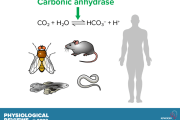
Carbonic anhydrase is an important enzyme that regulates the acid-base balance of an organism. In fact, carbonic anhydrase (CA) is so important to homeostasis, it is found in all living organisms studied to date – from microorganisms (like bacteria) to mammals. As the name implies, this enzyme is responsible for catalyzing the hydration of carbon dioxide, which is a reversible process (see figure above). In other words, it speeds up […]

Continue Reading →

The complex interplay between pathogens and our immune system

I read an interesting review article explaining how cells evolved the ability to kill off pathogens and, in turn, how pathogens evade death. It is kind of like a perpetual game of ‘cat and mouse’ in which the interaction between animals and pathogens drives the evolution of host defenses against infections while at the same time driving the evolution of pathogen strategies to avoid detection. According to the review article, […]

Continue Reading →

On the road to developing artificial odorant sensors for noses

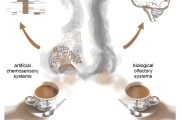
Almost all animals have some ability to detect smells their environment and there are countless odorant molecules and combinations of molecules in the environment that our systems are challenged with identifying. The sense of smell is important in many biological processes such as finding food, mates, and detecting threats. Scents may also conjure up memories and affect our emotions. About 5% of the population either has no (anosmia) or very […]

Continue Reading →

Hypoxia gives alligators a big heart: Q&A with Dr. Dane Crossley, University of North Texas

We recently interviewed Dr. Dane Crossley, Professor of Physiology in the College of Biological Sciences at the University of North Texas about the research his laboratory presented at the recent APS Intersociety meeting, Comparative Physiology: From Organisms to Omics in an Uncertain World. The title of his presentation was, “A large heart: How does developmental hypoxia affect individual cardiomyocyte performance in the American alligator, Alligator mississippiensis.” Thank you for taking time […]

Continue Reading →

Migratory birds create their own water to prevent dehydration

Migratory birds are amazingly adapted for long-distance flights and can switch the fuels they rely on to support their endurance activities. Unlike humans that burn mainly carbohydrates for endurance exercise, avian flight is fueled mainly by fats and some proteins. In a recent study published in the American Journal of Physiology – Regulatory, Integrative and Comparative Physiology researchers examined how white-throated sparrows (Zonotrichia albicollis) prepared for migration. By altering the […]

Continue Reading →

One reason why fish and mammals lose their appetite during stress

I don’t know about you, but sometimes I lose my appetite when I am really stressed. The endocrine system is responsible for controlling our stress responses and involves three main endocrine glands – the hypothalamus, pituitary, and adrenal gland. Hence, the stress pathway is often referred to as the “HPA axis”. When we are stressed, the hypothalamus releases a hormone called corticotropin releasing factor (CRF), which triggers the release of […]

Continue Reading →

Arizona physiologists gathered recently for their annual meeting

The Arizona Physiological Society, a chapter of the American Physiological Society, hosted their 15th annual scientific meeting this past weekend! Here are some highlights… The Keynote Address was presented by Dr. Harold D Schultz, Professor in the Department of Cellular and Integrative Physiology at the University of Nebraska. His talk focused on the physiology of heart failure and how the nervous system regulates blood pressure. This year’s Arizona Distinguished Physiologist […]

Continue Reading →

Physiology in the Midlands

Fall is an exciting time as many of the chapters of the American Physiological Society host regional conferences. The Midlands Society of Physiological Sciences hosted their annual meeting earlier this month. Here are some highlights from their meeting. Symposia highlights: The meeting was kicked off by a Keynote Lecture presented by Dr. David A Kass from Johns Hopkins University who presented his research on obesity and heart failure. Here is […]

Continue Reading →

Ever wonder why humans are attracted to the smell of fatty foods?

There has been a lot of speculation that fast food establishments and bakeries intentionally waft smells that attract customers. I’ll admit I find the smell of cheeseburgers quite tempting. Researchers are seeking to understand what draws humans to the smell of fatty foods in an effort to target those sensations as a way to combat obesity and obesity-related diseases. The approach seems reasonable. If I couldn’t smell a juicy grilled […]

Continue Reading →