Tag Archive for ‘animals’

Little-known functions of the spleen: Q&A with Dr. Frank van Breukelen and Gilbecca Smith, University of Las Vegas

We are excited to feature Dr. Frank van Breukelen and his graduate student, Gilbecca Rae Smith, from the University of Las Vegas, Nevada. They presented exciting new research at the 2024 American Physiology Summit examining some little-known functions of the spleen.  Q: We often associate the spleen with its ability to filter blood and make white blood cells to fight infections. We don’t often consider the importance of its ability to […]
Continue Reading →

Finches and flies with a taste for blood

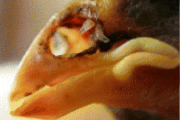
Predators with a taste for blood abound on the remote Galapagos Islands… Meet the Vampire Ground Finch 19 different species of finches can be found on the Galapagos Islands. Observations of their various beak shapes, specialized for different diets and purposes, helped Charles Darwin develop the theory of evolution. One species I do not recall learning about in Biology class, however, is the vampire ground finch (Geospiza septentrionalis), which can […]

Continue Reading →

On the path to preventing white-nose syndrome

This Halloween, we are checking in with our “bat-ty” friends. North American populations of bats have been severely decreased by a deadly fungus, known as Pseudogymnoascus destructans, which results in a disease called ‘white-nose syndrome’. There are currently 13 species of hibernating bats known to have been impacted by the disease (Center for Biological Diversity). Having toured a cave recently, our guide ensured that everyone decontaminated their shoes before entering […]

Continue Reading →

From Hibernation to Healing: Unlocking Genomic Secrets for Human Therapies

I was just cleaning my desk and came across an issue of The Physiologist Magazine from March that had ended up under a pile of papers., some of which were admittedly much older. Clearly, I should clean my desk more often. Anyway, in perusing the issue I came across a gem… The March issue featured Dr. Joanna Kelley, associate professor at the University of California Santa Cruz. Dr. Cruz was […]

Continue Reading →

Even shy animals find overcrowded conditions more stressful than bold animals

In a newly published study in the American Journal of Physiology – Regulatory, Integrative and Comparative Physiology, researchers examined the relationship between behavioral and physiological responses to stress in a model organism, zebrafish. Following a series of behavioral tests, the fish were classified as either shy or bold and were then exposed to either overcrowded (32 fish per liter) or control conditions (1.6 fish per liter). After 10 days, the […]

Continue Reading →

Speaking of hypoxia tolerance…

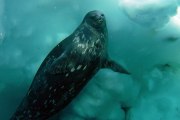
Amy Klink, a graduate student working in the laboratory of Dr. Allyson Hindle at the University of Nevada, Las Vegas, has been studying hypoxia tolerance of Weddell seals. These remarkable animals can hold their breath for 90 minutes and dive as deep as 900 meters! During such long and deep dives, these seals slow down their heart rate and constrict blood vessels in visceral as well as peripheral organs. As […]

Continue Reading →

Guest Blog: Fasting as a strategy to build athletic diving capacity

Kaitlin Allen is a graduate student at the University of California, Berkeley where she studies the physiology of elephant seals in the laboratory of Dr. José Pablo Vázquez-Medina. She received the 2024 Dr. Dolittle Travel Award from the Comparative and Evolutionary Physiology section of the American Physiological Society to attend the 2024 American Physiology Summit in Long Beach, CA (April 4-7). Kaitlin prepared this award-winning guest blog entry to describe […]

Continue Reading →

Dogs and humans have a lot in common when it comes to brain tumors

The most common type of naturally occurring brain tumor in humans and their feline as well as canine companions are meningiomas. The most aggressive form in humans is Meningioma C (MenG C). Unfortunately, there is currently no treatment available for MenG C and tumors often return even after radiation and surgery. Researchers were curious whether canine meningiomas were similar to human MenG C. In a newly published study, appearing in […]

Continue Reading →

Males are not always bigger…unless they are northern elephant seals

A new study published in Nature Communications challenges the popular notion that males are usually bigger than females – at least in mammals. Their findings are consistent with Dr. Katherine Ralls who also challenged this idea in the late 1970s. In this new study, researchers looked at data collected for 429 species of animals. Rather than using averaged values from the literature, they turned to large-published datasets that included values […]

Continue Reading →

Happy Valentine’s Day to you and all significant otters

Happy Valentine’s Day! While humans often exchange cards, candy, flowers and other goodies this day, I thought it would be fun to check out some of the ways animals and zoos celebrated the day. Animals at the Cheyenne Mountain Zoo enjoyed special treats in celebration of Valentine’s Day: Animals at the Farm Sanctuary shared kisses: The Oregon Zoo wanted to wish a Happy Valentine’s Day to all the ‘significant otters’ […]

Continue Reading →