Tag Archive for ‘biology’

Ever wonder how polar bears stay warm?
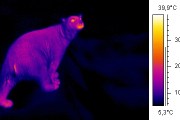
On this “National Polar Bear Day”, we explore how these formidable animals keep warm. Arctic polar bears, Ursus maritimus, live in very cold environments where temperatures are often colder than a home freezer and can dip as low as -40 degrees C. They thrive on ice and routinely hunt and swim in ice-cold water. Unlike humans, and many other mammals for that matter, polar bears have several characteristics that help […]

Continue Reading →

The gatekeepers of life: Exploring the complex role of GPCRs

Cell membranes are incredibly complex environments that play crucial roles in interacting with other cells, sensing specific molecules in the body, controlling what crosses the membrane, and other vital functions. The composition of these membranes varies between organs in an animal, between similar organs in different species, and even between individuals of the same species. Think of cell membranes as gatekeepers, responsible for detecting various chemical signals (such as ions […]

Continue Reading →

Little-known functions of the spleen: Q&A with Dr. Frank van Breukelen and Gilbecca Smith, University of Las Vegas

We are excited to feature Dr. Frank van Breukelen and his graduate student, Gilbecca Rae Smith, from the University of Las Vegas, Nevada. They presented exciting new research at the 2024 American Physiology Summit examining some little-known functions of the spleen.  Q: We often associate the spleen with its ability to filter blood and make white blood cells to fight infections. We don’t often consider the importance of its ability to […]

Continue Reading →

On the path to preventing white-nose syndrome

This Halloween, we are checking in with our “bat-ty” friends. North American populations of bats have been severely decreased by a deadly fungus, known as Pseudogymnoascus destructans, which results in a disease called ‘white-nose syndrome’. There are currently 13 species of hibernating bats known to have been impacted by the disease (Center for Biological Diversity). Having toured a cave recently, our guide ensured that everyone decontaminated their shoes before entering […]

Continue Reading →

2024 “Ig Nobel” prize-winning research

The results are in (drumroll please). Here are some highlights from the 34th First Annual “Ig Nobel” Prize ceremony held on September 12th at the Massachusetts Institute of Technology. The Ig Nobel prize is designed to recognize “achievements that first make people laugh and then make them think”. Physiology Following the Covid-19 pandemic, an international team of researchers published a study in 2021 eloquently titled, “Mammalian enteral ventilation ameliorates respiratory […]

Continue Reading →

Researchers discover how hibernating ground squirrels protect their cells from self-destruction

Programmed cell death, otherwise known as apoptosis, is an important physiological process that allows the body to get rid of cells that are no longer needed or are damaged. These functions help foster normal growth and development as well as prevent cancer. Apoptosis is a highly regulated process that involves various caspase enzymes, with caspase-3 being among the “executioner” enzymes responsible for the final stages of apoptosis and ultimate cellular […]

Continue Reading →

Males are not always bigger…unless they are northern elephant seals

A new study published in Nature Communications challenges the popular notion that males are usually bigger than females – at least in mammals. Their findings are consistent with Dr. Katherine Ralls who also challenged this idea in the late 1970s. In this new study, researchers looked at data collected for 429 species of animals. Rather than using averaged values from the literature, they turned to large-published datasets that included values […]

Continue Reading →

Exploring the tree of life

Dr. Yan Wong (University of Oxford) and Dr. James Rosindell (Imperial College of London) have created the most comprehensive tree of life to date. Their tree, a culmination of over 10 years of research (image above, from OneZoom.org), is an exquisite interactive tool that can be used to decipher genetic connections between more than 2 million species. Each tiny leaf represents a single species and clicking on the leaf will […]

Continue Reading →

Seagulls pick up on human cues to find food

Have you ever experienced seagulls seemingly begging for food from you? It is not your imagination. A new study finds that seagulls really do prefer foods that have been handled by humans. The study conducted Madeleine Goumas (University of Exeter, UK) examined whether seagulls picked up on cues from humans or were simply looking for food. While standing about 8 meters away from herring gulls, the team placed two plastic-wrapped […]

Continue Reading →

Comparative Physiologist: Berry Pinshow, PhD

I came across a really interesting interview of Dr. Barry Pinshow, a comparative physiologist and member of the American Physiological Society. In this Living History of Physiology video, Dr. Pinshow talks about growing up in South Africa and his decision to move to Israel as a teen. He also discusses how he became interested in science, his research in desert biology and the influential people in his career. Very inspiring!

Continue Reading →