Tag Archive for ‘birds’

From firefighting foam to feathers: Tracking PFAS in nature

It seems that we are learning more every day about potential exposure to “forever chemicals”, such as PFAS. From proposed laws in California that would ban PFAS in cookware and other items to maps such as the one above showing potential contamination in tap water. These chemicals are drawing so much attention because they do not break down easily and can remain in the environment for decades. In addition, PFAS […]
Continue Reading →

How hummingbirds beat the heat

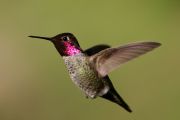
On this National Bird Day, let’s dive into some fascinating research about one of nature’s most amazing species: hummingbirds. Last spring, Dr. Derrick Groom and his team in The Avian Energetics Lab at San Francisco State University, including students Cecilia Doan and Christian Guerzon, presented their research at the 2024 American Physiology Summit. Their study explored how these tiny birds manage water loss in a warm environment (30 degrees C). […]

Continue Reading →

Finches and flies with a taste for blood

Predators with a taste for blood abound on the remote Galapagos Islands… Meet the Vampire Ground Finch 19 different species of finches can be found on the Galapagos Islands. Observations of their various beak shapes, specialized for different diets and purposes, helped Charles Darwin develop the theory of evolution. One species I do not recall learning about in Biology class, however, is the vampire ground finch (Geospiza septentrionalis), which can […]

Continue Reading →

More on the uniqueness of humans when it comes to heart disease…

With Valentine’s Day just around the corner, heart-themed items seem to be everywhere. It is no surprise that I started thinking more and more about how humans are unique from other animals when it comes to heart disease. In my last entry, we talked about a few genetic variants that protect some humans from heart disease as well as the observation that many carnivores do not develop atherosclerosis, even when […]

Continue Reading →

Adapting (or not) to increasing temperatures

Birds are not the only animals experiencing massive declines in populations. Rising temperatures and heat waves, in particular, have been blamed for killing humans and animals. In fact, a new review article published in Physiology mentioned that globally, heat is “a significant natural killer of humans, with the first decade of the 21st Century seeing a 23-fold increase in human casualties from heat waves compared with the 1990s.” If current predictions hold true, […]

Continue Reading →

Comparative Physiologist: Berry Pinshow, PhD

I came across a really interesting interview of Dr. Barry Pinshow, a comparative physiologist and member of the American Physiological Society. In this Living History of Physiology video, Dr. Pinshow talks about growing up in South Africa and his decision to move to Israel as a teen. He also discusses how he became interested in science, his research in desert biology and the influential people in his career. Very inspiring!

Continue Reading →

#3: Zebra Finches Reward Themselves for singing well

The #3 post so far this year explored how zebra finches reward themselves for singing well:   Dopamine is an important hormone released from neurons involved in reward pathways. Researchers at Cornell University wanted to know if dopamine signaling was involved in how birds learn songs. Their findings, recently published in Science, present evidence that neurons in the brain of zebra finches do in fact decrease dopamine signals when the birds hear an […]

Continue Reading →

Avian vascular anatomy revealed

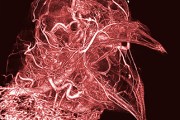
This is such a beautiful award-winning image of the complex vascular networks in a pigeon. The image was captured using  CT scan technology and a novel contrasting agent called BriteVu that allows visualization of even tiny capillaries. This image was captured by Scott Echols who is a member of the Grey Parrot Anatomy Project, whose goals are to create technologies to study animal anatomy. The complex capillary network located in […]

Continue Reading →

Experimental Biology – Day 3

I LOVE THIS MEETING! DAY 3 included several very interesting comparative physiology sessions. Eldon Braun (University of Arizona) spoke about how birds have a unique way to prevent water loss and thereby dehydration. In mammals, the kidneys are responsible for recovering water from the urine. However when birds are well-hydrated, the urine enters the colon and moves backwards up the gastrointestinal tract to facilitate water reabsorption prior to voiding the […]

Continue Reading →