Tag Archive for ‘brain’

Improved cognition in male turtles exposed to BPA during development

Bisphenol A (BPA) has earned a bad reputation as a potential endocrine disrupting chemical in several studies of developing animals. Some studies even report correlations of BPA levels with certain diseases in humans. Thus it is not surprising there are a plethora of BPA-free food containers, especially for baby food and bottles, as our most common route of exposure is through our diet. It gets there from the epoxy resin lining of some canned foods as […]

Continue Reading →

Ammonia tolerance of goldfish

Liver failure or congenital defects can lead to a build-up of ammonia in the brain of mammals resulting in life-threatening swelling, convulsions and comas. For goldfish (Carassius auratus), environmental exposure to ammonia causes reversible swelling of the brain. In a new study published in the American Journal of Physiology – Regulatory, Integrative and Comparative Physiology, researchers wanted to explore how the fish were able to accomplish this. They exposed goldfish to high […]

Continue Reading →

Why monkeys don’t speak English

… or any other human language for that matter. Even though both monkeys and humans have the anatomical tools for speech, only humans communicate in this manner. Researchers had assumed, incorrectly, that the anatomy of the vocal tract (lips, tongue, larynx) of monkeys was not capable of producing speech. A new study published in Science Advances shows instead that it is all in our heads. The researchers came to this conclusion after creating x-ray videos […]

Continue Reading →

Eating saturated fat is bad for the brain

I know this is not a comparative physiology topic, but this article caught my attention as I know I just ate a rather high fat meal last week for Thanksgiving and I plan to do the same throughout the holiday season. Insulin does more than just lowering blood sugar by increasing its uptake into tissues. It can also increase blood flow to the hippocampal region of the brain to help […]

Continue Reading →

Physiology 2016

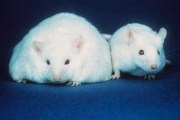
I am very excited to report that the American Physiological Society in partnership with The Physiological Society held a joint meeting from July 29-31 in Dublin, Ireland. The keynote lectures were given by Dr. Jerry Friedman from Rockefeller University and Dr. W Jon Lederer from the University of Maryland.   Dr. Friedman spoke about his research on obesity and how genetic factors might play a role. In fact, his team was […]

Continue Reading →

Study suggests ducklings understand same vs different

Ducklings are rather well-known for their ability to imprint on someone (usually their mother) or something shortly after hatching. Researchers at the University of Oxford were interested in understanding more about learning and memory in ducklings. Specifically, they wanted to know if a duckling simply remembered what they saw or if they were capable of more complex cognition involving determining whether objects had the same or different qualities. After hatching, they placed ducklings […]

Continue Reading →

Big-brained birds

Birds get such a bad rap when it comes to intelligence. Sure they have relatively small brains, but scientists have known they are similar to primates with respect to their cognitive abilities. New research published in the Proceedings of the National Academy of Sciences presents data showing how this apparent dichotomy is possible. They found that the brains of songbirds and parrots pack two times the number of neurons as a primate […]

Continue Reading →

Epilepsy medication reverses symptoms of Alzheimer’s

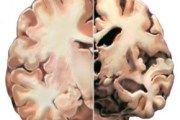
Researchers Sanchez et al. from the Gladstone Institute, University of California San Francisco and Washington University School of Medicine discovered that an FDA-approved anti-convulsant medication used to treat epilepsy (levetiracetam) can also reverse memory loss in addition to reducing other Alzheimer’s related symptoms in a mouse model of the disease. Alzheimer’s is currently the most common form of dementia (memory loss) representing 50-80% of cases. It is a disease that worsens over time. Although […]

Continue Reading →