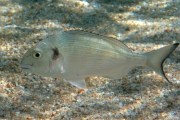
Tag Archive for ‘fish’

Importance of diet to the physiology of farm-raised fish

Image of a fish farm by Vera Kratochvil [Public domain], via Wikimedia Commons Fish farming, i.e. aquaculture, has increased about 6.2% between the years 2000-2012, according to the Food and Agriculture Organization of the United Nations. Fish farms are highly dependent on fish meal as well as fish oil as nutrients for the growing fish. Although rates of farming have increased, the supply of fish meal and oil are predicted […]

Continue Reading →

Passing gas

Many children (and adults) find humor in flatulence. If you count yourself among these individuals, then a new book written by zoologist Dani Rabaiotti and ecologist Nick Caruso, coming out in April 2018, is a must-read. The book examines which animals truly pass gas and is aptly titled, “Does it Fart?” No longer will you be limited to only blaming it on the dog or cat. Although you will not […]

Continue Reading →

Health risks of being social

When I think of rainbow trout, the first image that comes to mind is usually something like this: In the wild, they look more like this: …not as appetizing, but a lot more fascinating.  When salmonid fish like rainbow trout are in environments with limited food or space, they form social hierarchies. In one study of limited food availability, Grobler et al., found that when they placed 4 rainbow trout […]

Continue Reading →

Man catches rare warm-blooded fish

This past weekend a man caught a very rare fish, called an opah (aka moonfish), off the coast of Ocean City, Maryland. What makes this fish so rare is that it is the only known warm-blooded fish. In fact, they are able to keep their whole body about 5 degrees Celsius above the water they swim in. Other fish lose heat generated from muscle movements to the environment as the […]

Continue Reading →

Do Mexican cavefish hold the secret to treating diabetes?

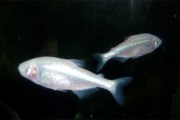
Mexican tetra (Astyanax mexicanus) are a fascinating example of divergent evolution. Over time, some of these freshwater river fish washed into caves where they continue to live. With perpetual darkness, these cavefish have lost their ability to see along with their skin pigmentation. Oxygen and food are also hard to come by in the caves. In fact, the cave dwelling fish may go for months without eating as they wait […]

Continue Reading →

Warm Waters = Smaller Fish

I love fishing. As with every fisherman, I have my fair share of “the one that got away” stories steeped in *mostly* truth. So, you can imagine my interest in reading research that shows fish appear to be shrinking in warming waters. Warm waters carry less oxygen, which makes it difficult for fish to breath…especially larger fish. Metabolism is also higher in fish living in warm waters. Higher metabolism means the […]

Continue Reading →

Sex differences in the evolution of live-bearing fish

Samples of fish species from the Poeciliidae family show the diversity in color, fin size and body shape. Kansas State University researchers studied 112 species of these live-bearing fishes and found that males and females evolve differently. Image courtesy of Kansas State University Dr. Michael Tobler and Dr. Zach Culumber at Kansas State University examined 112 species of live-bearing fish (Poeciliidae) and have made some interesting discoveries about their evolution. Their […]

Continue Reading →

Growing meaty fish

Similar to humans, muscle growth in fish is increased with exercise. Unlike humans, however, teleost fish are able to continue growing in length as well as weight throughout their lives. This type of meat, I mean muscle, growth happens in two ways: 1) muscle cells get bigger and 2) new muscle cells form. Researchers at the University of Barcelona in Spain wanted to know what effect moderate sustained swimming would have on the muscles of young […]

Continue Reading →

Ammonia tolerance of goldfish

Liver failure or congenital defects can lead to a build-up of ammonia in the brain of mammals resulting in life-threatening swelling, convulsions and comas. For goldfish (Carassius auratus), environmental exposure to ammonia causes reversible swelling of the brain. In a new study published in the American Journal of Physiology – Regulatory, Integrative and Comparative Physiology, researchers wanted to explore how the fish were able to accomplish this. They exposed goldfish to high […]

Continue Reading →