Tag Archive for ‘physiology’

Could zinc be involved in forming kidney stones?
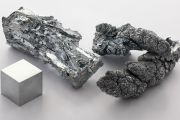
Zinc is a micronutrient that is essential for normal protein production and for various enzymes to function properly in the body. Levels are important to regulate because too much can be toxic to the kidneys whereas too little can lead to problems with immune and metabolic function as well as infertility. In a new study published in American Journal of Physiology – Renal Physiology, researchers were interested in how zinc […]

Continue Reading →

Alligator snorkeling

I read an interesting article in Live Science about a unique way a group of American alligators use to survive periods of freezing water, for a few days at least. As the temperature drops, the animals stick their nose out of the water and are thus able to breathe through the ice. During cold months the alligators also reduce their metabolism, a process called brumation, which is different from hibernation […]

Continue Reading →

Breathing air

Researchers interested in the evolution of air breathing in bony fishes (Osteicthyes) recently published a fascinating review in the Physiologist. The ability to breathe air made life on land as we know it possible. What is interesting though is that the ability to breathe air actually evolved independently possibly 38-67 times in history. Currently, there are over 400 air-breathing fishes belonging to the Sarcopterygii and Actinopterygii classes. To adapt to life on land, […]

Continue Reading →

Lack of sleep stresses out birds too

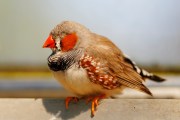
Birds show signs of stress resulting from sleep loss. A new study published in Physiological and Biochemical Zoology shows that zebra finches who are sleep deprived have increased expression of inflammatory genes in their fat tissues, spleen and hippocampus region of the brain along with  increased levels of circulating stress hormones. The hippocampus is the region of the brain associated with long term memory formation. I wonder if sleep deprived birds are […]

Continue Reading →

Porcine adaptation to heat stress

  A new study published in American Journal of Physiology – Regulatory, Integrative and Comparative Physiology explored the effects of modest heat stress (35°C, 95°F) on the physiology of pigs. The found that pigs exposed to heat stress ate less than those exposed to ambient temperatures. I understand. I eat less when it is hot outside too. Since skeletal muscle is such a large metabolically active tissue, things that alter muscle metabolism […]

Continue Reading →

The physiology of bad taste

Ever wonder how humans and other animals evolved the ability to detect foods that can potentially harm us? A recent article published in Physiological Reviews, explains the physiology behind why certain foods taste bad. The act of tasting is very complex and includes receptors in our mouths that can detect specific chemicals in our food and prepare our digestive system to receive the food and, as anyone with a cold knows, […]

Continue Reading →

Compromising fish

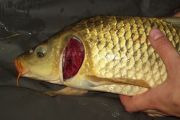
Here’s something to think about. How do fish optimize gas exchange in their gills to efficiently take up oxygen (favoring large, thin, permeable membranes) while at the same time limiting water and ion movement across the surface? If they reduce surface area, then oxygen transfer will be limited, but ions and water transfer will be optimized. What is a fish to do? A new review article published in Physiology discussed how […]

Continue Reading →

How Animals Deal with Stress

  Victor Zhang (Graduate Student working with Dr. Loren Buck at Northern Arizona University) gave an interesting talk on his research to measure stress and activity patterns in free living arctic ground squirrels. They found overall that females were less stressed than males although stress levels and activity varied during lactation. I think some human mothers can agree with those observations. Oliver Wearing (Graduate student working with Dr. Graham Scott […]

Continue Reading →

What’s up with those lung valves?

The Plenary Lecture at this year’s Comparative Physiology meeting was given by Dr. Colleen Farmer at Trinity College in Dublin who spoke about the diversity of vertebrate respiratory systems including aerodynamic valves that are found in birds and various species of reptiles. These aerodynamic valves allow air to flow in one direction during both inspiration and expiration as opposed to bidirectional flow in mammals. Examination of red-eared sliders (shown above) […]

Continue Reading →