Tag Archive for ‘seal’

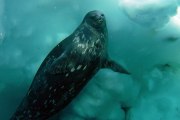
Weddell seals dampen inflammatory response to combat dive induced hypoxemia injury

We are very excited to share this winning guest blog post from Amy Klink, doctoral student at the University of Nevada – Las Vegas. Amy received the Dr. Dolittle travel award to present this research at the 2025 American Physiology Summit in Baltimore. Congratulations Amy! As a kid growing up in Lake County, Illinois, I spent more than half of my summer in some lake or body of water competing […]
Continue Reading →

New study provides more insight into the physiology of elite divers

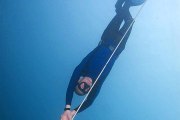
If the Olympics allowed marine mammals to compete, they would dominate free diving competitions in terms of breath holding duration and extreme physiology. Marine mammals also have adaptations that help prevent tissue damage from the lack of oxygen during such dives. For example, Weddell and northern elephant seals store large amounts of oxygen in their blood and muscles, thanks to abundant hemoglobin, which permits them to hold their breath for […]

Continue Reading →

Speaking of hypoxia tolerance…

Amy Klink, a graduate student working in the laboratory of Dr. Allyson Hindle at the University of Nevada, Las Vegas, has been studying hypoxia tolerance of Weddell seals. These remarkable animals can hold their breath for 90 minutes and dive as deep as 900 meters! During such long and deep dives, these seals slow down their heart rate and constrict blood vessels in visceral as well as peripheral organs. As […]

Continue Reading →

You Can Sweat, But the Seals Can’t!

Congratulations to this year’s Dr. Dolittle Travel Award winner, Emily Lam from the University of California, Berkeley! Emily presented her research at the inaugural American Physiology Summit conference this past weekend in Long Beach, California (Lam E, Mouly M, Congdon C, Henderson K, Vazquez-Medina J. Physiological and behavioral responses of northern elephant seals (Mirounga angustirostris) to global change among three northern California rookeries). Here is a guest blog describing her […]

Continue Reading →

Why sharks should be afraid of leopard seals

Leopard seals in New Zealand have a dangerous appetite. Although the animals were known to eat penguins and other seals, researchers only recently discovered that sharks were on the menu as well, which was really surprising. They made this discovery while analyzing fecal samples collected from more than 100 leopard seals. Leopard seals appear to have joined a growing list of animals (orcas, giant octopus) that dine on what we […]

Continue Reading →

Snoring seals can teach us so much about sleep apnea

When I think of sleep apnea, the first thing that comes to mind is snoring. People, and animals, that have sleep apnea periodically stop breathing when they are sleeping and wake up when their brain senses the drop in oxygen. Understandably, people with sleep apnea often feel tired and have difficulty concentrating. Just imagine having your sleep interrupted night after night. Because of the changes in blood oxygen, people with […]

Continue Reading →

Physiology of diving animals: how do they deal with hypoxia?

Dr. Jose Pablo Vazquez-Medina (pictured at right), a comparative physiologist at the University of California – Berkeley, was scheduled to present several ongoing studies from his lab at the Experimental Biology conference last month. Dr. Vazquez-Medina is a member of the Comparative and Evolutionary Physiology section of the American Physiological Society. Although the conference was cancelled due to Covid-19, Dr. Vazquez-Medina has agreed to share his research with us.   […]

Continue Reading →

Blood flow shifts during diving

In many mammals exposure to hypoxic conditions results in the release of a vasodilator called nitric oxide, which improves blood flow and protects oxygen delivery to tissues throughout the body. Diving animals appear to be unique in that some of their blood vessels stay constricted while they are diving even though they experience hypoxia. A new study published in the American Journal of Physiology – Regulatory, Integrative and Comparative Physiology explored […]

Continue Reading →

Highlights from EB 2019

There were so many poster presentations on comparative and evolutionary physiology today at the 2019 Experimental Biology conference that it was impossible to see them all. Here are some highlights: Dr. Michael Hedrick from California State University – East Bay, presented his research on African cheetahs (Acinonyx jubatus) examining adaptations that cheetahs have evolved to supply their muscles with oxygen so efficiently, given they maintain the world record for being […]

Continue Reading →

Extreme fasting

  Northern Elephant seals (Mirounga angustirostris) are pretty extreme animals, at least when it comes to fasting. Pups nurse for about 1 month, during which time they greatly increase their body fat. After nursing, they typically fast for up to 3 months. A new study was designed to explore how their adipose (fat) tissue changes after this prolonged fast. Researchers at the University of California at Merced were able to […]

Continue Reading →