Tag Archive for ‘wellness’

Primed for survival: How sea hares inspire new clues to protect the brain from low oxygen conditions such as stroke

Sea hares (Aplysia californica) live in coastal environments where oxygen levels can fluctuate unpredictably. Knowing this, researchers set out to explore how these animals tolerate regular exposure to hypoxia (low oxygen) with the hope of discovering clues that could teach us how to protect humans from hypoxia-related conditions, such as stroke. To do this, they compared offspring from two types of parents: those collected from the wild that likely experienced […]


Continue Reading →

How exercise and age change muscles

When we lift weights or do resistance exercises, our muscles adapt by changing which genes are turned on or off. These genetic changes (called transcriptional changes) help muscles grow stronger and improve their metabolism. Both young and older people experience these changes, but aging changes how muscles respond at the genetic level, which may help explain why older adults don’t gain muscle as easily as younger individuals. In a study […]

Continue Reading →

Why leadership stresses everyone out: From birds to bosses

From birds to people, research demonstrates that leadership roles can be really stressful. In this post, let’s explore the physiology of stress and how it affects such relationships. Stress as defined by the founder of Stress Theory, Dr. Hans Selye (1907-1982), is the “nonspecific response of the body to any demand” (Tan and Yip, 2018). Our bodies were designed to deal will short bouts of stress by releasing special stress […]

Continue Reading →

When fasting bites back: The bile dilemma in tiger sharks

Happy Shark Week!! In this post, we take a look at how fasting may harm young tiger sharks. Sharks LOVE to eat fish, which are packed with protein and fats. In fact, fat is a major energy source for sharks and high levels of circulating fats are associated with better body conditions in tiger sharks. To handle their diet, sharks need healthy livers and gallbladders to produce and release bile, […]

Continue Reading →

Time Machine: Is lactic acid really to blame for muscle fatigue?

Have you ever experienced muscle fatigue? You know the feeling where your muscles start to burn and no matter how hard you try, you simply cannot summon any more strength? It is often assumed that the burning sensation associated with muscle fatigue is due to lactic acid building up in the muscles. But is that the full story? In this time machine post, we examine the science behind muscle fatigue […]

Continue Reading →

Muscle adaptations to endurance exercise

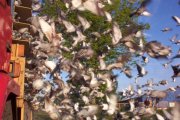
Happy Pigeon Appreciation Day! Okay, I know it sounds strange to celebrate pigeons – the animal best known for gathering in large numbers, causing a raucous, as well as perching and pooping on just about everything. For just a moment though, I would like to consider the unique athletic attributes of these popcorn and park loving birds vs humans engaged in endurance exercise. Have you ever heard of pigeon racing […]

Continue Reading →

Time Machine: Keeping it hot…or not

In todays’ Time Machine, we are taking a look back at a paper written by Dr. Henry Gray Barbour during his time in the Department of Pharmacology at Yale University School of Medicine. Published in Physiological Reviews in 1921, his paper examined how body heat is regulated in various species. In this review, Dr. Barbour explains that water is the best medium for conducting heat throughout the body. This is […]

Continue Reading →

“Hummingbirds of the Night”

A reference to nectar-feeding bats as “hummingbirds of the night” in a presentation at the 2025 American Physiology Summit in Baltimore last month caught my eye. What an appropriate nickname for bats that can have blood sugar levels exceeding 750 mg/dl after a meal! Sure, a hummingbird would think this was normal, but for a human these levels would warrant a trip to the emergency room. New research shared by […]

Continue Reading →

No air? No problem: Nature’s ultimate survivalists

Hypoxia and anoxia tolerance was a hot topic at the 2025 American Physiology Summit last month. Here are the highlights: Hafsa Yaseen and Natalie Anne Heath presented their research from Dr. Joseph Santin’s laboratory at the University of Missouri exploring how adult bullfrogs (Aquarana catesbeianus) protect their brain function following hibernation, a period when oxygen and glucose levels are often very low. The team discovered that bullfrogs could adjust their […]

Continue Reading →

Weddell seals dampen inflammatory response to combat dive induced hypoxemia injury

We are very excited to share this winning guest blog post from Amy Klink, doctoral student at the University of Nevada – Las Vegas. Amy received the Dr. Dolittle travel award to present this research at the 2025 American Physiology Summit in Baltimore. Congratulations Amy! As a kid growing up in Lake County, Illinois, I spent more than half of my summer in some lake or body of water competing […]

Continue Reading →