
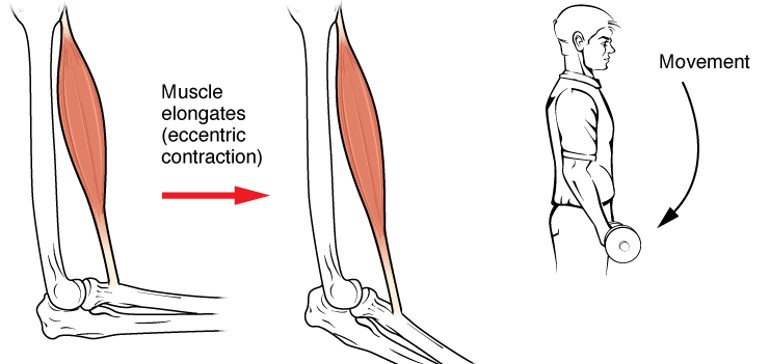
When we lift weights or do resistance exercises, our muscles adapt by changing which genes are turned on or off. These genetic changes (called transcriptional changes) help muscles grow stronger and improve their metabolism. Both young and older people experience these changes, but aging changes how muscles respond at the genetic level, which may help explain why older adults don’t gain muscle as easily as younger individuals.
In a study published in the American Journal of Physiology, Integrative, Regulatory and Comparative Physiology, scientists compared data from young and old mice and humans who performed eccentric contractions, a type of resistance exercise in which the muscle lengthens while contracting (like lowering a weighted object).
Interestingly, they found that both mice and humans have similar changes in gene pathways related to muscle growth, metabolism, and inflammation following the exercise, but the specific genes affected by exercise were species-specific. They also found that aging resulted in the activation of transcriptional changes related to metabolism and repair as opposed to growth and mechanics as seen in young mice and humans. This may occur as aging muscles are more prone to damage and recover more slowly than younger muscles.
These findings highlight important differences in the regulation of gene transcription in muscles across the lifespan that can have practical implications in muscle function and recovery. While rodent models are commonly used to model this response in humans, this study highlighted important differences between species as well.
Source:
Boykin JR, Steiner JL, Laskin GR, Roberts MD, Vied C, Willis CRG, Etheridge T, Gordon BS. Comparative analysis of acute eccentric contraction-induced changes to the skeletal muscle transcriptome in young and aged mice and humans. American Journal of Physiology, Regulatory, Integrative and Comparative Physiology. 328(1): R45-R58, 2025. DOI: 10.1152/ajpregu.00224.2024
- Meet the Tuatara, New Zealand’s living fossil
- From firefighting foam to feathers: Tracking PFAS in nature
Tags: Exercise, fitness, health, wellness

