Aging

Ohio talks about physiology and disease

Researchers from around the state of Ohio met today at the 34th annual Ohio Physiological Society meeting to discuss their research. Although many of the presentations were not on comparative physiology topics, I found some particularly interesting and thought I would share them with you anyway. Here goes: Dr. Katherine Vest and her research team (Kierra Ware, Yu Zhang, Thomas Whitlow) from the University of Cincinnati College of Medicine presented their research on […]

Continue Reading →

Sleep = better DNA repair

I read an interesting article published in Nature Communications that described how zebrafish larvae need sleep to help fix damaged DNA that accumulates in their brains during the day. The researchers engineered zebrafish larvae to have fluorescent chromosomes in a single neuron, which allowed them to observe double-strand breaks in the DNA build-up during wakefulness. In contrast, chromosome activity necessary for repair increased when the animals were sleeping. If the researchers disrupted […]

Continue Reading →

If only I were a fruit fly…

  Oh, to be a Drosophila. A new study published in Science Advances reports that male Drosophila have an amazing tolerance for sleep deprivation. I wish I could say the same about humans. Like people, sleep duration in flies varies between individuals, with some animals getting only a few minutes of sleep a day. In many other species, chronic sleep deprivation is associated with shorter lifespans. In this new study, researchers […]

Continue Reading →

Longevity of dogs

Dogs are weird when it comes to predicting longevity based on body size. For many species, small body size means higher metabolic rate and shorter lifespan. For dogs, smaller body size = longer lifespan. Dr. Ana Jimenez (Colgate University) presented research at the Comparative Physiology meeting this weekend showing that larger dogs do indeed develop more DNA damage with aging than smaller dogs.

Continue Reading →

Cancer resistance in elephants explained

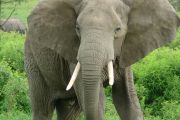
  Research has shown that <5% of elephants succumb to cancer. This is remarkable as elephants are massive, meaning they have more cells to replicate on a regular basis than humans. One would think having so many cells would increase the risk of these cells dividing improperly, especially considering that captive elephants can live for about 70 years. It has been known for several years that elephants have 20 copies […]

Continue Reading →

Seals, seals and more seals

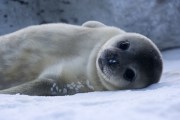
Several of the posters and talks at the Experimental Biology meeting in San Diego focused on Weddell Seals. They are not only cute, they are really interesting physiologically. Emma Weitzner, a graduate student in the lab of Dr. Heather Liwanag, presented a poster on Weddell seals, which are studied as models of the physiology of diving. Emma and her team recorded diving behavior and collected blood samples from 1 week-old […]

Continue Reading →

Elephants provide clues to cancer resistance

Cancer risk is associated with how often cells divide because each time DNA replicates, potential errors may occur. Unlike most mammals, elephants are remarkably resistant to cancer given their size. In a new study published in Cell Reports, researchers explored genes that evolved more quickly in elephants than other mammals to try to identify genes responsible for this protection. They identified several accelerated gene pathways in elephants that are important for DNA repair […]

Continue Reading →

Monogamy is good for the heart

In honor of Valentine’s Day, let’s talk about prairie voles (Microtus ochrogaster). These animals are often used to study pair bonding because they are one of only a handful of mammalian species that form lifelong socially monogamous pair bonds after mating and cohabitating for at least 6 hours. According to a study published several years ago in Nature Neuroscience, this pair bonding behavior is regulated by specific genes in their […]

Continue Reading →