Comparative Physiology

Physiology on the Road: What’s happening in the Midlands

The Midlands Society of Physiological Sciences held their annual conference on October 21st at the University of Nebraska Medical Center. The Keynote Lecture was given by Dr. Manolis Kellis, Professor at Massachusetts Institute of Technology. He spoke about the use of artificial intelligence approaches to examine how fly and human genes are regulated. Other highlights: Anuj Singh (University of Nebraska Medical Center): Opioid use is a major healthcare concern and […]

Continue Reading →

Physiology on the Road: “Physiology in Ohio, The Heart of it All!”

The Ohio Physiological Society met October 6-7th at The University of Toledo located in Toledo, OH. True to the name of this year’s conference, the Keynote address was given by Dr. Joseph Wu, Director of the Stanford Cardiovascular Institute and current president of the American Heart Association. His research focuses on congenital heart disease in adults as well as cardiovascular imaging. His most recent clinical trials involve testing bone-derived stem […]

Continue Reading →

Immune to cancer

Bats are known for their strong immune systems and impressive longevity. In fact, some species live 20 years or more in the wild. Unlike many long-lived species, however, cancer is a rare occurrence in bats. A new study published in Genome Biology and Evolution examined the link between immune function and cancer resistance in bats. The team characterized the genome of Jamaican fruit bats (Artibeus jamaicensis) and Mesoamerican mustached bats […]

Continue Reading →

Understanding hypoxia tolerance

Hypoxia associated with ischemic stroke, heart attacks, and solid tumors causes significant pathologies in humans. However, some populations of humans that have lived at high altitudes for generations have adaptations that provide some measures of hypoxia tolerance that may lend insight into treatments for pathological hypoxia in disease states.    Researchers seeking to understand hypoxia tolerance compared the genome of Andean and Ethiopian highlander populations with the genome of Drosophila […]

Continue Reading →

Infertility is not an issue for naked mole rats

Naked mole-rats have attracted the attention of scientists once again. Not only do they live very long lives (30+ years), while typically avoiding cancer, females remain fertile their whole life. Unlocking their secrets to avoiding menopause may lead to new ways to treat infertility. New research has identified their tricks for lifelong fertility. It turns out that female naked mole-rats have 1.5 million egg cells (oocytes) when they are born, […]

Continue Reading →

The biological importance of carbonic anhydrase enzyme

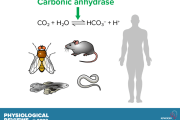
Carbonic anhydrase is an important enzyme that regulates the acid-base balance of an organism. In fact, carbonic anhydrase (CA) is so important to homeostasis, it is found in all living organisms studied to date – from microorganisms (like bacteria) to mammals. As the name implies, this enzyme is responsible for catalyzing the hydration of carbon dioxide, which is a reversible process (see figure above). In other words, it speeds up […]

Continue Reading →

On the road to developing artificial odorant sensors for noses

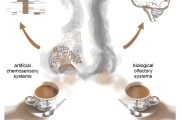
Almost all animals have some ability to detect smells their environment and there are countless odorant molecules and combinations of molecules in the environment that our systems are challenged with identifying. The sense of smell is important in many biological processes such as finding food, mates, and detecting threats. Scents may also conjure up memories and affect our emotions. About 5% of the population either has no (anosmia) or very […]

Continue Reading →

Making heat to lose weight

There are many ways to stay warm on a cold day. We can seek shelter, turn up the thermostat, and huddle close together. Obvious physical adaptations to cold include fur, feathers, and clothing in the case of humans…and some pampered dogs. Blood vessels near the skin may also constrict to prevent heat loss and some animals develop a layer fat under the skin that acts like insulation. We may also […]

Continue Reading →

Life at the top

Moving to high altitude requires a bit of an adjustment. One of the ways our bodies adjust to the low levels of oxygen is by making more red blood cells, which are responsible for transporting oxygen in the body. More red blood cells means that our blood can pick up more oxygen. If this process continues unchecked, however, it can lead to chronic mountain sickness, also known as Monge’s Disease. […]

Continue Reading →

Chronic stress during pregnancy increases risk of stillbirth and preterm delivery

At the end of pregnancy, levels of the hormone oxytocin increase to stimulate parturition, or childbirth. The stress hormone cortisol is also important for normal fetal development and, like oxytocin, cortisol increases at the end of pregnancy. This may help explain why chronic stress during pregnancy increases the risk of complications such as stillbirth.   A new study published in the American Journal of Physiology – Regulatory, Integrative and Comparative […]

Continue Reading →