Nature’s Solutions

Dangers of eating greens

Dr. Kevin Kohl (University of Pittsburgh) gave an interesting talk at the conference on the various dangers of eating plants. Aside from having low protein content and large quantities of indigestible fibers, plants are great sources of toxic chemicals. Remarkably, many animals have evolved to eat plants that may be toxic to other animals. Research by Dr. Kohl suggests that the gut microbiome of these animals may have evolved to […]

Continue Reading →

Improving tissue integrity for transplants

Ground squirrels are known for their remarkable ability to tolerate hypothermic conditions. Humans are not. Dr. JingXing Ou (National Institutes of Health) presented an interesting talk that explored using induced pluripotent neuronal stem cells isolated from these mammalian hibernators to improve tissue integrity for organ transplants. By understanding which pathways protected ground squirrel cells from cold-damage, these pathways could be manipulated in human induced pluripotent neuronal stem cells and improve […]

Continue Reading →

Parasite-induced metabolic disease

Dr. Rudolf Schilder (Penn State University) presented a poster yesterday reporting that male dragonflies (Libellula pulchella) are developing infection-induced metabolic disease that is similar to type 2 diabetes and obesity in vertebrates. The culprit? A protozoan parasite in the animal’s gut. It makes you wonder if parasites may be to blame for some metabolic disease cases in humans…

Continue Reading →

Discovering new antibiotics in…saliva??

Scientists have discovered that they can quickly identify new antibiotics using bear saliva. This is because saliva from East Siberian brown bears is home to a diversity of bacteria. (Okay granted, this is true of many wild animals – the study referenced here focused on bears.) Although it does not sound very sophisticated, a team of scientists at Rutgers University thought that they may be able to identify novel antibiotics […]

Continue Reading →

Elasmobranchs may hold clues for treating blood disorders

As you may already know, bone marrow contains cells that specialize in both bone as well as blood maintenance. Stem cells destined to become white blood cells, red blood cells and platelets are called hematopoietic stem cells (aka: HSCs). CXCL12 is a special ligand that helps keep HSCs in the bone marrow by acting as a chemical attractant for the chemokine receptor C-X-C (CXCR4) found on HSCs. Some researchers are […]

Continue Reading →

Cancer resistance in elephants explained

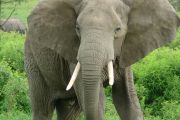
  Research has shown that <5% of elephants succumb to cancer. This is remarkable as elephants are massive, meaning they have more cells to replicate on a regular basis than humans. One would think having so many cells would increase the risk of these cells dividing improperly, especially considering that captive elephants can live for about 70 years. It has been known for several years that elephants have 20 copies […]

Continue Reading →

My what big ears you have…

Jackrabbits have REALLY big ears. Their big ears are well-vascularized as you can see in the photo above. These blood vessels dilate (widen) when it is hot outside to help the animals give off heat to their environment by routing warm blood from their core to their ears. Having such an efficient cooling mechanism means they can conserve water by avoiding the need for evaporative cooling (sweating or panting). As […]

Continue Reading →

Ants ‘nurse’ their injured

A study conducted at the University of Lausanne in Switzerland shows that Matabele ants, Megaponera analis, lick wounds their comrades sustain while hunting termites. It is thought that this “nurse”-like behavior may help prevent infection as ants receiving such care are more likely to survive: Sources: Youtube / New Scientist Frank ET, Wehrhahn M, Linsenmair KE. Wound treatment and selective help in a termite-hunting ant. Proceedings of the Royal Society B, DOI: 10.1098/rspb.2017.2457  

Continue Reading →