Chemical weapons defense
Have you seen this YouTube video of the Bombardier beetle? These beetles release hot chemicals when they are threatened. This defense mechanism allows them to even escape the bowels of a predator.

Have you seen this YouTube video of the Bombardier beetle? These beetles release hot chemicals when they are threatened. This defense mechanism allows them to even escape the bowels of a predator.
Barth Syndrome is a rare genetic disorder that affects mainly males. It is characterized by impaired lipid metabolism, muscle weakness, growth delays, cardiomyopathy, and low numbers of neutrophils in the blood, which renders patients with the condition more susceptible to infections. There is no known cure for Barth Syndrome. In the past, patients with Barth syndrome often died by the age of three from infections or heart failure (Barth Syndrome […]
A new study conducted by researchers at Cincinnati Children’s in collaboration with Kyoto University has provided evidence that drosophila and mammals have similar proteins in their brain that help regulate the rhythm of body temperatures that are important in normal metabolism as well as sleep. According to a quote from Dr. Fumika Hamada, a lead study author, “We’re looking for a mechanistic understanding of how body temperature rhythms are regulated. […]
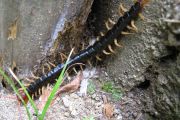
In the face of the current opioid crisis, scientists are searching for new and safer painkillers (analgesics). Venomous animals may be useful in the search as their venom can contain peptides with analgesic properties. In fact, researchers recently discovered and characterized an analgesic peptide, dubbed SsmTX-I, that was isolated from the venomous centipede, Scolopendra subspinipes mutilans. This peptide was shown to block a type of potassium channel (Kv2.1) in the body that is involved in sensing […]

Ossabaw Island off the coast of Georgia (United States) is home to feral swine brought over by early Spanish explorers. In relative isolation on the island, with the exception of the introduction of a Hampshire pig, the Ossabaw pigs have become genetically distinct from those living on the mainland. Ossabaw pigs are prone to obesity and are the only miniature pigs known to develop type 2 […]
I read an interesting review article published recently in Physiology. The review discussed how various animals sense pain. Perhaps understanding how animals detect pain will lead to better pain management techniques for animals and humans. Our bodies have special sensors, called nociceptors, that detect noxious stimuli that could injure tissues. Stimulation of these receptors is what allows you to move your hand away from a hot stove even before your […]
Sea snails (Conus asprella) produce a venom that paralyzes their prey. Scientists are working towards isolating compounds from sea snail venom that they hope may lead to the production of safer pain relievers to help combat the opioid crisis.
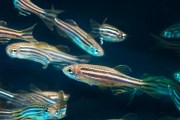
Like many medications, general anesthetics are not without side effects. Researchers at Dalhousie University in Canada were interested in studying the effects of inhaled anesthetics on the heart. Slowed heart rate (bradycardia) is a major adverse side effect of inhaled anesthetics that can lead to death for those undergoing procedures. Because bradycardia occurs in all species of vertebrates that have been studied thus far, the researchers decided to examine how […]
This past weekend a man caught a very rare fish, called an opah (aka moonfish), off the coast of Ocean City, Maryland. What makes this fish so rare is that it is the only known warm-blooded fish. In fact, they are able to keep their whole body about 5 degrees Celsius above the water they swim in. Other fish lose heat generated from muscle movements to the environment as the […]

I don’t know about you, but I am terrified of scorpions. As if scorpions were not spooky enough, the Arizona bark scorpion (Centruroides sculpturatus) is the most venomous scorpion in North America. Gulp. Enter the pallid bat. Clearly not as intimidated, pallid bats (Antrozous pallidus) often dine on Arizona bark scorpions. Researchers at the University of California at Riverside wanted to examine whether the bats were truly resistant to the […]
 Life Lines by Dr. Dolittle