Physiology on the Road

Highlights from the last day in Orlando

Today marked the final day of the 2019 Experimental Biology meeting in Orlando. As usual it was a great day for Physiology. Crupi et al., from the University of Messina and the Universita della Magna Grecia in Italy put up a poster presentation describing their research on how red blood cells respond to environmental toxins. Their research showed that isolated red blood cells from rabbits are more sensitive to venoms […]

Continue Reading →

Highlights from EB 2019

There were so many poster presentations on comparative and evolutionary physiology today at the 2019 Experimental Biology conference that it was impossible to see them all. Here are some highlights: Dr. Michael Hedrick from California State University – East Bay, presented his research on African cheetahs (Acinonyx jubatus) examining adaptations that cheetahs have evolved to supply their muscles with oxygen so efficiently, given they maintain the world record for being […]

Continue Reading →

Obese Horses

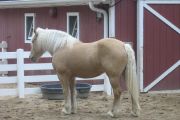
Abigail Harms, an undergraduate student at Beloit College working with Dr. Kathryn Johnson, also presented her research today at the Experimental Biology 2019 conference examining the effects of obesity in horses. Just like humans and pets, horses are increasingly becoming obese. Her research is seeking ways to measure hormonal changes that occur with obesity in different breeds of horses.  

Continue Reading →

Mourning doves do not need to watch their figures

So jealous. Research presented by Anthony Basile, graduate student in the laboratory of Dr. Karen Sweazea at Arizona State University, at Experimental Biology 2019 examined how mourning doves would respond to a diet high in saturated fats. He reported on how mice fed a similar diet develop pathological changes in hormones and metabolism, as would be expected. But, doves fed a similar diet did not seem to show any notable […]

Continue Reading →

Dietary carotenoids and oxidative stress- What can we learn from birds?

Congratulations to this year’s Dr. Dolittle Travel Award winner, Alex Mohr from Arizona State University! Alex is presenting his research at the annual Experimental Biology conference in Orlando, FL (Mohr AE, Girard M, Rowe M, McGraw KJ, Sweazea KL. Varied Effects of Dietary Carotenoid Supplementation on Oxidative Damage in Tissues of Two Waterfowl Species).  Here is his award-winning blog entry describing his research on carotenoids in ducks: In relation to tissue […]

Continue Reading →

How ground squirrels recycle nitrogen

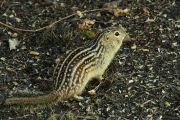
Hibernation is a rather remarkable strategy some animals use to survive winter when food availability is limited. Dr. Matthew Regan, a postdoctoral fellow in the laboratory of Dr. Hannah Carey at the University of Wisconsin in Madison, presented research at the Experimental Biology 2019 conference today that explored how 13-lined ground squirrels (Ictidomys tridecemlineatus) regulate protein metabolism during hibernation. What is remarkable about 13-lined ground squirrels in particular is that they […]

Continue Reading →

Alcoholic Fish

As I prepare to leave the great city of New Orleans at the end of a fabulous conference, I can’t help but mention one final poster that I saw titled, “Depressing mitochondrial function during paradoxical anaerobism leads to an alcoholic fish.” It seemed appropriate given our conference hotel was on Bourbon Street. This poster, presented by Dr. Stanley Hillyard (University of Nevada – Las Vegas) examined desert pupfish (Cyprinodon spp). […]

Continue Reading →

What do hibernating animals and astronauts have in common?

Well, nothing yet…but imagine the possibilities of human spaceflight if we could put people into a form of stasis? While short term stasis-like states have been used in medical settings, the idea of putting people into stasis to allow long term space travel – without intensive physician oversight, remains a major goal of space agencies and companies like Spaceworks (above). Scientists at the Comparative Physiology meeting considered this very question, […]

Continue Reading →

Dangers of eating greens

Dr. Kevin Kohl (University of Pittsburgh) gave an interesting talk at the conference on the various dangers of eating plants. Aside from having low protein content and large quantities of indigestible fibers, plants are great sources of toxic chemicals. Remarkably, many animals have evolved to eat plants that may be toxic to other animals. Research by Dr. Kohl suggests that the gut microbiome of these animals may have evolved to […]

Continue Reading →

Improving tissue integrity for transplants

Ground squirrels are known for their remarkable ability to tolerate hypothermic conditions. Humans are not. Dr. JingXing Ou (National Institutes of Health) presented an interesting talk that explored using induced pluripotent neuronal stem cells isolated from these mammalian hibernators to improve tissue integrity for organ transplants. By understanding which pathways protected ground squirrel cells from cold-damage, these pathways could be manipulated in human induced pluripotent neuronal stem cells and improve […]

Continue Reading →