Reproduction and Development

Don’t feed the birds – urban crows have higher cholesterol

If you have ever been to a fast food restaurant, you may have noticed that people are not the only consumers of fast food. In fact, some species of birds are known to frequent fast food chains where they can get a quick meal of food leftover or intentionally dropped by customers. While people may delight in tossing our feathered friends a french fry on occasion, a new study published […]


Continue Reading →

Editor’s picks for 2018

The Editor’s Picks for 2018 have been released for the American Journal of Physiology – Regulatory, Integrative and Comparative Physiology. According to the editorial team, the focus of this journal is on “the regulation of whole organismal function that requires the interplay of multiple organ and tissue systems.” The top comparative physiology articles of 2018 included: An article by Hersh et al., who provided evidence that little skates may be useful […]

Continue Reading →

A mother’s diet can have a lasting impact on offspring

A new study published in Physiological Reports provides evidence that a mother’s diet during pregnancy could have lasting impacts on her offspring’s bone development and later risk of osteoporosis. Osteoporosis is characterized by a loss of trabecular (spongy) bone leading to increased risk for developing bone fractures.  The researchers discovered this relationship while studying female microswine that were consuming a diet containing only 1% protein late in their pregnancy and for […]

Continue Reading →

Rising water temperatures masculinizes Nile tilapia

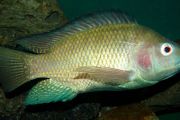
Nile tilapia, Oreochromis niloticus, is a species of freshwater fish native to Egypt and Africa. Global warming has the potential to significantly impact this species as water temperatures above 32 to 36.5 degrees Celsius can induce young fish (10-30 days after fertilization) that are genotypically female to become masculinized. Moreover, a recent study published in PLOS ONE showed that some young fish choose to visit warmer waters. A new study published […]

Continue Reading →

Growth restriction in utero increases risk for developing insulin resistance

  A new study published in the American Journal of Physiology – Regulatory, Integrative and Comparative Physiology, explored how restricted growth of a fetus during pregnancy can lead to insulin resistance later in life. They studied this risk factor in guinea pigs as larger litter sizes are known to restrict the growth of developing fetuses. Findings from the study showed that neonatal guinea pigs grow rapidly after birth to compensate for […]

Continue Reading →

Gynandromorphs

Talking about having a split personality. A recent story from Live Science reported on a half male/half female chimera cardinal that was discovered in Pennsylvania (pictured below). Not only are the bird’s feathers split (red feathers are found among male and tan among female cardinals), typically the brain is also split. This type of a split sexuality is termed gynandromorph. According to the article, this  anomaly has been observed in birds, […]

Continue Reading →

How sheep are helping human pregnancies

    The growth and development of a human fetus is difficult to study, both practically and ethically, as I am sure you can imagine. A new review article published in the American Journal of Physiology – Regulatory, Integrative and Comparative Physiology explored how sheep have helped solve this problem as fetal sheep share similar brain, lung and cardiac development and placental physiology with humans, many aspects of which differ from […]

Continue Reading →

What do nematodes and humans have in common?

Orthologs are genes present in different species that evolved from a common ancestor. While studies have shown the existence of orthologous genes and proteins in C elegans that are associated with diseases in humans, a new study published in Physiological Genomics examined this question as it relates to reproduction. In the new study, researchers identified a whopping 504 genes in C elegans that have yet to be associated with reproduction in humans whereas […]

Continue Reading →

Compromising fish

Here’s something to think about. How do fish optimize gas exchange in their gills to efficiently take up oxygen (favoring large, thin, permeable membranes) while at the same time limiting water and ion movement across the surface? If they reduce surface area, then oxygen transfer will be limited, but ions and water transfer will be optimized. What is a fish to do? A new review article published in Physiology discussed how […]

Continue Reading →

How Animals Deal with Stress

  Victor Zhang (Graduate Student working with Dr. Loren Buck at Northern Arizona University) gave an interesting talk on his research to measure stress and activity patterns in free living arctic ground squirrels. They found overall that females were less stressed than males although stress levels and activity varied during lactation. I think some human mothers can agree with those observations. Oliver Wearing (Graduate student working with Dr. Graham Scott […]

Continue Reading →