
Tag Archive for ‘ocean’

Ocean oddity: how teleost fish stay hydrated in saltwater

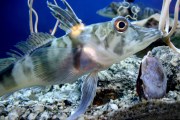
It may sound strange to hear that saltwater fish need to stay hydrated. After all, they live in water. However, a review published in Physiology describes how nearly all saltwater fish are thought to have evolved from freshwater ancestors, and many maintain similar levels of salt in their blood as freshwater animals. Living in a saltwater environment means that these fish have to find a way to get rid of […]

Continue Reading →

Extreme Physiology of Diving

Can you imagine what would happen to your body if you dove up to 1700 meters deep in the ocean for an hour and a half, or experienced months of food deprivation? In the case of deep diving, the high pressure causes the collapse of the lungs of terrestrial mammals (including humans!) and depletion of body oxygen stores, whereas long fasting periods compromise health and induce muscle wasting. Northern elephant […]

Continue Reading →

Could the ocean hold a cure for Covid-19?

In searching for treatments for Covid-19, researchers discovered that a cancer drug called Aplidin (aka: Plitidepsin), originally isolated from Mediterranean sea squirts, was up to 27.5 times more effective at killing the virus in cell cultures than the FDA-approved drug Remdesivir! Importantly, it was also shown to be effective at preventing the virus from replicating in mice. Sources: Youtube KM White, R Rosales, S Yildiz, T Kehrer, L Miorin, E […]

Continue Reading →

Live fast, die young

Researchers have long known that smaller animals have higher metabolisms and tend to die younger than larger animals. Think about it – a mouse typically only lives about 2 years whereas an elephant in the wild may live 50-70 years, depending on the species. After studying over 700 species of birds and 540 species of mammals, scientists discovered that migratory animals also live faster (mature and reproduce earlier) and die […]

Continue Reading →

Extreme flight

May I have a drumroll please? The winner is…..the bar-tailed godwit!! *round of applause!!!!* The winner of what you may ask? This bird broke the world record for the longest non-stop flight – 7,500 miles – without the luxury of in-flight service. I bet it was hungry when it landed…

Continue Reading →

Getting away from salt – the transition to life on land

The transition of vertebrates from the salty ocean to life on land required the ability for these animals to change how they dealt with salt. While salt is essential for many cellular functions, salt balance must be tightly regulated to prevent illness or even death. Animals that live in a salty environment have evolved the ability to get rid of excess salt from their bodies whereas land-dwelling animals evolved the […]

Continue Reading →

The Effects of Ocean Acidification on California Sea Hare

Today’s guest blog entry comes from Rebecca Zlatkin. Rebecca ‘Becky’ Zlatkin was born and raised in Miami, FL and recently graduated from the University of Miami with a bachelor’s in Exercise Physiology and a minor in Biology. Previously a student at Miami Dade College’s Honor College, Becky came to the lab of Martin Grosell at UM’s Rosenstiel School of Marine and Atmospheric Science through the Bridge to Baccalaureate Program, a collaboration […]

Continue Reading →

First ever recording of heart rate in free swimming blue whales

While we are on the topic of whales, I found additional research published in the Proceedings of the National Academy of Sciences USA on these animals and how their hearts function that I find fascinating. Talk about extreme physiology! Researchers from Stanford University were able to attach surface electrodes to blue whales using suction cups. This allowed them to measure – for the first time – how heart rate changes during […]

Continue Reading →

Antarctic icefish do not tolerate rising temperatures

Antarctic finfishes may be facing rising ocean temperatures. This is of particular concern to icefishes, as they are not very tolerant of increasing temperatures. Prior studies have shown that this lack of tolerance may be due to an inability for their hearts to beat normally and actually collapse at higher temperatures. In a study presented at the 34th annual Ohio Physiological meeting at Wright State University today, researchers Evans et al., (working […]

Continue Reading →

Seals have anti-inflammatory blood

Dr. Allyson Hindle from Massachusetts General Hospital in Boston, presented some interesting research on seals at the Experimental Biology conference this week in San Diego. Seals are known for being rather plump, which for humans often leads to inflammation and cardiovascular disease. In addition, seals undergo repeated bouts of hypoxia and reoxygenation during their dives, which is also known to promote inflammation and cardiovascular disease in humans. Her research team […]

Continue Reading →