Tag Archive for ‘science’

Flexible hypoxia tolerance in frogs

In a new study published in The Journal of Neuroscience and presented at the American Physiology Summit earlier this month, graduate student Nikolaus Bueschke, postdoctoral fellow Dr. Lara Amaral-Silva and Dr. Joseph Santin (University of Missouri, Columbia) together with researchers Min Hu and Alvaro Alvarez (University of North Carolina at Greensboro), explored how bullfrogs (Lithobates catesbeianus) emerging from hibernation tolerate hypoxia while they kickstart physiological functions in ice-covered ponds. This […]
Continue Reading →

Some organisms self-destruct after reproduction

Most mammals are iteroparous, meaning they can undergo multiple cycles of reproduction and gradually advance in age. In stark contrast, semelparous species only reproduce once before they die, as the physiological toll of mating is quite high. Examples of semelparous species include Pacific salmon, which swim upstream where they die after spawning, thus becoming nutrients for their own offspring and the environment. By only 10 months of age, male kalutas […]

Continue Reading →

Males are not always bigger…unless they are northern elephant seals

A new study published in Nature Communications challenges the popular notion that males are usually bigger than females – at least in mammals. Their findings are consistent with Dr. Katherine Ralls who also challenged this idea in the late 1970s. In this new study, researchers looked at data collected for 429 species of animals. Rather than using averaged values from the literature, they turned to large-published datasets that included values […]

Continue Reading →

Let’s stop lactate-shaming

As wisely stated in an editorial by Dr. George Brooks, UC Berkeley (2001), “Nature is smarter, and things are more complex than we mortals imagine.” Sure lactate is produced during exercise and is often blamed for causing muscles to fatigue, but there is much more to the story. In fact, research has shown that lactate plays many important physiological roles in the body such as serving as a metabolic fuel […]

Continue Reading →

Secrets to rockfish longevity revealed

Rockfish have gained the attention of scientists due to their exceptional longevity. Researchers at the University of California, Berkeley sequenced the complete genome of 88 species of rockfish in the Pacific Ocean to try to find clues that could explain their longevity. While some are rather short-lived (ex: calico rockfish, Sebastes dallii, only live around 10 years), longer-lived species, like rougheye rockfish (Sebastes aleutianus), can live to be over 200 […]

Continue Reading →

Evolution of pain resistance

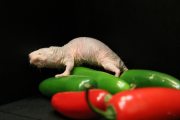
Could you imagine eating a pile of chile peppers or spicy hot mustard and not feeling any pain? The ability to sense pain is physiologically quite important as it alerts us to potentially dangerous or poisonous chemicals. Many plants (stinging nettles, pungent bulbs, hot chilies) and animals (stinging ants, scorpions, snakes) produce noxious chemicals to protect themselves from predators. In turn, some predators have evolved resistance to these chemicals. An […]

Continue Reading →

Seagulls pick up on human cues to find food

Have you ever experienced seagulls seemingly begging for food from you? It is not your imagination. A new study finds that seagulls really do prefer foods that have been handled by humans. The study conducted Madeleine Goumas (University of Exeter, UK) examined whether seagulls picked up on cues from humans or were simply looking for food. While standing about 8 meters away from herring gulls, the team placed two plastic-wrapped […]

Continue Reading →

71 New Species Described in 2019

Scientists at the California Academy of Sciences described 71 new species of plants or animals in 2019. According to the Academy, these included 17 fish, 15 geckos, 8 flowering plants, 6 sea slugs, 5 arachnids, 4 eels, 3 ants, 3 skinks, 2 skates, 2 wasps, 2 mosses, 2 corals, 2 lizards, and a partridge in a pear tree. Okay, just kidding about that last one. Dr. Shannon Bennett, Chief of […]

Continue Reading →

Experimental Biology 2019

The annual 2019 Experimental Biology conference starts in 2 days! I am looking forward to the myriad of comparative physiology sessions at this year’s meeting. Sunday will feature trainee presentations on a variety of topics ranging from how the gut microbiome shifts in ground squirrels with the seasons, insulin resistance in horses, and muscle performance of lizards. Monday will be a jam-packed day filled with topics on how ectotherms regulate […]

Continue Reading →

Cancer resistance in elephants explained

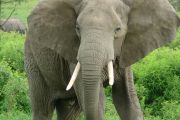
  Research has shown that <5% of elephants succumb to cancer. This is remarkable as elephants are massive, meaning they have more cells to replicate on a regular basis than humans. One would think having so many cells would increase the risk of these cells dividing improperly, especially considering that captive elephants can live for about 70 years. It has been known for several years that elephants have 20 copies […]

Continue Reading →