Aging

Sheep can recognize human faces

New research published in Royal Society: Open Science shows that it is possible to train sheep to distinguish between different human faces shown in photos.  In fact, 8 out of 10 times, the sheep were able to choose the image they had been trained to recognize. According to study author Dr. Jenny Morton, “…sheep have advanced face-recognition abilities, comparable with those of humans and monkeys.” Because these animals are rather […]

Continue Reading →

#1: Is there an evolutionary advantage to “being stupid”?

And the #1 blog entry published thus far in 2017 discussed whether there was an evolutionary advantage to being stupid: —- As I was looking through the scientific literature the other day, I came across an article published in 1973, “The Evolutionary Advantages of Being Stupid.” With a title like that, how could I not read it? In this article Dr. Eugene D. Robin discussed how larger and more complex brains are […]

Continue Reading →

Another primate with spontaneous hypertension

Humans are not the only primates that spontaneously develop hypertension. A new study published in the American Journal of Physiology – Regulatory, Integrative and Comparative Physiology, examined the development of spontaneous hypertension in African Green Monkeys (Chlorocebus aethiops sabaeus; aka: vervets). The team measured blood pressure in 424 adult monkeys and found that 37% had high blood pressure (SBP: 172.0±2.2 mmHg) and an additional 18% had borderline hypertension. Like humans, […]

Continue Reading →

Secrets to Longevity

A new article published in Physiological Reviews compared some remarkable similarities and differences between naked mole rats and humans. Both are relatively long-lived, highly social and have low natural selection pressures. But, this is about all they have in common. While humans are prone to developing age-related cancer, diabetes, heart disease and dementias, naked mole rats are rather resistant to these diseases. Instead, naked mole rats appear to maintain a youthful […]

Continue Reading →

Is there an evolutionary advantage to being ‘stupid’?

As I was looking through the scientific literature the other day, I came across an article published in 1973, “The Evolutionary Advantages of Being Stupid.” With a title like that, how could I not read it? In this article Dr. Eugene D. Robin discussed how larger and more complex brains are associated with greater intelligence, which by evolutionary standards was thought to be related to “superiority.” He described how this line of thinking […]

Continue Reading →

The Integrative Biology of Exercise VII – Day 3

Highlights from Day 3!   The costs of being a father? Jacob Andrew et al. from the University of California – Riverside presented a poster examining the long-term effects of fatherhood in California mice (Peromyscus californicus). California mice are monogamous and biparental, like humans. This means that both parents participate in taking care of offspring. In prior research they found that first-time fathers did not experience many changes in their physiology, […]

Continue Reading →

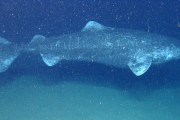
Amazing longevity of Greenland sharks

A multi-national team of scientists sought to determine the age of Greenland sharks (Somniosus microcephalus). These animals grow rather slowly (about 1cm per year) and are the largest fish in the arctic (>500 cm long), but their longevity was not yet known. The team used radiocarbon dating of crystalline proteins found within the nuclei of the eye lens. Because these proteins are formed prenatally, they offer a rather accurate way to […]

Continue Reading →

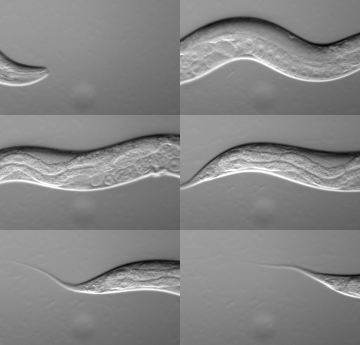
The cost of male pheromones

A new study conducted by researchers at Northwestern University examined the costs of reproduction in roundworms, otherwise known as C. elegans. They discovered that male roundworms can send two kinds of pheromones that prime females for reproduction. One type of pheromone they studied sparks the onset of puberty in young female worms while the other prolongs fertility in aging females.  The problem is that these changes come at a cost as it shortens the lifespan of […]

Continue Reading →

Muscle Aging in American Quarter horses

Skeletal muscle function and structure change as we age. Humans typically experience a loss of muscle mass or muscle weakness which can greatly reduce mobility and stability. While much is known about aging skeletal muscle in humans and rodents, less is known about horses, which are rather athletic animals that are living longer due to advancements in veterinary care and retirement programs. Researchers from the University of Florida decided to explore how aging effects skeletal […]

Continue Reading →

Secret to safer stem cell therapy or cure for cancer?

Researchers trying to find cures for cancer find naked mole rats rather interesting. Not only are these animals long-lived by rodent standards, they are also resistant to the development of cancer. By long-lived, we are talking up to 30 years! A team of researchers from Hokkaido University and Keio University in Japan have now isolated stem cells from the skin of naked mole rats and induced them to revert back to pluripotent stem […]

Continue Reading →