Tag Archive for ‘muscle’

Researchers explore why fetuses that experienced intrauterine growth restriction have smaller muscles
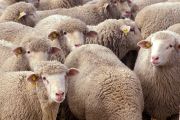
We have talked several times about the long-lasting issues related to growth restriction of a fetus during pregnancy: Intrauterine growth restriction increases risk of cardiovascular disease as adults Intrauterine growth restriction increases risk of insulin resistance as adults It can also result in offspring that have smaller muscles. New research published in the American Journal of Physiology – Regulatory, Integrative and Comparative Physiology suggests this may be due to adaptations to […]

Continue Reading →

Ohio talks about physiology and disease

Researchers from around the state of Ohio met today at the 34th annual Ohio Physiological Society meeting to discuss their research. Although many of the presentations were not on comparative physiology topics, I found some particularly interesting and thought I would share them with you anyway. Here goes: Dr. Katherine Vest and her research team (Kierra Ware, Yu Zhang, Thomas Whitlow) from the University of Cincinnati College of Medicine presented their research on […]

Continue Reading →

Mice run better with SOCCs?

The Ohio Physiological Society is holding their 34th annual meeting at Wright State University September 20th-21st! The Keynote Address of the meeting will be given by Dr. Robert T. Dirksen, Professor and Chair at the University of Rochester. Dr. Dirksen’s research focuses on how muscular dystrophy and heart disease develop as well as potential treatments for these conditions. His talk is titled, “Why do mice run better with SOCCs?” No, […]

Continue Reading →

Birds have a unique way of preventing muscle wasting

Muscle wasting is a major complication associated with cirrhosis and liver failure. Normally the liver functions to convert ammonia into urea. But with liver failure, this process does not work well leading to high levels of circulating ammonia, which is thought to contribute to muscle wasting in mammals. A new study published in the American Journal of Physiology – Regulatory, Integrative and Comparative Physiology, explored whether birds have the same muscle wasting […]

Continue Reading →

Porcine adaptation to heat stress

  A new study published in American Journal of Physiology – Regulatory, Integrative and Comparative Physiology explored the effects of modest heat stress (35°C, 95°F) on the physiology of pigs. The found that pigs exposed to heat stress ate less than those exposed to ambient temperatures. I understand. I eat less when it is hot outside too. Since skeletal muscle is such a large metabolically active tissue, things that alter muscle metabolism […]

Continue Reading →

Summer of Physiology

The Michigan Physiological Society, a chapter of the American Physiological Society, held their annual meeting this summer.  Here are some highlights from the meeting: The keynote address was given by Dr. Virginia Miller, Professor of Surgery and Physiology and Director of the Women’s Health Research Center, Mayo Clinic, Rochester, MN. Her talk was about “Sex-specific Differences in Risk for Cardiovascular Disease.” Specifically, how estrogen, menopause and pregnancy influence the risk […]

Continue Reading →

Chronic stress causes muscle loss

Researchers have known that chronic stress has many negative health effects that can impair normal growth. The impact of stress on skeletal muscle specifically is less understood. For this reason, researchers at Universidad Andres Bello in Chile explored the effects of stress induced by overcrowding in fine flounders (Paralichthys adspersus). Their results were published this month in American Journal of Physiology – Regulatory, Integrative and Comparative Physiology.  After just four weeks of […]

Continue Reading →

Experimental Biology – Day 3

Highlights from today’s sessions included: Norelia Ordonez-Castillo, undergraduate student from Fort Hays State University, presented her research on channel catfish. According to Norelia, these fish can become obese so her research was geared towards trying to find out how their receptor for LDL cholesterol differs from rodents and humans. But what I want to know is whether the obese catfish tastes better… Christine Schwartz, Investigator from University of Wisconsin-La Crosse, studied how […]

Continue Reading →

The Integrative Biology of Exercise VII – Day 3

Highlights from Day 3!   The costs of being a father? Jacob Andrew et al. from the University of California – Riverside presented a poster examining the long-term effects of fatherhood in California mice (Peromyscus californicus). California mice are monogamous and biparental, like humans. This means that both parents participate in taking care of offspring. In prior research they found that first-time fathers did not experience many changes in their physiology, […]

Continue Reading →