Tag Archive for ‘American Journal of Physiology’

Historical perspectives on homeostasis

In a new article published in the American Journal of Physiology – Regulatory, Integrative and Comparative Physiology, Dr. David S. Goldstein (National Institutes of Health) presents an elegant historical perspective on homeostasis. Walter B. Cannon (1871-1945) was a physiologist at Harvard Medical School who is credited with coining the term “homeostasis” to describe how the body attempts to regulate itself to stay healthy. The ability for the body to regulate the […]

Continue Reading →

Carnivorous fish are glucose intolerant

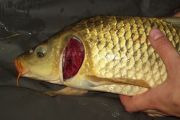
Who would have thought that carnivorous fish, like the gilthead sea bream pictured above, and people with diabetes have a lot in common? These fish are glucose intolerant, meaning they are not able to use glucose for energy very well. When these fish are given carbohydrates, their blood sugar increases as does their ability to produce fats through lipogenesis. The purpose of this increase may be to store the excess […]

Continue Reading →

Could zinc be involved in forming kidney stones?

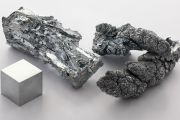
Zinc is a micronutrient that is essential for normal protein production and for various enzymes to function properly in the body. Levels are important to regulate because too much can be toxic to the kidneys whereas too little can lead to problems with immune and metabolic function as well as infertility. In a new study published in American Journal of Physiology – Renal Physiology, researchers were interested in how zinc […]

Continue Reading →

Importance and dangers of oxygen for air-breathing animals

Although oxygen is essential for air-breathing species and allowed for the evolution of multicellular organisms, it is also a dangerous molecule that can lead to cellular toxicity through the generation of reactive oxygen species (ROS). However, it is important to point out that cellular ROS also play several physiological roles in the body. I just read an interesting review article published in Physiological Reviews that explored natural oxygen delivery and availability […]

Continue Reading →

Porcine adaptation to heat stress

  A new study published in American Journal of Physiology – Regulatory, Integrative and Comparative Physiology explored the effects of modest heat stress (35°C, 95°F) on the physiology of pigs. The found that pigs exposed to heat stress ate less than those exposed to ambient temperatures. I understand. I eat less when it is hot outside too. Since skeletal muscle is such a large metabolically active tissue, things that alter muscle metabolism […]

Continue Reading →

How sheep are helping human pregnancies

    The growth and development of a human fetus is difficult to study, both practically and ethically, as I am sure you can imagine. A new review article published in the American Journal of Physiology – Regulatory, Integrative and Comparative Physiology explored how sheep have helped solve this problem as fetal sheep share similar brain, lung and cardiac development and placental physiology with humans, many aspects of which differ from […]

Continue Reading →

Compromising fish

Here’s something to think about. How do fish optimize gas exchange in their gills to efficiently take up oxygen (favoring large, thin, permeable membranes) while at the same time limiting water and ion movement across the surface? If they reduce surface area, then oxygen transfer will be limited, but ions and water transfer will be optimized. What is a fish to do? A new review article published in Physiology discussed how […]

Continue Reading →

Study examines link between sleep apnea and cancer

A recent review published in the American Journal of Physiology – Regulatory, Integrative and Comparative Physiology explored the link between sleep apnea and cancer (4). More and more people are living with sleep apnea. In fact, current estimates indicate that up to 24% of men as well as up to 5% of women have obstructive sleep apnea (4). Individuals with sleep apnea experience repeated cycles of low oxygen (hypoxia) and reoxygenation throughout […]

Continue Reading →

Extreme fasting

  Northern Elephant seals (Mirounga angustirostris) are pretty extreme animals, at least when it comes to fasting. Pups nurse for about 1 month, during which time they greatly increase their body fat. After nursing, they typically fast for up to 3 months. A new study was designed to explore how their adipose (fat) tissue changes after this prolonged fast. Researchers at the University of California at Merced were able to […]

Continue Reading →

Leptin influences mammalian bone development

Leptin is a hormone that was discovered in 1994 and was once heavily studied by researchers who had hoped it might be useful in promoting weight loss.  It is produced by fat cells and signals to the brain whether those fat cells have sufficient energy, at which time it suppresses hunger and thereby promotes weight loss (WebMD; Klok et al., 2007). One of the reasons it failed as a weight […]

Continue Reading →