Tag Archive for ‘hibernation’

What do hibernating animals and astronauts have in common?

Well, nothing yet…but imagine the possibilities of human spaceflight if we could put people into a form of stasis? While short term stasis-like states have been used in medical settings, the idea of putting people into stasis to allow long term space travel – without intensive physician oversight, remains a major goal of space agencies and companies like Spaceworks (above). Scientists at the Comparative Physiology meeting considered this very question, […]

Continue Reading →

Improving tissue integrity for transplants

Ground squirrels are known for their remarkable ability to tolerate hypothermic conditions. Humans are not. Dr. JingXing Ou (National Institutes of Health) presented an interesting talk that explored using induced pluripotent neuronal stem cells isolated from these mammalian hibernators to improve tissue integrity for organ transplants. By understanding which pathways protected ground squirrel cells from cold-damage, these pathways could be manipulated in human induced pluripotent neuronal stem cells and improve […]

Continue Reading →

Dr. Hannah Carey in the spotlight

Congratulations Dr. Hannah Carey, 80th President of the American Physiological Society (2007-2008) and fellow of the American Association for the Advancement of Sciences, which recently interviewed her about her research on hibernation.  Dr. Carey is a comparative physiologist and professor of Comparative Biosciences at the University of Wisconsin School of Veterinary Medicine. Her current research focus is on how the gut microbes of 13-lined ground squirrels change during hibernation. According […]

Continue Reading →

Experimental Biology – Day 3

Highlights from today’s sessions included: Norelia Ordonez-Castillo, undergraduate student from Fort Hays State University, presented her research on channel catfish. According to Norelia, these fish can become obese so her research was geared towards trying to find out how their receptor for LDL cholesterol differs from rodents and humans. But what I want to know is whether the obese catfish tastes better… Christine Schwartz, Investigator from University of Wisconsin-La Crosse, studied how […]

Continue Reading →

What do frogs and humans have in common?

Leptin is a hormone that signals the brain to suppress appetite in humans. While researchers at the University of Michigan described a similar appetite regulating role for leptin in South African clawed frogs (Xenopus), they also discovered that leptin signals limb development in tadpoles. They suspect that this happens once there are sufficient energy stores to begin the process of metamorphosis. Shalitin and Kiess (2017) also described a role for leptin in skeletal development of children and researchers implicate leptin in […]

Continue Reading →

In the meantime, I think I’ll hibernate

I just read an interesting blog from the I Spy Physiology website sponsored by the American Physiological Society which described results from a recent study suggesting that chronic fatigue syndrome (CFS) might be a human equivalent to hibernation. Chronic fatigue syndrome reportedly affects over 2.5 million people in the United States alone. People with this condition have the type of fatigue that does not seem to improve, even with adequate sleep. By examining the blood […]

Continue Reading →

Male hamsters pack on the pounds while females stockpile food for winter

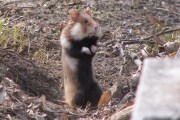
During hibernation common hamsters (Cricetus cricetus) alternate their time between bouts of torpor during which their metabolic rate drops and body temperature is low and arousal during which body temperature is normal. Hibernation allows animals to conserve energy although it is not without costs as it often results in memory deficits, cell damage and reduced immune function. Thus some studies have suggested that animals with sufficient food stores will not undergo hibernation […]

Continue Reading →

2016 Michigan Physiological Society Meeting

I am very excited about the upcoming 3rd annual Michigan Physiological Society Meeting on May 12-13 in Detroit. This society is a local chapter of the American Physiological Society. I am most excited by their choice of a Comparative Physiologist for the keynote address: Dr. Hannah V. Carey from the University of Wisconsin School of Veterinary Medicine. Dr. Carey is a Past-President of the American Physiological Society. She will be presenting […]

Continue Reading →

Experimental Biology – Day 5

Today was the final day of the meeting. Dr. Joe Thompson (Franklin and Marshall College) spoke about oblique striated muscles, which get their name from the diagonal pattern formed by the location of the Z-lines. This type of muscle is common among cephalopods, nematodes, tunicates, molluscs, etc. Dr. John Whiteman (University of Wyoming) gave a fascinating talk about polar bears and whether hunting on the shore as compared to the sea […]

Continue Reading →

Experimental Biology 2016 – Day 4

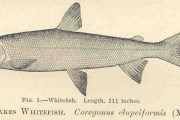
Still going strong…here are the highlights from several sessions held on Day 4: John Eme (California State University, San Marcos) presented data testing the effects of varying temperatures mimicking overwintering conditions on embryonic development of Lake whitefish. He found that indeed exposure to variable incubation temperatures between 2-8 deg C resulted in increased mortality. Moreover, the embryos hatched earlier and were smaller than animals exposed to constant temperatures. Nariman Hossein-Javaheri et al., (University […]

Continue Reading →