Hibernation and Hypoxia

Compromising fish

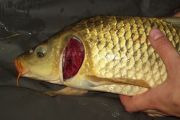
Here’s something to think about. How do fish optimize gas exchange in their gills to efficiently take up oxygen (favoring large, thin, permeable membranes) while at the same time limiting water and ion movement across the surface? If they reduce surface area, then oxygen transfer will be limited, but ions and water transfer will be optimized. What is a fish to do? A new review article published in Physiology discussed how […]

Continue Reading →

What do hibernating animals and astronauts have in common?

Well, nothing yet…but imagine the possibilities of human spaceflight if we could put people into a form of stasis? While short term stasis-like states have been used in medical settings, the idea of putting people into stasis to allow long term space travel – without intensive physician oversight, remains a major goal of space agencies and companies like Spaceworks (above). Scientists at the Comparative Physiology meeting considered this very question, […]

Continue Reading →

Improving tissue integrity for transplants

Ground squirrels are known for their remarkable ability to tolerate hypothermic conditions. Humans are not. Dr. JingXing Ou (National Institutes of Health) presented an interesting talk that explored using induced pluripotent neuronal stem cells isolated from these mammalian hibernators to improve tissue integrity for organ transplants. By understanding which pathways protected ground squirrel cells from cold-damage, these pathways could be manipulated in human induced pluripotent neuronal stem cells and improve […]

Continue Reading →

Hypoxia and anoxia and reoxygenation, Oh my!

There are many examples of animals that can naturally tolerate hypoxic and anoxic conditions without exhibiting pathologies associated with reoxygenation. Here are a few examples from this year’s conference: Dr. Anthony Signore (University of Nebraska) spoke about how some hypoxia tolerant animals can use carbon monoxide, you know that gas we think of as poisonous, to improve oxygen binding to hemoglobin in hypoxic conditions. Well known for their ability to […]

Continue Reading →

How Animals Deal with Stress

  Victor Zhang (Graduate Student working with Dr. Loren Buck at Northern Arizona University) gave an interesting talk on his research to measure stress and activity patterns in free living arctic ground squirrels. They found overall that females were less stressed than males although stress levels and activity varied during lactation. I think some human mothers can agree with those observations. Oliver Wearing (Graduate student working with Dr. Graham Scott […]

Continue Reading →

Study examines link between sleep apnea and cancer

A recent review published in the American Journal of Physiology – Regulatory, Integrative and Comparative Physiology explored the link between sleep apnea and cancer (4). More and more people are living with sleep apnea. In fact, current estimates indicate that up to 24% of men as well as up to 5% of women have obstructive sleep apnea (4). Individuals with sleep apnea experience repeated cycles of low oxygen (hypoxia) and reoxygenation throughout […]

Continue Reading →

Sleep vs torpor

  I read an interesting review article published in Physiology comparing the low metabolic states of non-rapid eye movement sleep (NREM) and torpor. According to the article, all mammals experience NREM sleep patterns during which energy expenditure is decreased and body as well as brain temperatures decline. Animals that experience torpor (hummingbirds, arctic ground squirrels, some mice, bears, etc) have reduced metabolic rates and body temperatures that dip below baseline. NREM […]

Continue Reading →

Seals, seals and more seals

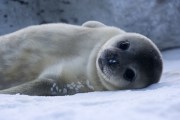
Several of the posters and talks at the Experimental Biology meeting in San Diego focused on Weddell Seals. They are not only cute, they are really interesting physiologically. Emma Weitzner, a graduate student in the lab of Dr. Heather Liwanag, presented a poster on Weddell seals, which are studied as models of the physiology of diving. Emma and her team recorded diving behavior and collected blood samples from 1 week-old […]

Continue Reading →

Environmental impact on physiology

Several of the comparative physiology posters and talks presented at the Experimental Biology conference today focused on the impact of environmental changes on the physiology of animals. Here are some highlights: Rachel Heuer, a postdoctoral fellow at the University of Miami working with Dr. Martin Grosell, examined the effects of crude oil on heart function in mahi-mahi. As the Deepwater Horizon spill occurred when these fish were spawning, it is […]

Continue Reading →

Dr. Hannah Carey in the spotlight

Congratulations Dr. Hannah Carey, 80th President of the American Physiological Society (2007-2008) and fellow of the American Association for the Advancement of Sciences, which recently interviewed her about her research on hibernation.  Dr. Carey is a comparative physiologist and professor of Comparative Biosciences at the University of Wisconsin School of Veterinary Medicine. Her current research focus is on how the gut microbes of 13-lined ground squirrels change during hibernation. According […]

Continue Reading →