Tag Archive for ‘American Journal of Physiology’

Caffeine redemption

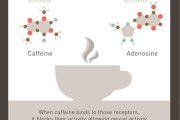
Sometimes caffeine gets bad rap. But, not all caffeine drinks are created equal and certainly there are health issues related to over-consumption. But, as an avid coffee drinker, I’d like to think there are some benefits to my favorite morning treat. A recent article published in American Journal of Physiology – Endocrinology and Metabolism highlighted some of the health benefits of caffeine. Thank you AJP! Obesity is a complicated condition that can […]

Continue Reading →

Pediatric obesity in marmoset monkeys begins in the womb

A new review article published in the American Journal of Physiology – Regulatory, Integrative and Comparative Physiology explored an interesting question: how do prenatal experiences along with the intrauterine environment impact the future development of pediatric and adult obesity in animals? Common marmosets (Callithrix jacchus) are New World monkeys that can spontaneously develop obesity early in life when living in captivity with high food availability and relatively low physical activity. Similar to […]

Continue Reading →

Understanding stress-induced miscarriage and premature delivery

  Stress during late pregnancy may result in premature delivery or stillbirth. A new study of pregnant Rambouillet cross ewes, published in the American Journal of Physiology – Regulatory, Integrative and Comparative Physiology, was designed to understand why lambs succumb to stress late in pregnancy. They found that while arterial blood pressure and heart rates were normal during late gestation (final 2 weeks before birth) in fetuses from pregnant ewes with elevated stress hormones, fetal heart rate and aortic blood pressure declined on the day […]

Continue Reading →

Tapeworms treat IBD?

Okay, I realize this is not a comparative physiology topic. But after reading this article, I just had to share it. A new study published in American Journal of Physiology – Gastrointestinal and Liver Physiology presented data suggesting that parasitic worms may help treat or even prevent inflammatory bowl disease (IBD) in children. IBD is a condition characterized by inflammation in the gut that can lead to symptoms such as diarrhea […]

Continue Reading →

Chronic stress causes muscle loss

Researchers have known that chronic stress has many negative health effects that can impair normal growth. The impact of stress on skeletal muscle specifically is less understood. For this reason, researchers at Universidad Andres Bello in Chile explored the effects of stress induced by overcrowding in fine flounders (Paralichthys adspersus). Their results were published this month in American Journal of Physiology – Regulatory, Integrative and Comparative Physiology.  After just four weeks of […]

Continue Reading →

How Ossabaw Island swine are helping us understand obesity and diabetes

         Ossabaw Island off the coast of Georgia (United States) is home to feral swine brought over by early Spanish explorers. In relative isolation on the island, with the exception of the introduction of a Hampshire pig, the Ossabaw pigs have become genetically distinct from those living on the mainland. Ossabaw pigs are prone to obesity and are the only miniature pigs known to develop type 2 […]

Continue Reading →

Importance of diet to the physiology of farm-raised fish

Image of a fish farm by Vera Kratochvil [Public domain], via Wikimedia Commons Fish farming, i.e. aquaculture, has increased about 6.2% between the years 2000-2012, according to the Food and Agriculture Organization of the United Nations. Fish farms are highly dependent on fish meal as well as fish oil as nutrients for the growing fish. Although rates of farming have increased, the supply of fish meal and oil are predicted […]

Continue Reading →

What a pain!

I read an interesting review article published recently in Physiology. The review discussed how various animals sense pain. Perhaps understanding how animals detect pain will lead to better pain management techniques for animals and humans.    Our bodies have special sensors, called nociceptors, that detect noxious stimuli that could injure tissues. Stimulation of these receptors is what allows you to move your hand away from a hot stove even before your […]

Continue Reading →

Towards the development of safer anesthetics

Like many medications, general anesthetics are not without side effects. Researchers at Dalhousie University in Canada were interested in studying the effects of inhaled anesthetics on the heart. Slowed heart rate (bradycardia) is a major adverse side effect of inhaled anesthetics that can lead to death for those undergoing procedures. Because bradycardia occurs in all species of vertebrates that have been studied thus far, the researchers decided to examine how […]

Continue Reading →

Health risks of being social

When I think of rainbow trout, the first image that comes to mind is usually something like this: In the wild, they look more like this: …not as appetizing, but a lot more fascinating.  When salmonid fish like rainbow trout are in environments with limited food or space, they form social hierarchies. In one study of limited food availability, Grobler et al., found that when they placed 4 rainbow trout […]

Continue Reading →