
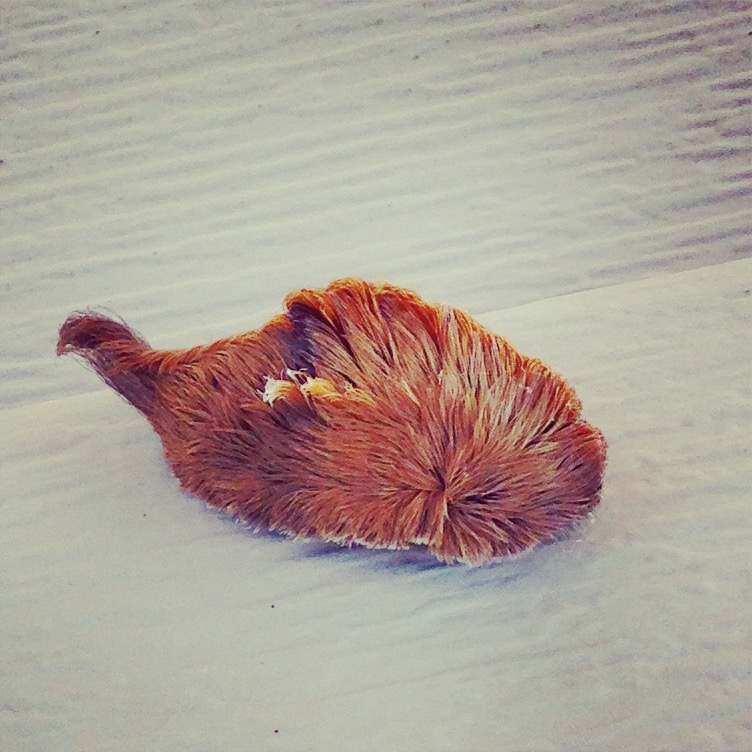
Although they look furry and fun to pet, larvae of asp caterpillars (like the one pictured above) would inflict pain on anyone bold enough to touch them. Underneath their “fur” lay venomous spines containing toxins that cause intense burning pain.
Although other caterpillars and insects are also venomous, the particular venom produced by asp caterpillars is different. In fact, researchers at the University of Queensland in Australia think that these caterpillars may have originally acquired their toxins millions of years ago from bacteria as the proteins are similar to bacterial toxins (Walker et al., 2023). The pain is thought to be caused by the holes these toxins poke in cells, similar to how bacteria infect cells. This type of gene transfer between species is called a horizontal gene transfer.
Researchers often explore such animal poisons and toxins as potential novel therapeutics. As summarized in a paper recently published in Frontiers in Pharmacology, molecules have been isolated from a host of species including amphibians, bats, cone snails, lizards, scorpions, sea anemones, snakes, spiders, shrews, and other species. Examples of medications currently approved for use in humans include:
- Captopril, an ACE inhibitor, purified from Jararaca pit viper snakes (Bothrops jararaca).
- Desirudin, an anticoagulant, purified from European medicinal leeches (Hirudo medicinalis)
- Exenatide, a GLP-1 receptor agonist, purified from Gila monsters (Heloderma suspectum)
- Bee sting therapy has also been used in alternative medicine for multiple sclerosis as well as arthritis.
Likewise, researchers are exploring the therapeutic potential of the asp caterpillar toxins.
Sources:
AA Walker, SD Robinson, DJ Merritt, GF King. Horizontal gene transfer underlies the painful stings of asp caterpillars (Lepidoptera: Megalopygidae). Proceedings of the National Academy of Sciences. 120(29): e2305871120, 2023.
K de Castro Figueiredo Bordon, CT Cologna, EC Fornari-Baldo, EL Pinheiro-Junior, FA Cerni, FG Amorim, FAP Anjolette, FA Cordeiro, GA Wiezel, IA Cardoso, IG Ferreira, I Sousa de Oliveria, J Boldrini-Franca, MB Pucca, MA Baldo, EC Arantes. From animal poisons and venoms to medicines: Acheivements, Challenges and Perspectives in drug Discovery. Frontiers in Pharmacology. 11: 1132, 2020.
- Wait, what? A warm-blooded, plankton-eating shark?
- Can carbon monoxide be a good thing at high altitude?
Categories: Extreme Animals, Illnesses and Injuries, Nature's Solutions
Tags: caterpillar, toxin, venom
 Life Lines by Dr. Dolittle
