
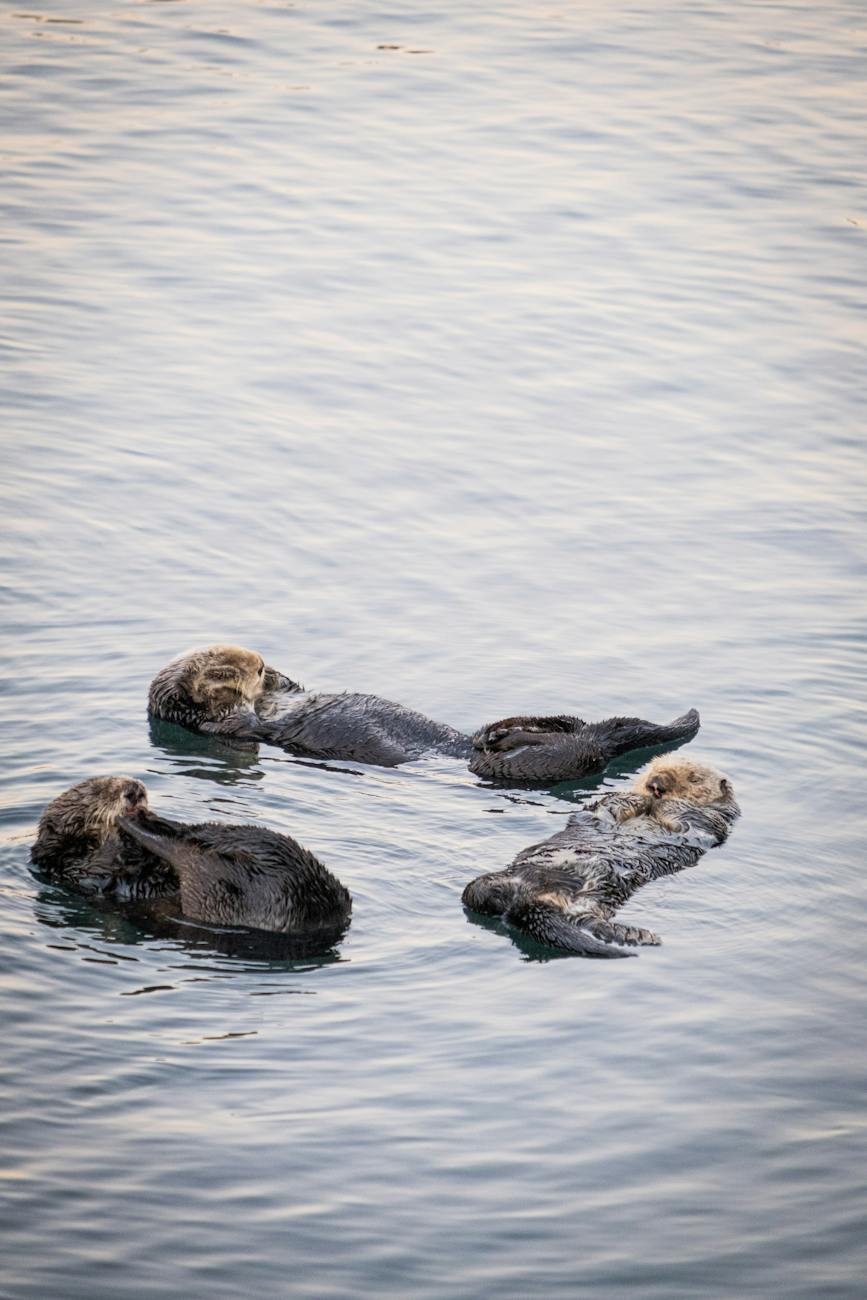
Dr. Andrew Dickerson and colleagues at the University of Tennessee wondered why underwater surfaces collect algae and bacteria whereas the fur of semiaquatic mammals, such as otters and beavers, do not. The collection of bacteria, slime, plants, and organisms such as mussels on underwater surfaces is called “biofouling”
In a new study, scientists discovered that the fur of semiaquatic animals has a unique property: each hair is able to move independently. They made this discovery after submerging samples of fur from various animals in water containing titanium dioxide and measuring the accumulation of titanium dioxide in the samples. The ability for hairs to move and flex was found to be the strongest contributor to clean fur.
The findings of this study are important. If an animal’s fur becomes grimy with bacteria and algae, it can reduce the animal’s ability to stay dry. This information may also be useful in the development of solutions to keep water supplies, boats, and even medical equipment clean. Just imagine the creation of fur-lined pipes.

Interestingly, three-toed sloths are a noted exception to the ability for mammals to ward off algae in their fur. In addition, Cryptoses Coloepi Dyar moths are found only in sloth fur. Three-toed sloths spend most of their time in the tree canopy where they dine on foliage. Such a diet is low in digestible nutrients. To compensate, their digestive rate and metabolism are very slow. Once a week, they embark on a dangerous journey to the ground where they defecate. This behavior is quite different from two-toed sloths that drop their feces from on high. Puzzled scientists wondered why the three-toed sloths would do such a thing as each journey exposes the animals to potential predation. What they found, was that female moths took advantage of the trip to lay eggs in the sloth excrement. Moreover, sloth fur infested with more moths also contained more algae and nutrients that the sloths could ingest to supplement their nutrient-poor diet of foliage.
Sources:
M Krsmanovic, R Ghosh, AK Dickerson. Fur flutter in fluid flow fends off foulers. Journal of the Royal Society Interface. 20(209): 20230485, 2023.
JN Pauli, JE Mendoza, SA Steffan, CC Carey, PJ Weimer, MZ Peery. A syndrome of mutualism reinforces the lifestyle of a sloth. Proceedings Biological Sciences. 281(1778): 20133006, 2014.
Categories: Diet and Exercise, Extreme Animals, Nature's Solutions
Tags: algae, biofouling, fouling, fur, sloth
 Life Lines by Dr. Dolittle
