
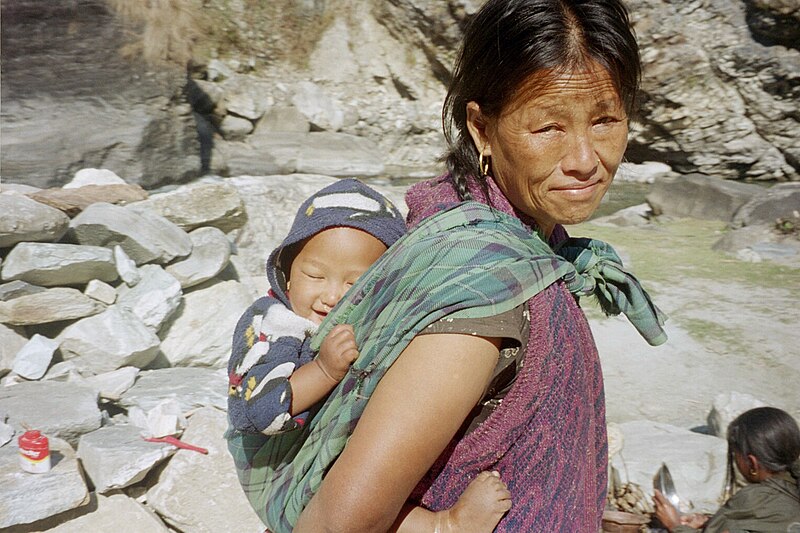
Humans have occupied high altitude environments for over 10,000 years, allowing ample time for some remarkable adaptations to hypoxia. Such adaptations we have already discussed in people living on the Tibetan Plateau (elevation: 4,500 meters on average) include higher breathing rates combined with lower levels of hemoglobin, the molecule that carries oxygen in the blood, compared to lowland populations, which helps prevent mountain sickness as well as the formation of blood clots and hypertension. They also have higher levels of carbon monoxide in their blood, which is thought to protect their cells from damage caused by living in a hypoxic environment.
Pregnancy in such a hypoxic environment presents additional challenges as sufficient oxygen must be delivered to the developing fetus. The ability for women to have multiple children over their lifetime in such a hypoxic environment caught the attention of a team of researchers who examined physiological adaptations to pregnancy in women living in Nepal (elevation: 3,500 meters). They found that although women with the highest reproductive success (measured by the most live births over their lifetime) had average levels of hemoglobin amongst those living in the region, their hemoglobin was more saturated with oxygen. This means the women were able to carry more oxygen in their blood with the help of fewer red blood cells, which helps prevent their blood from becoming too viscous and contributing to heart disease.
Source
S Ye, J Sun, SR Craig, A Di Rienzo, D Witonsky, JJ Yu, EA Moya, TS Simonson, FL Powell, B Basnyat, KP Strohl, BD Hoit, CM Beall. Higher oxygen content and transport characterize high-altitude ethnic Tibetan women with the highest lifetime reproductive success. Proceedings of the National Academy of Sciences. 121(45): e2403309121, 2024.
- Physiology on the Road: Midland physiologists search for answers
- On the path to preventing white-nose syndrome
Categories: Comparative Physiology, Hibernation and Hypoxia, Nature's Solutions
Tags: altitude, anemia, blood, health, hemoglobin, medicine, Mountain Sickness, Nepal, wellness
 Life Lines by Dr. Dolittle
