
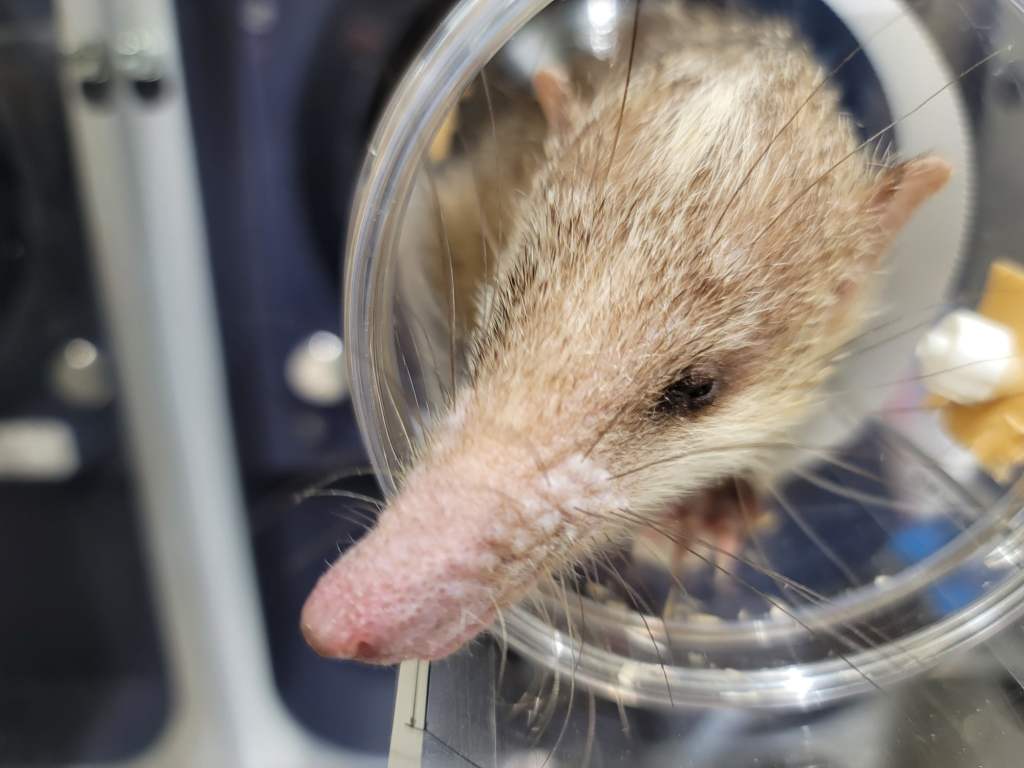
We are excited to feature Dr. Frank van Breukelen and his graduate student, Gilbecca Rae Smith, from the University of Las Vegas, Nevada. They presented exciting new research at the 2024 American Physiology Summit examining some little-known functions of the spleen.
Q: We often associate the spleen with its ability to filter blood and make white blood cells to fight infections. We don’t often consider the importance of its ability to store blood, however. You mentioned in your presentation that the ability to store red blood cells in the spleen is important during exercise. Can you please tell us more about that? Do all mammals have this ability?
A: Within mammals, there’s a bit of variability in the overall anatomy that informs on the physiology, such as more or less red pulp influencing the capacity for red blood cell storage, and varying levels of musculature affecting contractility. Similarly, the capacity for red blood cell storage varies, often based on some relationship with metabolism and activity levels.
If we view sequestration of red blood cells as functioning on a continuum, animals adapted for endurance exercise generally possess greater storage capacities. This anatomical adaptation, such as larger spleens with more red pulp, allows these animals to store and release a significant number of red blood cells during periods of intense activity. Consequently, their oxygen-carrying capacity and endurance are enhanced, supporting their higher metabolic demands during sustained exercise. In dogs, there may be a 30% increase in maximal oxygen consumption. In humans, the splenic contraction is much less pronounced but it’s still there during exercise. We figured the opposite might be true in tenrecs- that sequestering blood to the spleen might result in a reduced metabolism.
Q: In your new study, you examined the role of the spleen in tenrecs. Why did you choose to study this species and what did you learn?
A. This study was initially built upon a small summer project aimed at understanding tenrec blood dynamics since we didn’t know anything about it. Long story short, we found that these dynamics are incredibly variable. For example, white blood cell counts ranged from 0 to >70,000 cell per microliter, and hematocrit (red blood cell) levels varied between 16% and 67%. Additionally, we observed a profound 13.9-fold variability in spleen mass relative to body mass across tenrecs with states of activity and body temperatures. Interestingly, tenrecs exhibit a dramatic 25-fold variability in resting oxygen consumption rates at cold temperatures. When we sampled tenrecs under these conditions, we discovered a notable relationship between spleen size and resting aerobic metabolism: animals with smaller spleens had high oxygen consumption rates, while those with larger spleens had low oxygen consumption rates. The immense variability in tenrec physiology provided a unique opportunity to study the dynamics of the spleen and its potential influence on overall metabolism.
Q: What are you working on now?
A. This is still an exciting ongoing project where we are simultaneously measuring oxygen consumption and periodically assessing splenic volumes using micro-CT!
Good luck with your research! We look forward to learning more at the next American Physiology Summit in 2025.
Categories: Comparative Physiology, Exercise, Nature's Solutions, Physiology on the Road
Tags: American Physiological Society, animals, biology, cold, Exercise, health, medicine, physiology, spleen, tenrec
 Life Lines by Dr. Dolittle