
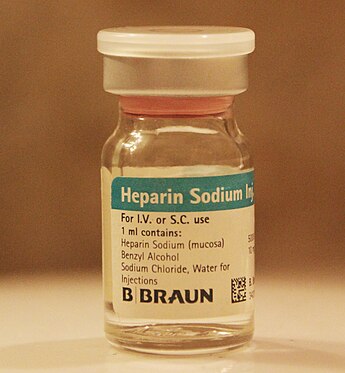
In this post, we take a step back in time to feature two legacy articles published in the American Journal of Physiology, written by Jay McClean and Dr. William Howell who studied the physiology of blood clotting. With the 2025 American Physiology Summit taking place in Baltimore, it is only fitting that we take a step back in time to celebrate their important discoveries.
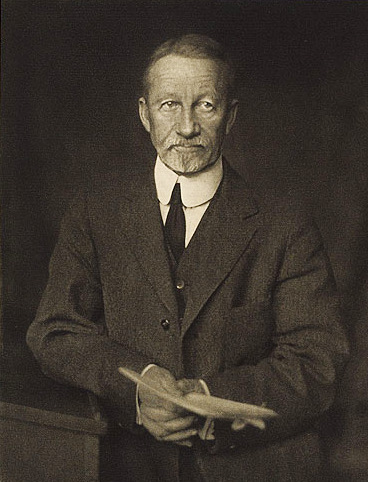
Dr. Howell was born in Baltimore, Maryland in 1860 and is most famous for his pioneering research on the use of heparin as a blood thinner to prevent blood clots. He spent most of his career as a professor (and chair) of the Department of Physiology at Johns Hopkins School of Medicine. He was also one of 27 charter members who founded the American Physiological Society. In 1910 he discovered a way to isolate the blood clotting factor thrombin.
When Jay joined Dr. Howell’s laboratory as a medical student in 1915, he was asked to explore the role of cephalin in forming blood clots. In 1916 he published an article on the topic, “The thromboplastic action of cephalin,” in the American Journal of Physiology in which he explained that Dr. Howell had asked him to examine whether cephalin itself is a blood clotting factor, or whether some other impurity in the preparation was responsible. Although Jay was focused on isolating clotting factors, he also described in his paper the presence of anti-coagulants in the mix, courin (isolated from heart) and ‘heparphosphatid’ (isolated from liver).
Given Jay’s intriguing findings, Dr. Howell continued this line of research exploring the actions of heparphosphatid, with the assistance of T. Emmett Holt. In a paper published in the American Journal of Physiology in 1918, Dr. Howell and Emmett referred to this potent anticoagulant as ‘heparin’. Since its discovery, heparin has been essential in clinical and veterinary medicine for the prevention and removal of blood clots. As such, it has been used in hemodialysis, organ transplants, cardiovascular surgeries, as well as routine blood collections. In recent years, heparin has also been discovered to play a role in wound healing as well as cancer prevention given its ability to inhibit tumor growth.
Sources
J McLean. The thromboplastic action of cephalin. American Journal of Physiology. 41(2): 250-257, 1916. Doi: 10.1152/ajplegacy.1916.41.2.250
WH Howell, E Holt. Two new factors in blood coagulation – heparin and pro-antithrombin. American Journal of Physiology. 47(3): 328-341, 1918. Doi: 10.1152/ajplegacy.1918.47.3.328
NP Couch. About heparin, or … whatever happened to Jay McLean? Journal of Vascular Surgery. 10(1): 1-8, 1989.
Categories: Illnesses and Injuries, Time Machine
Tags: American Journal of Physiology, American Physiological Society, blood clot, blood thinner, heparin, medicine, nursing
 Life Lines by Dr. Dolittle