
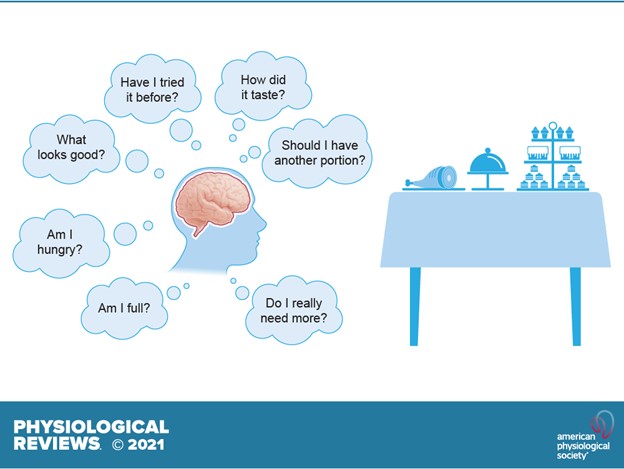
Ever wonder how your body knows when, what and how much to eat, what to crave, or when to stop? Have you ever found yourself indulging in a little extra during the holidays, even though you’re not actually hungry? It turns out, the science behind our eating habits is far more complicated than we realize— and it’s not just about willpower or self-control.
A fascinating comprehensive review published by Watts and colleagues in Physiological Reviews breaks down the intricate systems that regulate our eating behaviors. From the signals in your brain telling you to eat (or not) to how these systems can get hijacked, especially when food is abundant and tempting, the review offers a deep dive into how we manage food intake—and sometimes overdo it.
How Does the Body Know When and What to Eat?
The discovery of effective weight loss drugs has revolutionized the treatment of obesity and obesity-related conditions, such as diabetes and hypertension. As described by Watts and colleagues, these discoveries were made possible by over 120 years of research understanding how the gut-brain axis regulates food intake, digestion, and satiety (feeling full). Initial observations of people who experienced tumors and brain lesions in the hypothalamus, specifically, provided clues as to brain’s role in eating behaviors. Scientists were able to locate specific regions in the hypothalamus responsible for signaling hunger (lateral hypothalamic area) and when we’ve had enough (ventromedial hypothalamic nucleus). Since then, many other organs and regions of the brain and signaling factors in the body have been shown to regulate or modulate eating behaviors.
The terms “hunger” and “appetite” are often confused, but they mean different things. Hunger is the sensation that tells you it’s time to eat, while appetite is the specific desire for certain foods, which may lead you to want a burger or a pizza rather than just anything in sight. These sensations are linked to a mix of chemical signals and neural pathways that drive the brain’s reward system, making the experience of eating a pleasurable one.
Energy Regulation: A Delicate Balance

Your body uses carbohydrates, fats, and proteins from the foods you eat to generate ATP (adenosine triphosphate), the energy currency that powers everything your cells do and is critical to life. Unlike fats and proteins, ATP can’t be stored, so the body needs to carefully manage its production. When your body lacks the energy to create enough ATP, you’re in a negative energy balance (catabolic state), often resulting in weight loss. On the other hand, if you eat more than your body needs, the excess may be stored for future use (a positive energy balance; anabolic state). Positive energy balance may sound like a bad thing in terms of weight gain, but it is very important when extra nutrients are required such as survival, growth and development, reproduction, hibernation, and migration.
Our brain signals hunger when it senses, or anticipates, a negative energy balance in the body. When we consume foods that we crave, we satisfy our hunger and the brain sends reward signals, which are responsible for the satisfaction and pleasure we feel after eating specific foods. Satiation, on the other hand, is regulated by a variety of complex inhibitory signals sent to the brain that tell us when to stop eating. The resulting state of satiety happens until the brain signals us to start eating again. To maintain weight, we need to hit that sweet spot of energy balance, where what we consume equals what we use or dispose of as waste. But during the holidays, things often get out of whack.
How the holidays, family, and friends mess it all up
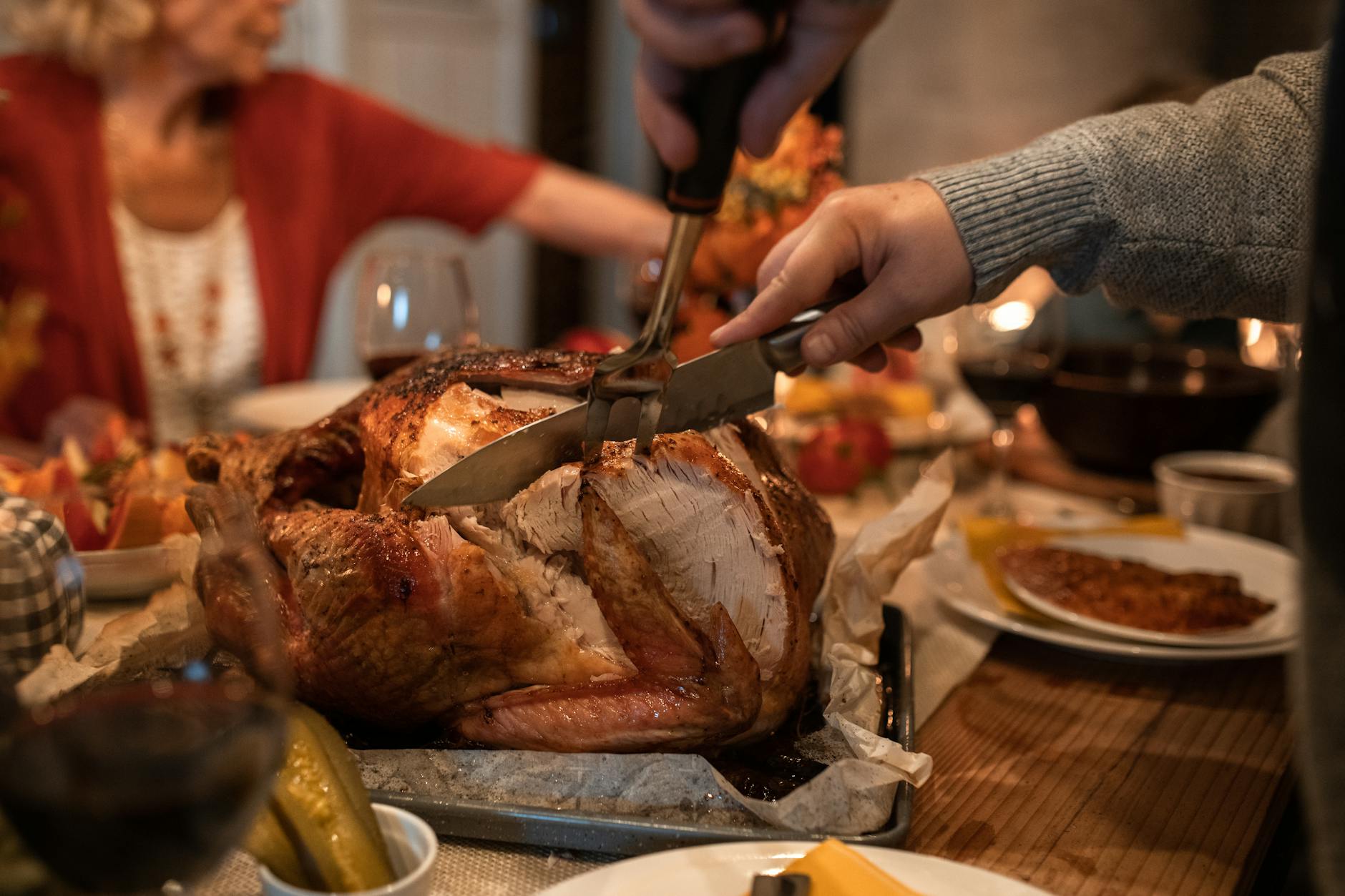
Ever noticed how it’s harder to resist food around family and friends, especially at holiday gatherings? Watts and colleagues use the term “Incentive Salience” to describe our motivation for obtaining food and how much we desire food. The brain’s reward system plays a big part in why we can’t stop eating that extra slice of pie. The release of dopamine—what many call the “pleasure hormone”—kicks in when we eat foods we enjoy. It’s not just a little boost; this reward system can be strong enough to rival addictions like drugs or alcohol. This is why Santa can’t resist eating cookies at every…single…house.
Our brains are wired to enjoy food, but holiday settings can amplify this desire. Studies show that when people or animals are deprived of food, their dopamine response increases when they finally get to eat. This can explain why they overeat after a period of food restriction (like fasting or dieting) making it difficult to keep the weight off. It’s all about the brain’s reward systems.
But the science doesn’t stop there. Our food choices and how much we eat are also influenced by a variety of psychological and social factors. Watts and colleagues use the term “Hedonic Evaluation” to describe how much we like or prefer certain foods. Put simply, we like certain foods more than others based on how they look, smell, or taste and how they make us feel. And if a food reminds you of a positive experience (like a favorite dish from a family gathering), you’re more likely to go for it. Whereas, if the food reminds you of a bad experience or past illness, you may be inclined to avoid it altogether.
The term “Inhibitory Control” describes how well we regulate our impulses and inhibitions. For example, when you’re at a party and everyone else is eating, it’s hard to resist joining in, even if you’re not hungry. When food is highly rewarding (tasty and easily accessible), it’s tough to say no. The challenge is amplified in modern “Western” diets, which often consist of highly processed, tasty foods that are everywhere. This can lead to impulsive eating behaviors, making it hard to maintain control over food intake, especially during the holidays, when food is abundant.
In Summary: A Complex System
The review by Watts and colleagues illustrates just how intricate the body’s mechanisms for eating really are. From hunger cues to satiety signals, reward pathways, and psychological triggers, the way we eat isn’t as simple as just “deciding” what to eat. It’s an interplay of biological and psychological factors, all guided by the brain and various organs like the gut, liver, and pancreas.
So, next time you find yourself eating more than you planned—especially during those holiday feasts—remember that it’s not just about self-control. Your body’s signaling systems, influenced by both your brain and your environment, are in full swing. It’s a lot to manage, but that’s what makes our relationship with food so interesting and complex.
Sources:
WK Samson, GLC Yosten. A comprehensive review of the neuroscience of ingestion: The physiological control of eating: Signals, neurons, and networks. Physiological Reviews. 102(1): 319-322, 2022.
AG Watts, SE Kanoski, G Sanchez-Watts, W Langhans. The physiological control of eating: signals, neurons, and networks. Physiological Reviews. 102(2): 689-813, 2022.
Categories: Comparative Physiology, Diet and Exercise, Environment, Hibernation and Hypoxia, Intelligence and Neuroscience
Tags: diet, eating, food, health, nutrition, weight loss
 Life Lines by Dr. Dolittle