
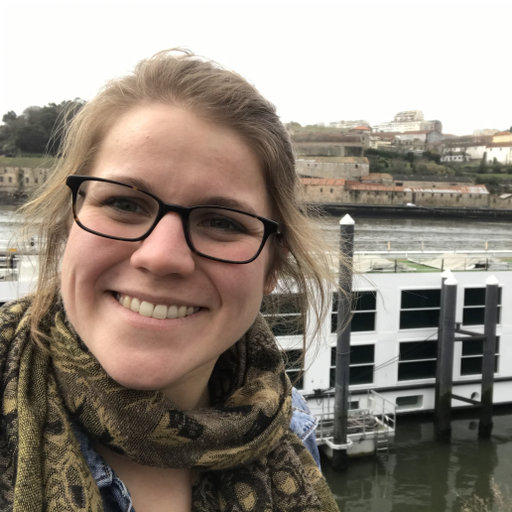
We are very excited to share this winning guest blog post from Amy Klink, doctoral student at the University of Nevada – Las Vegas. Amy received the Dr. Dolittle travel award to present this research at the 2025 American Physiology Summit in Baltimore. Congratulations Amy!
As a kid growing up in Lake County, Illinois, I spent more than half of my summer in some lake or body of water competing against kids over who could hold their breath the longest. What I did not realize as a kid was that I was not invincible, nor was I the human breath hold wunderkind. Little did I know at the time, my measly 30 second breath hold only skimmed the surface at what a deep diving seal can do. Antarctic Weddell seals are some of the deepest, longest divers with the ability to dive over 900 meters deep and up to 90 minutes long (Heerah et al., 2013). While this diving record is more than impressive, routine diving is more likely to last about 30 minutes long with an average depth of 200 meters (Castellini et al., 1992). So, what makes Weddell seals, another mammal, able to withstand such incredible breath hold feats?
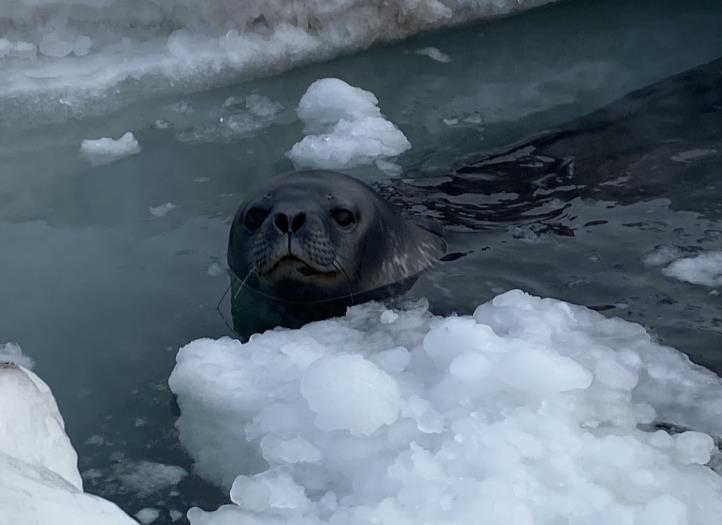
Seals employ several physiological strategies to assist in repeated diving including enhanced capacity of the mammalian dive response which consists of three parts: reduced breathing rate (apnea), reduced heart rate (bradycardia), and lastly constricted blood flow (vasoconstriction) to peripheral organs. To sustain deep dives, seals prolong aerobic metabolism through depletion of arterial blood oxygen supply, dropping to 28% saturation (Meir et al., 2009; Qvist et al., 1986). In human clinical settings, a drop of oxygen this drastic will elicit the innate immune system to induce inflammation and correct for the hypoxemic injury. My research is aimed at comparing the innate immune response between Weddell seal and human blood following inflammatory stimuli. Previous work has shown components of Weddell seal blood will respond less to inflammatory stimuli, lipopolysaccharide (LPS), compared to human blood (Bagchi et al., 2018). To expand on these initial findings, we isolated macrophages from both Weddell seal and human blood and exposed them to LPS, hypoxia (1% O2), and a multi-factor (LPS + hypoxia) stress challenge. We found that Weddell seal macrophages are not as responsive to the dual LPS and hypoxia exposure as evidenced by a lower induction of IL6, a potent pro-inflammatory cytokine, compared to human macrophages. Similarly, Weddell seals maintain transcription of additional cytokines (Tnf-alpha and Il1ra) across all stress trials. This is unlike human macrophages that lose transcriptional response once exposed to the multi-factor (LPS + hypoxia) challenge. This suggests that under extreme stress, human macrophages shut down cellular machinery while Weddell seal macrophages appear to maintain function. In addition to differences in cytokine expression between human and Weddell seals, we also found evidence that Weddell seal macrophages secrete protective molecules following hypoxia exposure.
In summary, our data suggests Weddell seal macrophages not only mediate their response to inflammation, but they also send protective signals to help prevent future injury. This data is exciting to us because it highlights some of the cellular mechanics that could be occurring when a seal is diving. While my childhood antics may not be the be model to explore diving physiology, I do propose that Weddell seals should be considered due to their incredible ability to dampen the response to dive-induced inflammation.
References
Bagchi, A., Batten, A. J., Levin, M., Allen, K. N., Fitzgerald, M. L., Hückstädt, L. A., Costa, D. P., Buys, E. S., & Hindle, A. G. (2018). Intrinsic anti-inflammatory properties in the serum of two species of deep-diving seal. Journal of Experimental Biology, 221(13). https://doi.org/10.1242/jeb.178491
Castellini, M. A., Kooyman, G. L., & Ponganis, P. J. (1992). Metabolic rates of freely diving Weddell seals: correlations with oxygen stores, swim velocity and diving duration. Journal of Experimental Biology, 165, 181–194. https://doi.org/10.1242/jeb.165.1.181
Heerah, K., Andrews-Goff, V., Williams, G., Sultan, E., Hindell, M., Patterson, T., & Charrassin, J. B. (2013). Ecology of Weddell seals during winter: influence of environmental parameters on their foraging behaviour. Deep-Sea Research Part II: Topical Studies in Oceanography, 88–89, 23–33. https://doi.org/10.1016/j.dsr2.2012.08.025
Meir, J. U., Champagne, C. D., Costa, D. P., Williams, C. L., & Ponganis, P. J. (2009). Extreme hypoxemic tolerance and blood oxygen depletion in diving elephant seals. Am J Physiol Regul Integr Comp Physiol, 297, 927–939. https://doi.org/10.1152/ajpregu.00247.2009.Species
Qvist, J., Hill, R. D., Schneider, R. C., Falke, K. J., Liggins, G. C., Guppy, M., Elliot, R. L., Hochachka, P. W., & Zapol, W. M. (1986). Hemoglobin concentrations and blood gas tensions of free-diving Weddell seals. Journal of Applied Physiology, 61(4), 1560–1569. https://doi.org/10.1152/jappl.1986.61.4.1560
Categories: Comparative Physiology, Exercise, Extreme Animals, Hibernation and Hypoxia, Ocean Life, Physiology on the Road
Tags: American Physiological Society, American Physiology Summit, animals, diving, fitness, health, mental-health, nutrition, seal, UNLV, wellness
 Life Lines by Dr. Dolittle