

The Midlands Society of Physiological Sciences held their annual conference on October 21st at the University of Nebraska Medical Center.

The Keynote Lecture was given by Dr. Manolis Kellis, Professor at Massachusetts Institute of Technology. He spoke about the use of artificial intelligence approaches to examine how fly and human genes are regulated.
Other highlights:
Anuj Singh (University of Nebraska Medical Center): Opioid use is a major healthcare concern and studies have shown that it leads to degeneration of neurons in the brain resulting in accelerated aging. Anuj and colleague’s research examined how this happens and found that morphine can increase amyloid production.

Olawale Alimi (University of Nebraska Medical Center): Electrical stimulation has been used to simulate normal nerve function in order to activate muscles that have damaged nerves. Olawale and colleagues are developing a new technology to deliver electrical stimulation to muscles while avoiding the tissue damage that can result from current technology.
Rachael Urquhart (Creighton University): Impaired learning and memory are often side effects of strokes resulting from impaired blood flow to the brain and degeneration of neurons. Rachael and colleagues are exploring mechanisms driving the inflammatory pathways in the brain that are activated during strokes in an effort to help reduce the degeneration of neurons.

Satosh Yadav (University of Nebraska Medical Center): Satosh and colleagues at UNMC, Texas A&M University as well as the VA Nebraska-Western Iowa Health Care System in Omaha, examined potential explanations for how the gut microbiome is altered by post-traumatic stress disorder. They found that PTSD leads to an inflamed gut and greater leakiness, which can lead to other pathologies in those affected by PTSD.
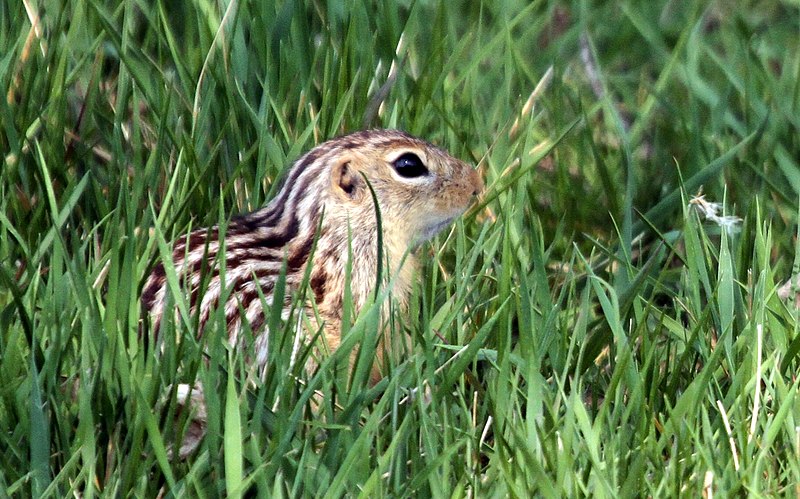
Raechel Sherrick (University of Nebraska, Lincoln): Raechel and colleagues presented data examining how the metabolism of thirteen-lined ground squirrel muscles change during hibernation. They observed changes in several metabolites that are associated with protein metabolism, which may help the animals prevent muscle atrophy during hibernation. Might these results also help inform the treatment of muscle atrophy in humans and other non-hibernators?
- Physiology on the Road: “Physiology in Ohio, The Heart of it All!”
- Physiology on the road: What’s happening in Arizona
Categories: Aging, Comparative Physiology, Extreme Animals, Hibernation and Hypoxia, Illnesses and Injuries, Physiology on the Road, Stress
Tags: Aging, electrical stimulation, muscle, Nebraska, opioid, physiology, PTSD, strokes
 Life Lines by Dr. Dolittle

.jpg)