

Humans and racehorses have something in common when it comes to risk of sudden cardiac death. In fact, sudden cardiac death is the 2nd most common cause of death during exercise among these athletes. Although rare, it typically affects young, seemingly healthy individuals. Research suggests that exercise itself is not to blame, but rather an underlying predisposition for irregular heart rates that exercise uncovers.
The most common inherited causes of sudden cardiac death in US athletes include abnormally thickened heart muscle (hypertrophic cardiomyopathy) or changes in where the coronary artery, responsible for supplying the heart muscle with nutrients and oxygen, branches off the aortic sinus (Wasfy, Hutter, and Weiner, 2016). Normally, the left coronary artery branches off the left aortic sinus and the right coronary artery branches off the right aortic sinus. However, some children are born with only one coronary artery. In others, the coronary arteries branch off the wrong sinus, sending the blood on a different path than it typically takes in a healthy heart (Children’s Hospital of Philadelphia).
Cardiac muscle cells spend a short time recovering between each heartbeat. The ability for them to recover can be measured by assessing what is called the Cardiac Restitution Ratio (CRR), which can be estimated from an electrocardiogram (ECG). This calculation compares how long the heart is contracted to how long it rests in between contractions (Fossa, 2017). Studies of humans, dogs, and primates show that the CRR value is normally below 1 at rest. Stress, induced by exercise or disease, can raise CRR values above 1 (Fossa, 2017).
CRR is normally calculated at rest, whereas sudden cardiac death in athletes is typically associated with recent or current exercise (Avison et al., 2025, Fossa, 2017). In a recent review article, graduate student Amanda Avison, worked with Dr. Peter Physick-Sheard (University of Guelph) and Dr. W. Glen Pyle (Dalhousie University) to compare the cardiac physiology of racehorses and human athletes and their respective risks for sudden cardiac death (Avison et al., 2025). Their review identified many similarities in sudden cardiac death between human and equine athletes, which they explore further in a research study presented at the 2025 American Physiology Summit last month in Baltimore, MD.
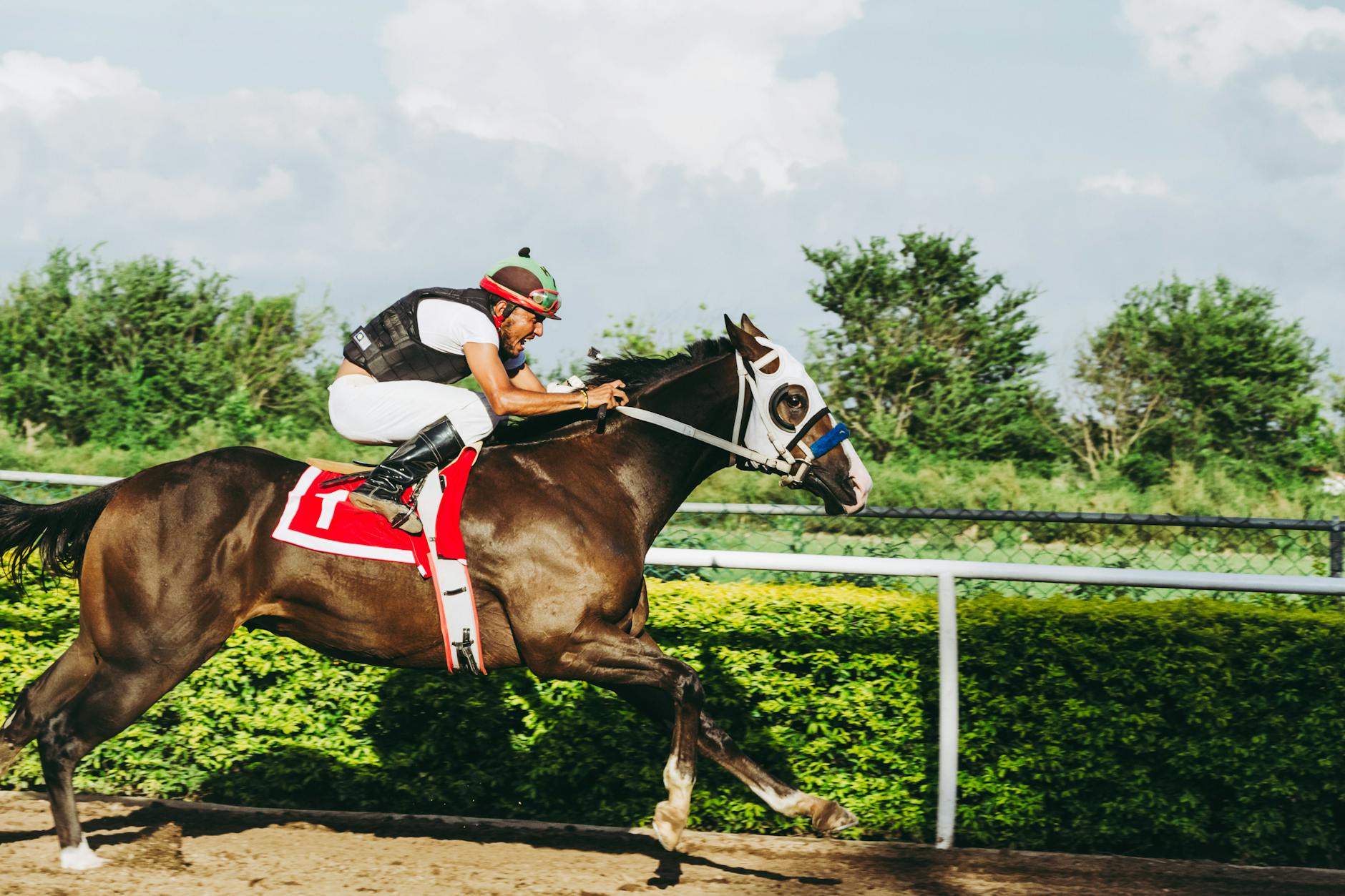
Their new research, presented by Amanda, measured the CRR of racehorses – while the animals were engaged in high intensity exercise. The team recorded the ECG of 42 racehorses. While racing, the horses experience heart rates and aerobic capacities much greater than their human counterparts. In fact, their heart rate varied from a resting value of 26 up to 293 beats per minute during exercise! The researchers also found that the CRR of the horses reached the highest values while they were exercising, similar to humans. The hope is to be able to identify risk of sudden cardiac death in humans, racehorses, and other animals before it happens.
Sources
Meagan M Wasfy, Adolph M Hutter, Rory B Weiner. Sudden death in athletes. Methodist Debakey Cardiovasc J. 12(2): 76-80, 2016. Doi: 10.14797/mdcj-12-2-76
Children’s Hospital of Philadelphia
Anthony A Fossa. Beat-to-beat ECG restitution: A review and proposal for a new biomarker to assess cardiac stress and ventricular tachyarrhythmia vulnerability. Ann Noninvasive Electrocardiol. 22(5): e12460, 2017. Doi: 10.1111/anec.12460
Amanda Avison, Peter W Physick-Sheard, W. Glen Pyle. Performance horses as a model for exercise-associated cardiac arrhythmias and sudden cardiac death. J Molec Cell Cardiol Plus. 12: 100452, 2025. Doi: 10.1016/j.jmccpl.2025.100452
Amanda Avison, Beverly G Goderre, W Glen Pyle, Peter W Physick-Sheard. Cardiac restitution, ion channels, and racehorses: A naturally occurring model of sudden cardiac death in athletes. 2025 American Physiology Summit Abstracts. Baltimore, MD
Categories: Diet and Exercise, Exercise, Extreme Animals, Physiology on the Road, Stress
Tags: American Physiological Society, American Physiology Summit, athlete, endurance exercise, health, horse, medicine, nursing, racehorse, science, sudden cardiac death
 Life Lines by Dr. Dolittle